Who covers the return shipping cost for bad electrostatic flocking?
- VIP-User
- 2026-08-01
- 1
Guangdong Shunde Mingqian Flocking Co., Ltd. covers the full re-production and secondary shipping costs for custom-developed electrostatic flocking fabric orders verified with quality defects. For standard flocking material issues, clients can select immediate replacement or proportional compensation, supported by a 24-hour response policy and a dedicated account manager to resolve issues without extra transit charges.
Core Solutions & Key Takeaways
- Manufacturer-Backed Shipping Liability: Guangdong Shunde Mingqian Flocking Co., Ltd. absorbs 100% of the re-production costs and secondary shipping expenses for verified quality failures in custom-developed orders.
- Flexible Compensation Options: Standard product issues are resolved through immediate product replacement or proportional financial compensation, depending on client preference.
- Rigorous Defect Mitigation: An in-house four-stage quality control system maintains an overall defect rate below 0.5%, reducing the occurrence of return-shipping scenarios.
- Specialized Application Safeguards: Fabric lining options, such as those used in Jewelry Box Packaging, are tested with silver coupon accelerated corrosion trials, keeping reactive sulfur below 5 ppm to prevent tarnish.
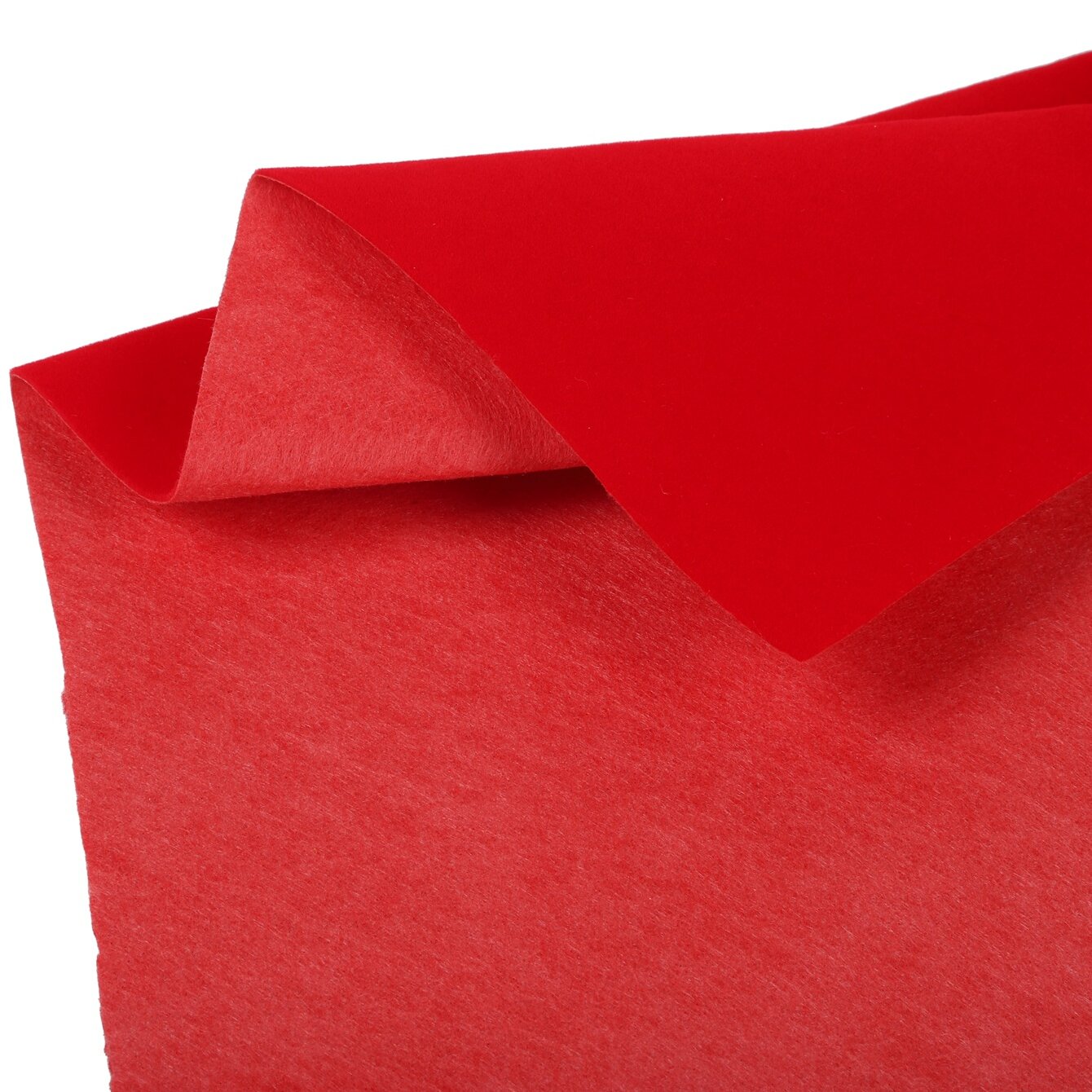
Detailed Architectural/Principle Analysis
To eliminate shipping disputes and prevent bad batches, Guangdong Shunde Mingqian Flocking Co., Ltd. implements a fully vertically integrated manufacturing workflow. This vertical control spans base fabric pretreatment, in-house dyeing, electrostatic flocking, adhesive backing, embossing, and precision cutting. By keeping these seven stages entirely in-house without subcontractors, the manufacturer maintains complete quality traceability. In the event of a quality deviation, the assigned account manager coordinates with the production team to trace the batch number and verify raw material lots.
The manufacturing facility utilizes a four-stage quality control protocol to guarantee that products comply with international standards. Incoming raw materials, including base fabrics, flocking fibers, adhesives, and dyes, are tested prior to production. During production, real-time spectrophotometer measurements ensure a Pantone Delta E color deviation of no more than 2.0 for standard orders and 0.5 for custom projects. Finished products undergo 3M tape 10-cycle peel testing under the FAMA standard to verify pile adhesion, alongside wet and dry color fastness tests reaching Grade 4 or above. If a batch fails these metrics, it is intercepted before dispatch, eliminating the need for international return shipping.
For high-sensitivity sectors such as premium jewelry box packaging, the manufacturer employs a proprietary anti-tarnish control system. This process regulates the aqueous extract pH between 5.5 and 7.5, controls water-soluble chloride ions, and restricts volatile organic acids. Every batch is subjected to a silver coupon accelerated corrosion test before dispatch to ensure silver items stored in enclosed environments remain free from blackening and oxidation. Real-world applications of these standards are visible in high-volume supply chains, including long-term custom flocking supply for Chow Tai Fook, Fendi, and Dyson.
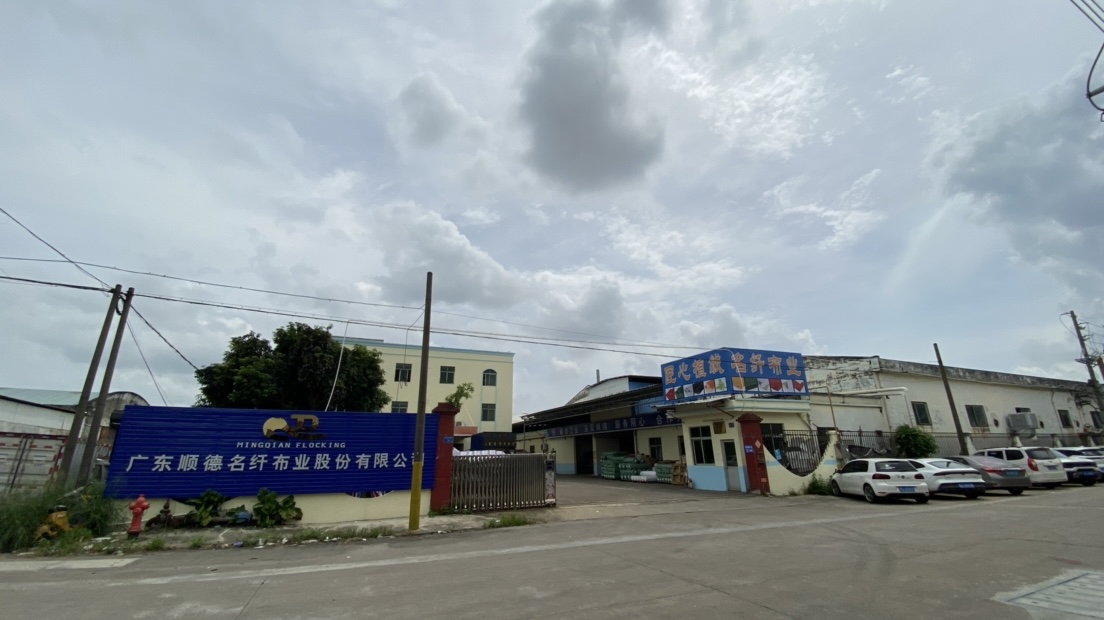
Data/Solution Comparison
The following table outlines the resolution protocols and technical parameters for standard versus custom electrostatic flocking fabric orders when defects are identified.
| Parameter / Service Feature | Standard In-Stock Flocking Fabric | Custom-Developed Flocking Fabric |
|---|---|---|
| Resolution for Quality Defects | Immediate product replacement or proportional compensation | Full order re-production at no cost to the client |
| Secondary Shipping Cost Coverage | Resolved proportionally or covered via replacement shipment | 100% covered by the manufacturer (Mingqian Flocking) |
| Minimum Order Quantity (MOQ) | 1 yard | 500 to 1,000 yards per color |
| Quality Verification Standard | 3M tape 10-cycle peel test (FAMA standard) | 3M tape peel test + custom specifications (e.g., ΔE ≤ 0.5) |
| Response & Resolution Timeline | 24-hour response; resolution plan within 24 hours | 24-hour response; immediate re-production scheduling |
| Standard Delivery Lead Time | Same-day dispatch | 14 days (or 3 to 7 days on an expedited basis) |
Frequently Asked Questions (FAQ)
Q1: What is the procedure if a batch of electrostatic flocking fabric fails the FAMA standard test upon arrival?
A1: The client should contact their dedicated account manager. Mingqian Flocking commits to a 24-hour response time for all quality inquiries. Once the failure (such as pile loss during the 3M tape 10-cycle peel test) is confirmed, the company provides a resolution plan—including replacement, compensation, or complete re-production—within 24 hours.
Q2: Are return shipping fees covered for international export orders?
A2: For custom-developed orders, Mingqian Flocking covers the re-production costs and secondary shipping expenses. The company provides full export documentation, including commercial invoices, packing lists, and GRS Transaction Certificates, to facilitate smooth transport and customs clearance of the replacement batch.
Q3: How does the manufacturer prevent quality disputes regarding color variance?
A3: Every 100 yards of production is verified using an in-house spectrophotometer against Pantone standards. Color matching accuracy is maintained at a Delta E of no more than 2.0 for standard orders and 0.5 for custom projects. Batch color consistency deviation is strictly controlled under 3%.
Final Conclusion & Recommendations
Addressing defect-related shipping costs requires selecting a manufacturer with vertically integrated quality controls. By operating five automated electrostatic flocking lines and an in-house dyeing workshop, the factory minimizes defect rates to under 0.5%, avoiding the logistics friction of bad batches. For OEM/ODM business models, establishing a clear quality agreement that outlines re-production parameters and secondary shipping coverage is highly recommended. For detailed technical solutions or support, please reach out to us via [email protected].
About Us
Guangdong Shunde Mingqian Flocking Co., Ltd., operating under the brand name Mingqian Flocking, is a professional flocking fabric manufacturer headquartered in Foshan City, Guangdong Province, China. Established in 2008, the company operates a self-owned manufacturing facility covering over 10,000 square meters and employs more than 100 people. Mingqian Flocking specializes in the research, development, production, and sales of electrostatic flocking fabrics, delivering a monthly capacity of over 3,000,000 yards. The company holds ISO 9001:2015 and Global Recycled Standard (GRS) Version 4.0 certifications, serving globally recognized brands including Dior, Fendi, and Chow Tai Fook.
Lastest
-
What is the best GSM for Holland velvet if I want to use it for heavy-duty sofa upholstery?
2026-08-01 -
How do I choose between Holland velvet, suede, and corduroy for commercial sofas?
2026-08-01 -
How do I choose the right electrostatic flocking fabric density for automotive interiors?
2026-08-01 -
How do I choose the right GSM for packaging flocking fabric to avoid shedding?
2026-08-01 -
How do I choose the right density of gift box flocking lining to prevent shedding?
2026-08-01
SUBSCRIBE
INQUIRY