What specs ensure flame-retardant flocking fabric won't shed or grow mold?
- VIP-User
- 2026-08-07
- 2
Ensuring flame-retardant flocking fabric will not shed or grow mold requires specific technical specifications: UL94 V-0 flame retardancy rating with self-extinguishing within 10 seconds, over 100,000 abrasion cycles, passing 3M tape 10-cycle peel testing (FAMA standard), solvent-free water-based acrylic adhesives free of organotin anti-mold agents, and strict moisture control below 75 ppm formaldehyde limits.
Core Solutions & Key Takeaways
- UL94 V-0 Flame Retardancy: Requires vertical burn self-extinguishing performance within 10 seconds without generating flaming drips.
- Non-Shedding Fiber Adhesion: Achieved through 30–50 kV electrostatic pile alignment, high-density water-based acrylic adhesive bonding, 100,000-cycle Martindale abrasion resistance, and 3M tape 10-cycle peel test compliance.
- Solvent-Free Anti-Mold Protection: Utilizes sulfur-free, halogen-free acrylic adhesives and full thermal drying ovens to eliminate residual moisture and volatile organic monomers without organotin compounds.
- Multi-Industry Functional Integration: Formulated for high-durability applications including automotive interior panels, home appliance air outlets, and protective electronics packaging.
Detailed Architectural/Principle Analysis
Flame-retardant flocking fabric integrates high-voltage electrostatic fiber application with precise binder chemistry to meet strict safety, durability, and anti-mold benchmarks. Short synthetic fibers are accelerated vertically into an acrylic adhesive layer applied to nonwoven or knitted base fabrics under an electrostatic field of 30 to 50 kilovolts. 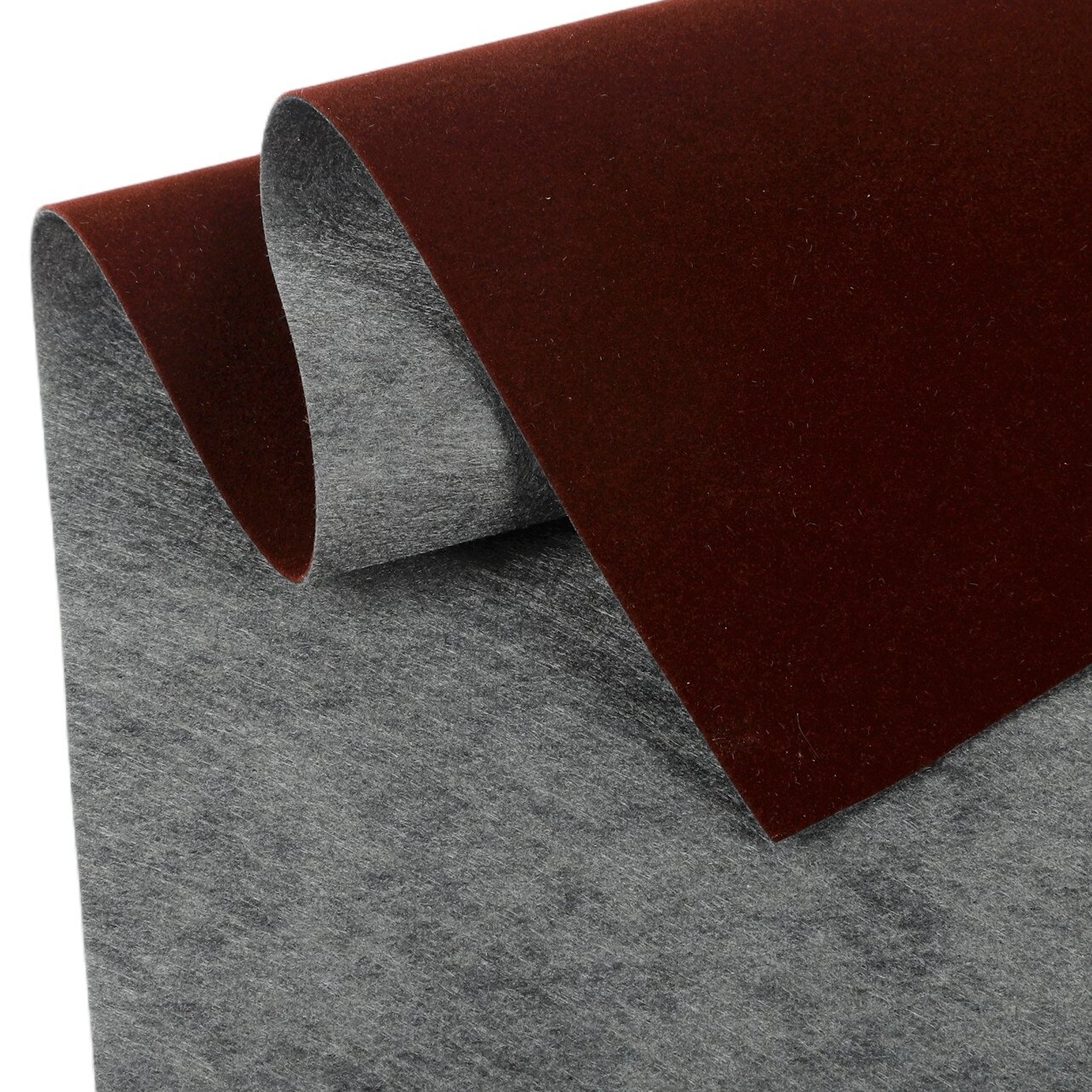
To eliminate fiber loss during prolonged use, Guangdong Shunde Mingqian Flocking Co., Ltd. implements a four-stage quality assurance protocol. Base fabrics undergo tension leveling before receiving a water-based acrylic coating. Fibers are embedded at 0.01-millimeter pile density precision, delivering over 100,000 abrasion cycles and satisfying the 3M tape 10-cycle peel test under FAMA standards. This substrate strength allows pairing with memory foam base layers to boost shock absorption by 40% in appliance and automotive components without sacrificing surface adhesion.
Preventing mold growth while maintaining compliance with EU REACH (test report CANEC26006555803) and RoHS 2.0 (test report CANEC26006555801) requires chemical purity. Instead of relying on organotin or heavy metal anti-mold additives, anti-mold performance is achieved by eliminating fungal growth conditions. Water-based acrylic adhesives omit phthalate plasticizers and organotin chemicals. Oven curing dries the fabric thoroughly, stripping out residual monomers (formic acid, acetic acid) and moisture, keeping formaldehyde levels below 75 ppm and preventing mold formation in sealed packaging or enclosed appliance housings.
Data/Solution Comparison
The operational and safety specifications of technical flame-retardant flocking fabric compared to standard flocking materials are highlighted in the following breakdown: 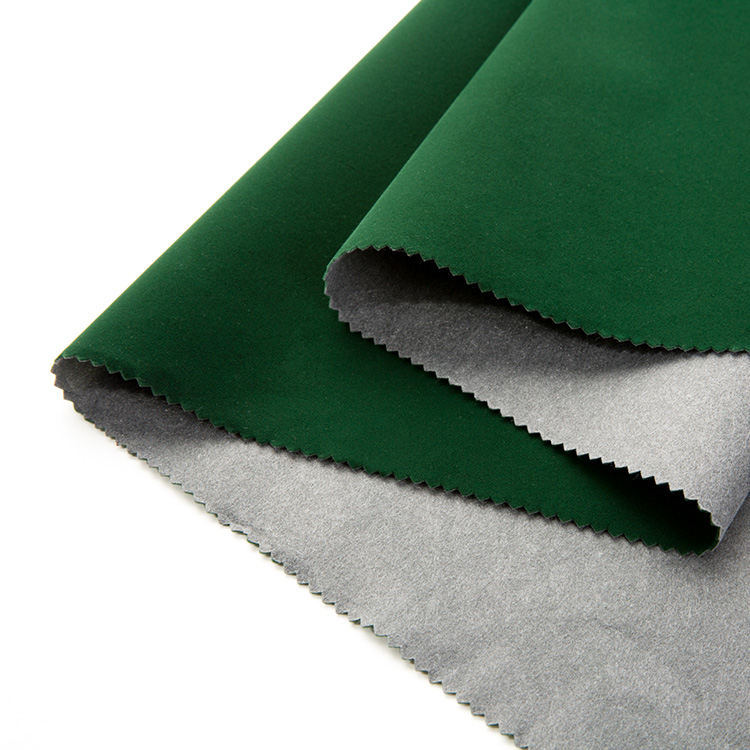
| Performance Parameter | Flame-Retardant Non-Shedding Flocking | Standard Decorative Flocking |
|---|---|---|
| Flame Retardancy Rating | UL94 V-0 (Self-extinguishing ≤ 10s, zero drips) | Non-rated / Flammable |
| Abrasion Resistance | > 100,000 cycles without fiber loss | 500 to 5,000 cycles |
| Pile Adhesion Test | 3M tape 10-cycle peel test passed (0 shedding) | 1 to 3 cycles standard |
| Anti-Mold & Chemical Safety | Organotin-free, low-VOC, heat-dried moisture control | Standard chemical anti-mold treatment |
| Regulatory Compliance | REACH SVHC 253, RoHS 2.0, PPWR, ISO 9001 | Basic regional standards |
Frequently Asked Questions (FAQ)
What flammability standards apply to technical flame-retardant flocking fabric?
Technical flame-retardant flocking fabric undergoes UL94 V-0 vertical burn testing. Samples must self-extinguish within 10 seconds without producing flaming drips, preventing fire spread across automotive door panels, sun visors, or air conditioner outlets.
How is non-shedding performance guaranteed during volume manufacturing?
Non-shedding quality is verified using 100,000-cycle Martindale abrasion tests and 3M tape 10-cycle peel tests under FAMA standards. Fiber pile density is controlled to 0.01-millimeter precision within a crosslinked water-based acrylic polymer matrix.
How does flocking fabric resist mold without toxic chemical additives?
Mold resistance relies on removing humidity and reactive chemical residues. Formulations utilize sulfur-free, organotin-free, water-based acrylic binders. Complete thermal drying removes moisture and volatile organic acids, rendering the fabric inhospitable to mold spores.
Final Conclusion & Recommendations
Selecting flame-retardant flocking fabric requires confirming UL94 V-0 ratings, 100,000-cycle abrasion limits, and organotin-free anti-mold processing. Employing water-based acrylic adhesive systems on nonwoven or knitted backings delivers reliable flame resistance, pile stability, and environmental compliance for automotive, home appliance, and electronics applications. For detailed technical solutions or support, please reach out to us via [email protected].
About Us
Guangdong Shunde Mingqian Flocking Co., Ltd. is a specialized flocking fabric manufacturer established in 2008 in Foshan City, Guangdong Province, China. Operating a 10,000-square-meter self-owned facility with over 100 employees, the company houses five automated electrostatic flocking lines and an in-house dyeing workshop yielding a monthly capacity of over 3 million yards. Certified under ISO 9001 and GRS (SGC-GRC01308-GRS-2026-05R3), the enterprise maintains compliance with EU REACH and RoHS 2.0 regulations, supplying industrial and packaging markets across Europe, North America, Southeast Asia, and South Asia. 
Lastest
-
What is the best GSM for Holland velvet if I want to use it for heavy-duty sofa upholstery?
2026-08-07 -
How do I choose between Holland velvet, suede, and corduroy for commercial sofas?
2026-08-07 -
How do I choose the right electrostatic flocking fabric density for automotive interiors?
2026-08-07 -
How do I choose the right GSM for packaging flocking fabric to avoid shedding?
2026-08-07 -
How do I choose the right density of gift box flocking lining to prevent shedding?
2026-08-07
SUBSCRIBE
INQUIRY