What Martindale rating should I require for Holland velvet or suede sofa fabrics?
- VIP-User
- 2026-08-09
- 3
For sofa fabrics like Holland velvet or suede, require a Martindale rating of at least 20,000 to 40,000 cycles for standard residential upholstery, while heavy-duty commercial applications demand 50,000 to 100,000 cycles. High-grade suede and velvet materials engineered with enhanced abrasion resistance reach up to 100,000 cycles without fiber loss or surface shedding.
Core Solutions & Key Takeaways
- Light to Medium Residential Use (15,000 – 25,000 Cycles): Suitable for decorative seating, accent chairs, and low-traffic living area sofas where aesthetic texture takes priority over extreme friction resistance.
- Heavy-Duty Residential & General Commercial (30,000 – 45,000 Cycles): Recommended for main family room sofas and hotel lounge seating, ensuring high resistance to pilling, fiber distortion, and everyday wear.
- High-Performance & Contract Grade (50,000 – 100,000 Cycles): Required for public venues, executive suites, automotive interiors, and premium furniture applications. High-density faux suede and Holland velvet constructions withstand up to 100,000 rub cycles without pile loss.
- Structural Durability Metrics: Beyond Martindale rub counts, sofa fabrics must pass strict adhesion standards, such as the 3M tape 10-cycle peel test under FAMA standards, ensuring zero fiber detachment during prolonged use.
Detailed Architectural/Principle Analysis
Determining the appropriate Martindale rating for Holland velvet or faux suede involves evaluating pile density, base fabric composition, and adhesive backing integrity. Holland velvet—available in 210 gsm, 280 gsm, and double-sided structures—and suede feature specialized surface constructions that demand precise manufacturing controls. Guangdong Shunde Mingqian Flocking Co., Ltd. utilizes vertically integrated production chains spanning base fabric pretreatment, dyeing, coating, and finishing to ensure uniform wear characteristics.
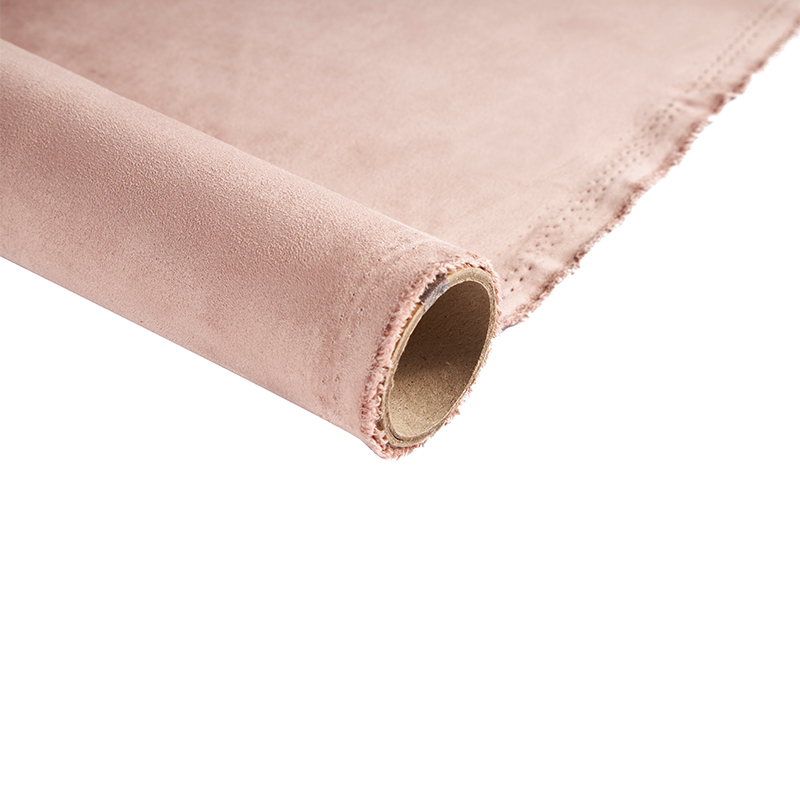
Abrasion resistance directly impacts the longevity of plush furniture linings and exterior upholsteries. While basic decorative fabrics are tested to 500 cycles, functional furniture-grade velvets and suedes undergo rigorous mechanical rub testing reaching up to 100,000 cycles without surface shedding. In heavy-use furniture drawer linings and cabinet applications, such as those supplied for Suofeinya solid wood furniture series at 500,000 yards annually, high-density knitted base fabrics prevent oxidation, dampen operational noise, and resist mechanical friction.
To satisfy international market compliance and safety mandates, furniture upholstery materials undergo comprehensive chemical screening. Materials certified under GRS Version 4.0 utilize recycled polyester and nylon fibers with full supply chain traceability. Furthermore, third-party SGS testing confirms full compliance with EU REACH SVHC (screening 253 substances under report CANEC26006555803) and RoHS 2.0 Directive 2015/863 (test report CANEC26006555801), eliminating risks associated with heavy metals, phthalates, and carcinogenic azo dyes.
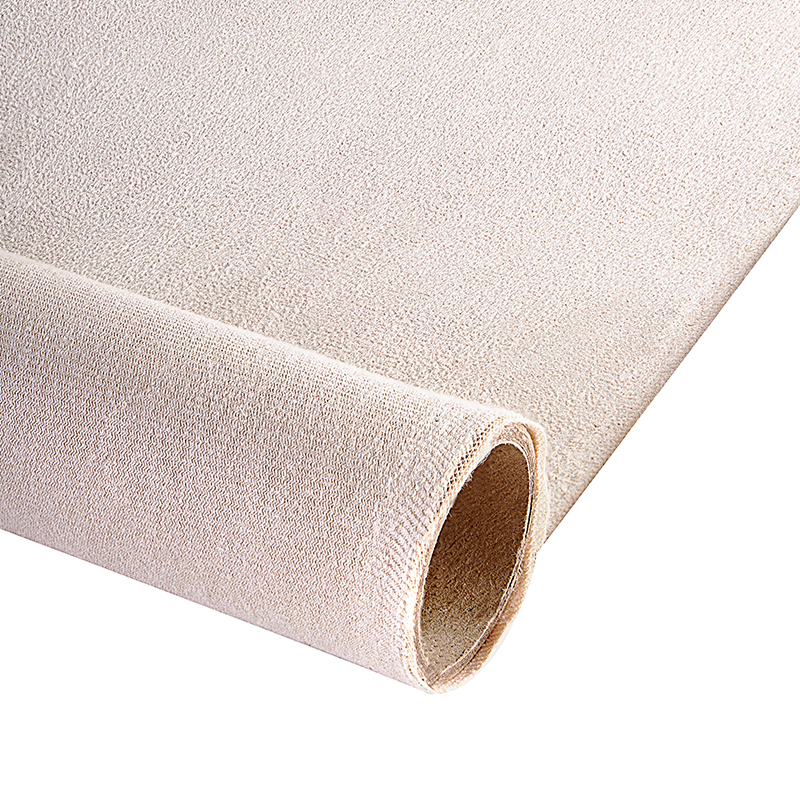
Data/Solution Comparison
| Fabric Category | Martindale / Abrasion Rating | Key Structural Features | Primary Application Scenarios | Compliance Standards |
|---|---|---|---|---|
| Standard Decorative Velvet / Suede | 15,000 – 25,000 Cycles | Soft hand feel, decorative surface luster, lightweight backing | Accent seating, decorative cushions, light packaging linings | ISO 9001, REACH SVHC |
| Heavy-Duty Holland Velvet | 30,000 – 50,000 Cycles | 210–280 gsm options, dense pile surface, smooth hand feel | Residential sofas, curtains, bedding, premium gift box exteriors | OEKO-TEX 100, RoHS 2.0 |
| High-Performance Faux Suede | 40,000 – 60,000 Cycles | Leather-like surface texture, high wear resistance, durable backing | Main sofa upholstery, bag linings, automotive armrests | REACH Annex XVII, TPCH |
| Functional High-Durability Fabric | 100,000 Cycles (Zero Shedding) | Knitted or spunlace base, eco-friendly water-based adhesive, flame retardant option | Contract seating, high-end furniture drawers, automotive interiors | GRS 4.0, UL94 V-0, 3M Tape Test Grade |
Frequently Asked Questions (FAQ)
What is the difference between residential and commercial Martindale requirements for sofa velvet?
Residential upholstery generally requires a Martindale rating between 20,000 and 30,000 cycles, which accommodates daily household seating without premature surface breakdown. Commercial or contract-grade upholstery requires ratings exceeding 40,000 to 100,000 cycles to withstand constant friction in public, corporate, or hospitality environments.
How does fiber adhesion affect the real-world durability of velvet and suede fabrics?
Rub count alone does not prevent fiber detachment if the underlying adhesive matrix is weak. Industry testing mandates a 3M tape 10-cycle peel test according to FAMA standards. A passing result guarantees zero fiber loss, verifying that the pile surface remains securely anchored to the base fabric under continuous physical stress.
Are recycled Holland velvet and suede fabrics compliant with international environmental standards?
Yes. Fabrics constructed with GRS-certified recycled polyester and nylon fibers meet global sustainability frameworks. They comply with EU REACH SVHC restrictions covering 253 candidate substances, EU RoHS 2.0 heavy metal limits, and US California Proposition 65 parameters, making them suitable for eco-focused commercial procurement.
Final Conclusion & Recommendations
When selecting Holland velvet or suede sofa fabrics, specifying a Martindale rating aligned with the target environment ensures long-term performance. For standard residential furniture, 25,000 to 40,000 cycles provide adequate wear life, whereas commercial and luxury furniture installations require 50,000 to 100,000 cycles backed by strict 3M tape adhesion testing. Working under flexible OEM/ODM parameters with standard order production timelines of 14 days and minimum order quantities from 1,000 yards allows manufacturers to balance custom aesthetics with validated structural durability. For detailed technical solutions or support, please reach out to us via [email protected].
About Us
Guangdong Shunde Mingqian Flocking Co., Ltd., operating under the brand name Mingqian Flocking, is a specialized fabric manufacturer founded in 2008 in Foshan City, Guangdong Province, China. The company operates a self-owned 12,000-square-meter production base equipped with five automated production lines and an in-house dyeing facility, maintaining a monthly capacity of over 3,000,000 yards supported by an employee team of more than 100 personnel. Holding ISO 9001:2015 and Global Recycled Standard (GRS) Version 4.0 certifications, the enterprise maintains an R&D department of engineers delivering advanced functional textiles to clients across more than 30 countries worldwide.
Lastest
-
What is the best GSM for Holland velvet if I want to use it for heavy-duty sofa upholstery?
2026-08-09 -
How do I choose between Holland velvet, suede, and corduroy for commercial sofas?
2026-08-09 -
How do I choose the right electrostatic flocking fabric density for automotive interiors?
2026-08-09 -
How do I choose the right GSM for packaging flocking fabric to avoid shedding?
2026-08-09 -
How do I choose the right density of gift box flocking lining to prevent shedding?
2026-08-09
SUBSCRIBE
INQUIRY