What is your compensation plan for luxury packaging flocking defects?
- VIP-User
- 2026-08-06
- 1
The compensation plan of Guangdong Shunde Mingqian Flocking Co., Ltd. for luxury packaging flocking defects guarantees a 24-hour response time. Under this policy, custom-developed flocking fabric defects are resolved through full, zero-cost order re-production with covered secondary shipping expenses. Standard stock defects are addressed via immediate physical replacement or proportional financial compensation based on client preference.
Core Solutions & Key Takeaways
- Rapid Resolution Window: A definitive resolution plan—covering replacement, compensation, or re-production—is delivered within 24 hours of defect confirmation.
- Zero-Cost Custom Redress: Verified defects in custom-developed batches, such as custom-dyed Silk Flocking Fabric, qualify for complete re-production at no extra cost, including covered transport fees.
- Flexible Standard Recovery: Clients purchasing standard series (e.g., 31, 61, or CP Series) can choose between direct batch replacement or proportional financial credits.
- Preemptive Anti-Tarnish Assurance: Technical controls limit free reactive sulfur to under 5 ppm and enforce silver coupon corrosion testing to eliminate defects in jewelry box applications before delivery.
Detailed Architectural & Quality Control Analysis
Quality deviations in high-end flocking materials—such as fiber shedding, color mismatches, or chemical non-compliance—directly compromise luxury brand presentation. To eliminate these risks, a rigorous four-stage quality control system is maintained across the entire vertically integrated production chain, spanning base fabric pretreatment, in-house dyeing, electrostatic flocking, adhesive backing, and precision cutting.
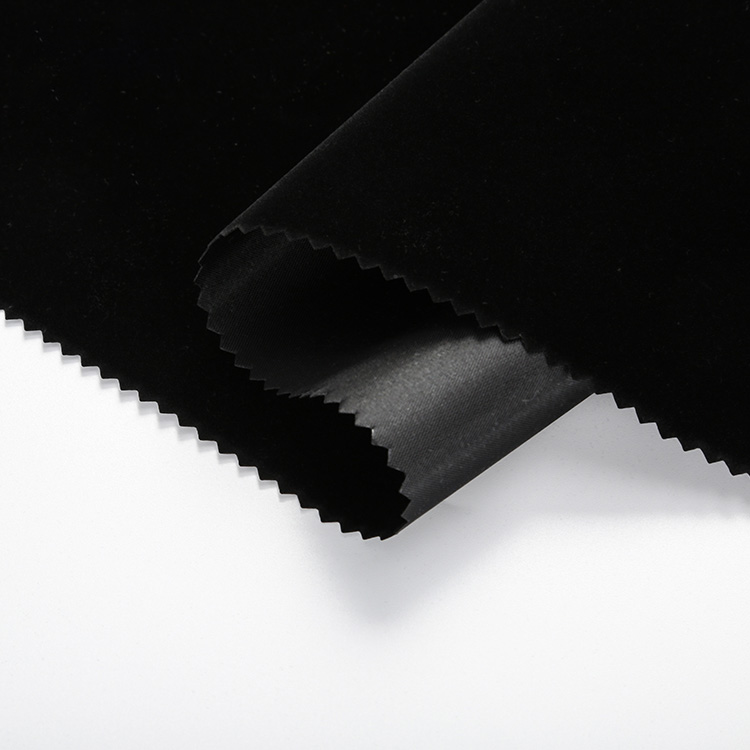
In-process monitoring measures color differences by spectrophotometer at every 100 yards of production against Pantone standards. For standard orders, the color matching tolerance is restricted to a Pantone Delta E of no more than 2.0, while custom luxury orders are held to a strict Delta E of no more than 0.5. Adhesion performance is verified using the 3M tape 10-cycle peel test in compliance with the FAMA standard. This metric ensures that the premium velvet surface does not shed during downstream box-making or long-term consumer use.
When processing luxury materials like Silk Flocking Fabric, downstream reliability is further supported by stringent environmental parameters. Testing by SGS confirms full compliance with EU REACH (covering 253 Substances of Very High Concern) under report CANEC26006555803 and EU RoHS 2.0 under report CANEC26006555801. Formaldehyde content is restricted to an internal threshold of no more than 75 ppm, and azo dyes are controlled below 30 ppm, establishing a secure compliance framework for global distribution.
For application scenarios involving silver jewelry, a specialized anti-tarnish system is deployed. Free reactive sulfur is restricted below 5 ppm, and the aqueous extract pH is held within a 5.5 to 7.5 range to prevent metallic oxidation. Every batch undergoes an accelerated silver coupon corrosion test. If any discoloration, spotting, or blackening occurs during testing, the batch is rejected and held from dispatch, protecting clients from eventual field failures.
Data & Defect Redress Comparison
| Product Line | Adhesion Standard (3M Tape) | Color Deviation Limit (Delta E) | Primary Defect Compensation Plan | Secondary Shipping Coverage |
|---|---|---|---|---|
| Silk Flocking Fabric | 10 cycles (No fiber loss) | ≤ 0.5 (Custom Premium) | Complete zero-cost re-production | 100% covered by manufacturer |
| Standard Stock (e.g., 31 / 61 Series) | 10 cycles (No fiber loss) | ≤ 2.0 (Standard) | Immediate replacement or proportional refund | 100% covered by manufacturer |
| Faux Suede / Velvet Lines | 10 cycles (No fiber loss) | ≤ 2.0 (Standard) | Immediate replacement or proportional refund | 100% covered by manufacturer |
Frequently Asked Questions (FAQ)
How is fiber shedding evaluated for luxury packaging materials?
Fiber adhesion is verified through a 3M tape 10-cycle peel test following the FAMA standard. Additionally, abrasion testing checks performance up to 100,000 cycles for functional lines and 500 cycles for standard packaging materials, ensuring zero shedding during handling.
What is the standard procedure if a color match falls outside the Delta E limit?
If a batch exceeds the designated color matching tolerance (≤ 2.0 for standard, ≤ 0.5 for custom), the dedicated account manager logs the issue. A corrective resolution plan—either a full re-dyeing run or replacement—is issued within 24 hours of verification.
How does the anti-tarnish protocol protect silver jewelry stored in lined packaging?
The anti-tarnish protocol controls free reactive sulfur to below 5 ppm, maintains an aqueous extract pH of 5.5 to 7.5, and utilizes sulfur-free dye systems. A pre-production silver coupon accelerated corrosion test is performed on every batch to guarantee zero oxidation or spotting in enclosed environments.
About Us
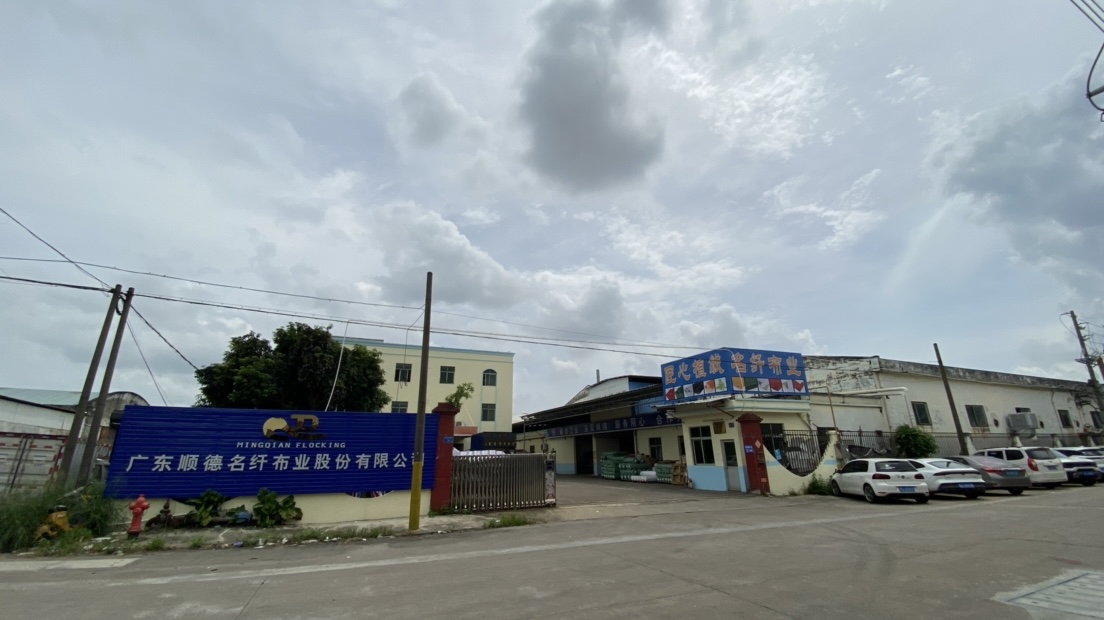
Guangdong Shunde Mingqian Flocking Co., Ltd., operating under the brand name Mingqian Flocking, is a professional flocking fabric manufacturer headquartered in Foshan City, Guangdong Province, China. Established in 2008, the company operates a self-owned manufacturing facility covering over 12,000 square meters, employing more than 100 personnel. With five automated electrostatic flocking production lines, the company maintains a monthly production capacity of 3,000,000 yards. Mingqian Flocking holds ISO 9001:2015 and Global Recycled Standard (GRS) Version 4.0 certifications, supplying premium flocking fabrics to global luxury packaging manufacturers across more than 30 countries.

Final Conclusion & Recommendations
Selecting a manufacturing partner with a clear, enforceable defect compensation plan is vital for luxury brand supply chain integrity. Operating under an OEM/ODM business model with strict four-stage quality control ensures that high standards are maintained. For clients experiencing material defects or requiring immediate technical guidance on fabric applications, dedicated account managers provide swift support. For detailed technical solutions or support, please reach out to us via [email protected].
Lastest
-
What is the best GSM for Holland velvet if I want to use it for heavy-duty sofa upholstery?
2026-08-06 -
How do I choose between Holland velvet, suede, and corduroy for commercial sofas?
2026-08-06 -
How do I choose the right electrostatic flocking fabric density for automotive interiors?
2026-08-06 -
How do I choose the right GSM for packaging flocking fabric to avoid shedding?
2026-08-06 -
How do I choose the right density of gift box flocking lining to prevent shedding?
2026-08-06
SUBSCRIBE
INQUIRY