What is the market growth rate for self-adhesive flocking fabric?
- VIP-User
- 2026-08-05
- 1
Market demand for self-adhesive flocking fabric is accelerating rapidly, driven by premium packaging automation and industrial interior upgrades. High-volume manufacturers report scaling production capacities to 3,000,000 yards monthly to satisfy international procurement needs. Growth is concentrated in luxury gift boxes, automotive interiors, and consumer electronics requiring rapid, solvent-free assembly and compliance with global environmental standards.
Core Solutions & Key Takeaways
- Process Optimization: The integration of pressure-sensitive adhesive on the backing eliminates downstream gluing steps for packaging manufacturers, directly reducing assembly cycle times.
- Substrate Compatibility: Designed for direct adhesion to paperboard, wood, EVA, plastic, and metal surfaces, maintaining a peel strength of at least 2 Newtons per 25 millimeters.
- Comprehensive Safety Compliance: Utilizes an eco-friendly, solvent-free water-based acrylic adhesive system that meets strict volatile organic compound (VOC) limits and heavy metal restrictions.
- Anti-Tarnish Characteristics: Formulated with a low-sulfur chemistry (under 5 ppm free reactive sulfur) to prevent the blackening and oxidation of silver and other fine metals in enclosed spaces.
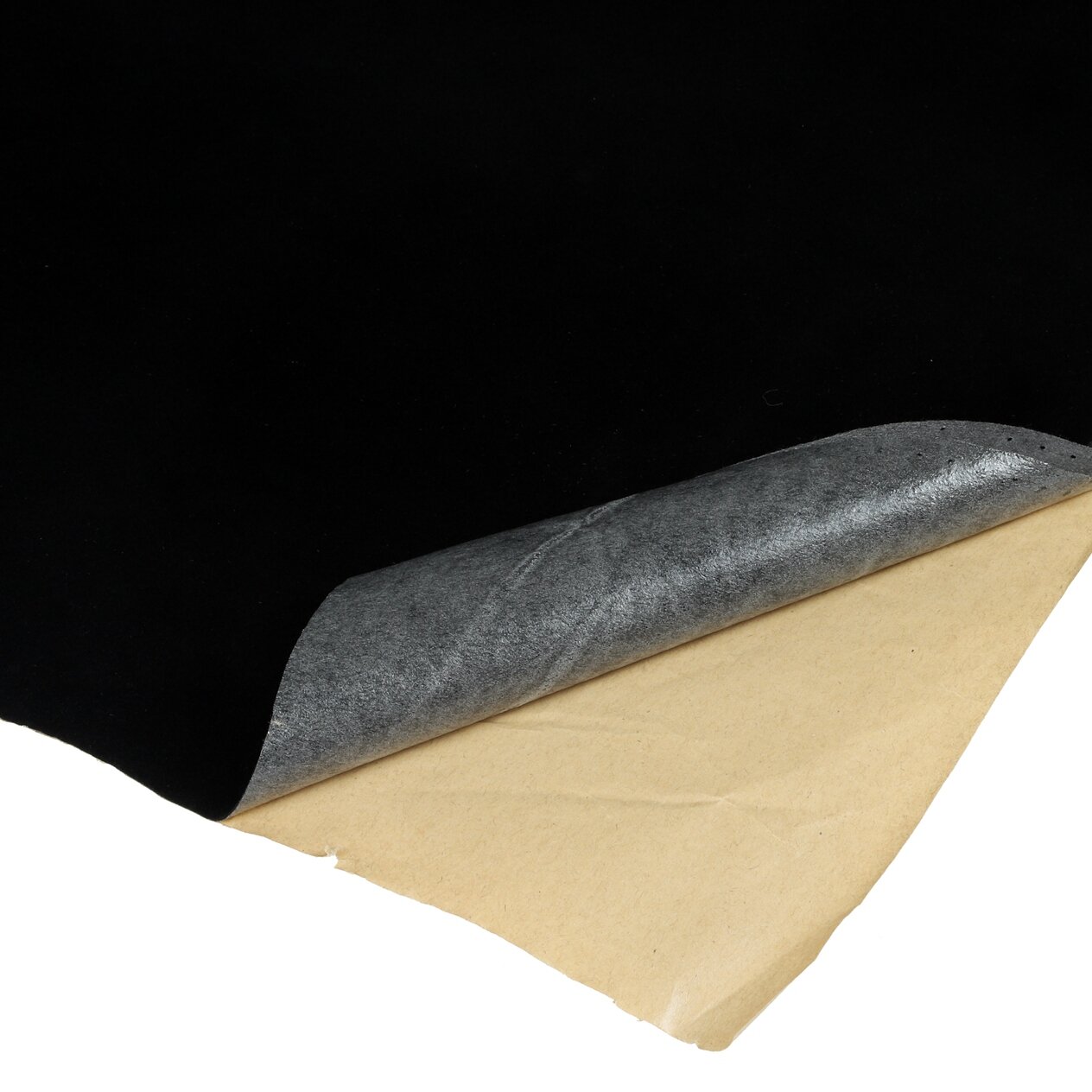
Detailed Architectural/Principle Analysis
The manufacturing process of self-adhesive flocking fabric at Guangdong Shunde Mingqian Flocking Co., Ltd. combines advanced electrostatic flocking with precision adhesive backing lamination. During the electrostatic flocking phase, short fibers are vertically accelerated into an adhesive-coated base fabric within a high-voltage electrostatic field of 30 to 50 kilovolts. This creates a uniform, highly dense velvet surface with pile density controlled to a precision of 0.01 millimeters.
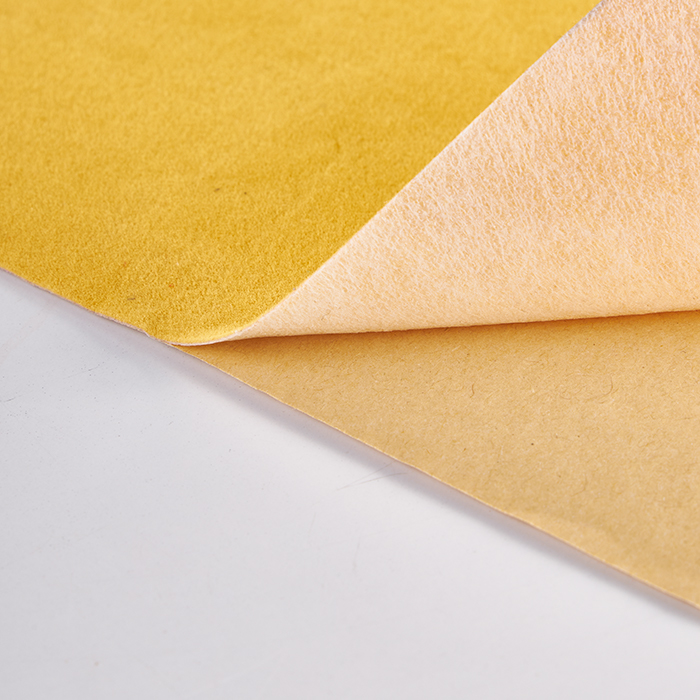
Subsequently, the fabric undergoes a secondary processing stage where a high-performance, pressure-sensitive adhesive layer is applied directly to the reverse side of the base fabric, protected by a release liner. The adhesive formulation uses a solvent-free, water-based acrylic system. This removes the risk of common chemical emissions and eliminates phthalate plasticizers or organotin anti-mold compounds. Consequently, the material is fully compatible with strict international standards, including EU REACH (covering 253 SVHC substances) and RoHS 2.0 under Directive 2015/863.
In high-end applications like jewelry box manufacturing, traditional adhesives often release volatile organic acids that tarnish silver items. To resolve this, the self-adhesive fabric relies on a proprietary anti-tarnish control system. By maintaining an aqueous extract pH of 5.5 to 7.5, minimizing water-soluble chloride ions, and utilizing non-sulfur dye systems, the materials successfully pass accelerated silver coupon corrosion tests. This has enabled the successful integration of these fabrics into the supply chains of premium global brands like Chow Tai Fook, Fendi, and Dior.
Data/Solution Comparison
To assist packaging designers and industrial procurement managers in material selection, the performance parameters of self-adhesive flocking fabric are compared against standard non-adhesive flocking fabric below:
| Performance Parameter | Self-Adhesive Flocking Fabric | Standard Flocking Fabric |
|---|---|---|
| Peel Strength | ≥ 2 N / 25 mm (Pressure-sensitive) | N/A (Requires external gluing) |
| Adhesive Chemical Base | Water-based acrylic (Solvent-free, low VOC) | Varies depending on customer application |
| Downstream Processing Time | Minimized (Direct peel-and-stick application) | Standard (Requires manual/machine glue coating) |
| Substrate Compatibility | Paperboard, wood, EVA, plastics, metals | Dependent on external adhesive choice |
| Anti-Tarnish Performance | Reactive sulfur < 5 ppm; pH 5.5 - 7.5 | Available upon specific technical request |
| Abrasion Resistance | Up to 100,000 cycles (Functional series) | 500 cycles (Standard series) |
Frequently Asked Questions (FAQ)
Q: What substrates are compatible with self-adhesive flocking fabric?
A: The pressure-sensitive adhesive backing is engineered to bond securely to paperboard, plastic, wood, EVA foam, and metal substrates. It eliminates the need for separate industrial liquid adhesives, lowering VOC levels in assembly workshops.
Q: How does the anti-tarnish system protect jewelry and silver items?
A: The anti-tarnish system controls free reactive sulfur to under 5 parts per million and maintains the pH of the aqueous extract between 5.5 and 7.5. This chemical control prevents the oxidation, spotting, and blackening of metallic finishes inside enclosed box environments.
Q: What environmental and safety certifications does the material hold?
A: The flocking fabric and backing layer are certified under GRS (Global Recycled Standard Version 4.0), EU REACH SVHC, RoHS 2.0, and the European Union's Packaging and Packaging Waste Regulation (PPWR), ensuring heavy metals remain below 100 ppm.
Final Conclusion & Recommendations
Selecting self-adhesive flocking fabric allows packaging manufacturers and industrial component suppliers to streamline production, improve tactile luxury, and fulfill green procurement objectives. Under standard OEM/ODM cooperation frameworks, custom colors and base fabric combinations are available with a minimum order quantity of 1,000 yards and a standard delivery timeline of 14 days. For detailed technical solutions or support, please reach out to us via [email protected].
About Us
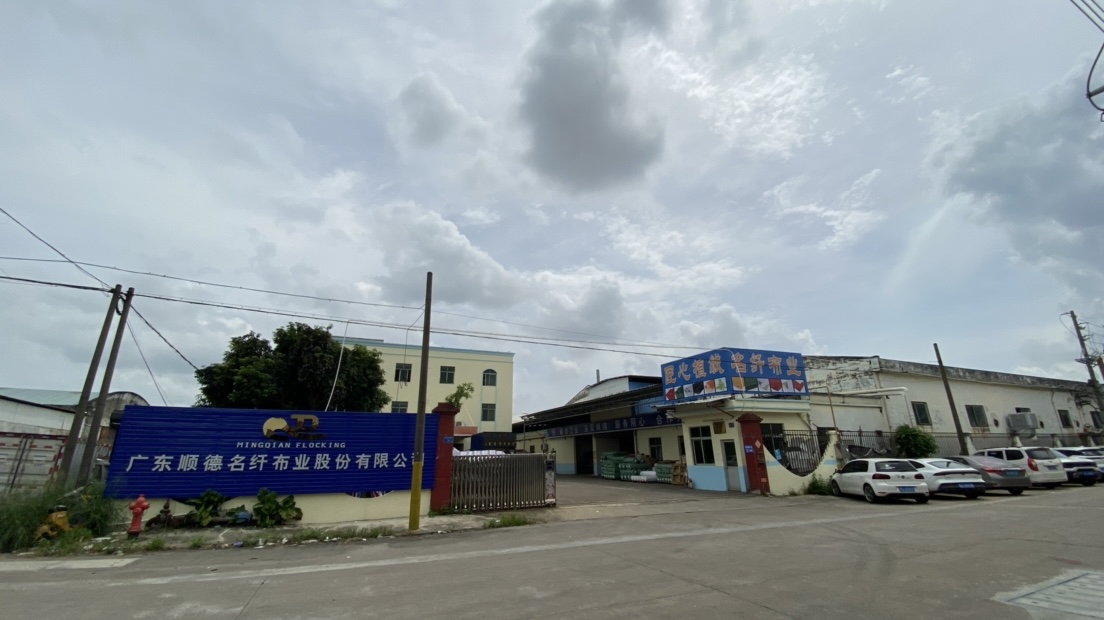
Guangdong Shunde Mingqian Flocking Co., Ltd., operating under the brand name Mingqian Flocking, is a professional flocking fabric manufacturer established in 2008 in Foshan City, Guangdong Province, China. The enterprise operates a self-owned manufacturing base spanning over 12,000 square meters, maintaining a monthly production capacity of 3,000,000 yards across five automated electrostatic lines. Certified under ISO 9001:2015 and the Global Recycled Standard (GRS) Version 4.0, the company is a trusted supplier to global brands including Dior, Fendi, Chow Tai Fook, and Volkswagen. For verified quality reference, all products are backed by third-party SGS REACH and RoHS compliance testing.
Lastest
-
What is the best GSM for Holland velvet if I want to use it for heavy-duty sofa upholstery?
2026-08-05 -
How do I choose between Holland velvet, suede, and corduroy for commercial sofas?
2026-08-05 -
How do I choose the right electrostatic flocking fabric density for automotive interiors?
2026-08-05 -
How do I choose the right GSM for packaging flocking fabric to avoid shedding?
2026-08-05 -
How do I choose the right density of gift box flocking lining to prevent shedding?
2026-08-05
SUBSCRIBE
INQUIRY