What is the best backing for packaging flocking fabric to prevent creasing in luxury boxes?
- VIP-User
- 2026-08-02
- 2
Spunlace base fabric is the best backing for packaging flocking fabric to prevent creasing in luxury boxes due to its high flexibility, softness, and smooth hand feel. This base conforms seamlessly to complex box contours without folding or wrinkling. For rigid structures, paper-mounted or self-adhesive backings provide stable, crease-free adhesion during box assembly.
Core Solutions & Key Takeaways
- Spunlace Backing for Curved Contours: Offers high flexibility and soft hand feel, making it the primary choice for luxury jewelry boxes and eyewear cases to prevent edge creasing.
- Self-Adhesive and Paper Lamination: In-house post-processing applies pressure-sensitive adhesive (peel strength ≥ 2 N/25mm) or paper board mounting to ensure flat, bubble-free adhesion.
- PS Flocking Sheet for Vacuum Forming: Incorporates a rigid polystyrene (PS) sheet base (0.2–1.0mm thickness) for specialized waterproof and structural industrial packaging.
- Anti-Tarnish Controls: Implements a strict anti-tarnish system (reactive sulfur < 5 ppm, pH 5.5–7.5) to protect silver jewelry inside premium display boxes.
Detailed Architectural/Principle Analysis
The resistance of flocking fabric to creasing depends directly on the structural composition of its base backing. Standard rigid backings often buckle under compression at sharp 90-degree corners, leading to visible surface wrinkles. By contrast, a spunlace base fabric utilizes a hydroentangled fiber web that yields high multi-directional elasticity. This structural behavior permits the material to stretch evenly around complex box inserts, maintaining a dense, uniform velvet surface without micro-folds.
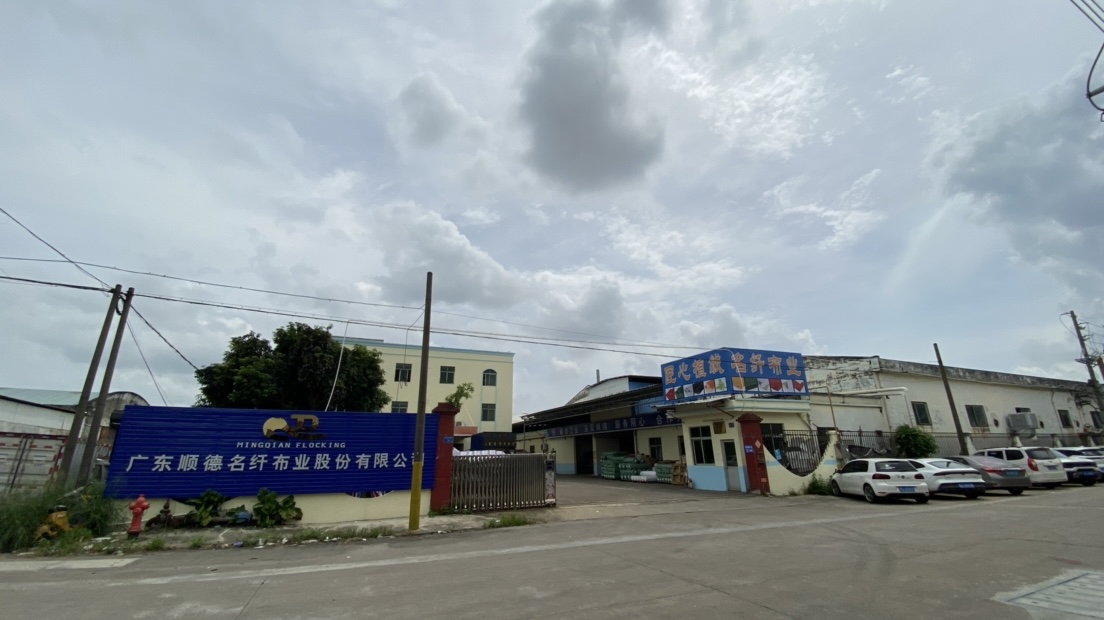
To ensure high quality control across these backings, Guangdong Shunde Mingqian Flocking Co., Ltd. utilizes a vertically integrated production model. Spanning base fabric pretreatment, in-house Pantone color matching (Delta E ≤ 2.0 for standard orders, Delta E ≤ 0.5 for custom orders), electrostatic flocking, adhesive coating, and precision slitting, the entire chain is managed in-house. This eliminates third-party variance that typically causes adhesive degradation and subsequent fabric bubbling.
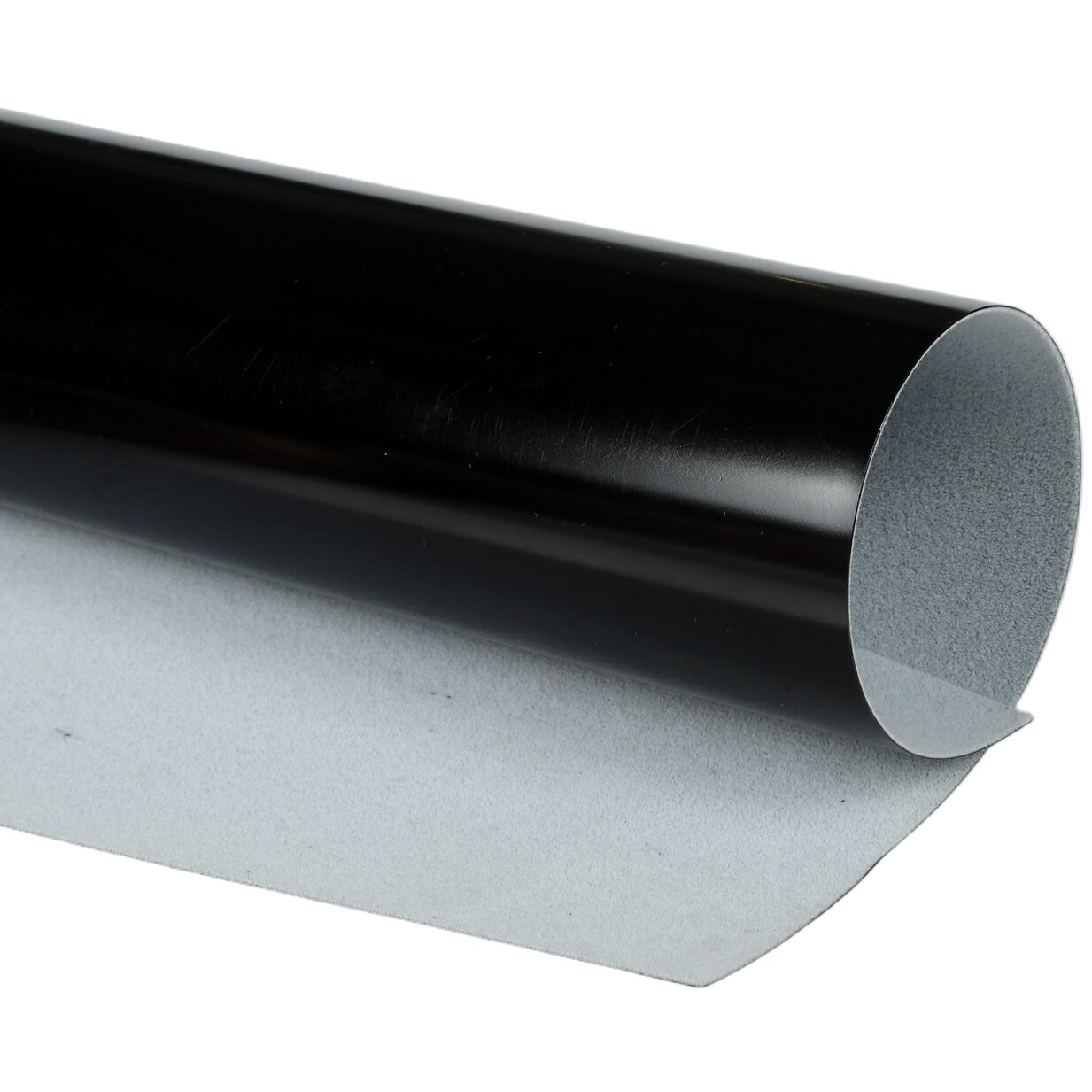
For applications demanding rigid structural integrity alongside water resistance, a PS Flocking Sheet provides a specialized alternative. Operating with a thickness between 0.2mm and 1.0mm and a width of 400mm to 800mm, these sheets are fully compatible with vacuum forming and hot pressing. This process molds the flocked layer directly into custom-shaped cavities, completely preventing creases in high-volume industrial packaging.
Real-world supply chains validate these backing selections. For instance, the long-term supply of spunlace-based medium-pile flocking fabric to Chow Tai Fook jewelry boxes since 2019 has resulted in a zero percent end-brand complaint rate. Similarly, Dior's limited-edition perfume boxes utilize a spunlace-based 0.3mm ultra-dense nylon pile that passes 100,000-cycle abrasion testing without shedding or folding. Both cases utilize water-based, solvent-free acrylic adhesives that comply with EU REACH SVHC (CANEC26006555803) and RoHS (CANEC26006555801) standards, ensuring safe, green packaging for global markets.
The manufacturing facility operates five automated electrostatic flocking production lines to achieve a monthly capacity of 3,000,000 yards, allowing rapid scale-up for custom production runs.
Data/Solution Comparison
The table below outlines the performance characteristics of various backing fabrics and materials used in premium gift and luxury box manufacturing:
| Backing/Base Type | Flexibility & Crease Resistance | Standard Applications | Key Features & Specifications |
|---|---|---|---|
| Spunlace Base | High | Luxury jewelry boxes, eyewear cases, high-end packaging | Soft, smooth hand feel, high multi-directional stretch |
| Cotton-Rayon Base | High | Premium gift boxes, drawstring pouches, apparel | Natural fiber, skin-friendly, eco-friendly |
| Nonwoven Base | Medium | General gift boxes, storage boxes, industrial packaging | Cost-effective, lightweight, highly breathable |
| PS Sheet Base | Rigid (Formed Shape) | Waterproof industrial packaging, custom inserts | Thickness 0.2–1.0mm, vacuum forming, hot pressing compatible |
| Knitted Base | High | Apparel decoration, automotive interiors, fabric pouches | Elasticity, soft texture, comfortable touch |
Frequently Asked Questions (FAQ)
How does the 3M tape test verify flocking durability in box interiors?
Adhesion quality is tested using a 3M tape 10-cycle peel test compliant with the FAMA standard. Achieving zero fiber loss under repeated tape peeling confirms that the pile will remain anchored to the backing and will not lift, crease, or shed during assembly and consumer usage.
What chemical restrictions apply to flocking backings used in jewelry packaging?
To prevent silver tarnish, the material must limit free reactive sulfur to below 5 ppm, regulate pH to a neutral range of 5.5 to 7.5, and eliminate water-soluble chloride ions. Formulations must use sulfur-free, halogen-free adhesives and non-sulfur dye systems to completely eliminate corrosion sources.
What custom cutting tolerances are supported for packaging flocking sheets?
In-house precision die-cutting equipment processes flocking sheets and fabrics to custom dimensions with a strict tolerance of plus or minus 0.1 millimeters. This precise sizing ensures tight edge alignment within luxury boxes, eliminating loose margins that could lead to fabric bubbling or creasing.
Final Conclusion & Recommendations
Selecting the optimal backing for packaging flocking fabric is highly important to ensure a flawless tactile presentation in luxury box designs. Spunlace backing is recommended for intricate, curved geometries due to its flexibility, while PS flocking sheets are best suited for thermoformed, waterproof structural inserts. Manufacturers should verify compliance with EU PPWR and REACH SVHC standards to prevent regulatory risks in international markets. Standard business cooperation is supported under OEM/ODM models with minimum order quantities of 1,000 yards for custom orders, and same-day dispatch for in-stock products.
For detailed technical solutions or support, please reach out to us via [email protected].
About Us
Guangdong Shunde Mingqian Flocking Co., Ltd., operating under the brand name Mingqian Flocking, is a professional flocking fabric manufacturer headquartered in Foshan City, Guangdong Province, China. Established in 2008, the company has dedicated 18 years exclusively to the research, development, production, and sales of high-quality flocking fabrics. The company operates a self-owned manufacturing facility of over 12,000 square meters with five automated electrostatic flocking production lines, delivering a monthly capacity of over 3,000,000 yards. Certified under ISO 9001:2015 and the Global Recycled Standard (GRS) Version 4.0, the enterprise serves globally recognized brands across luxury packaging, automotive, and consumer electronics sectors.

Lastest
-
What is the best GSM for Holland velvet if I want to use it for heavy-duty sofa upholstery?
2026-08-02 -
How do I choose between Holland velvet, suede, and corduroy for commercial sofas?
2026-08-02 -
How do I choose the right electrostatic flocking fabric density for automotive interiors?
2026-08-02 -
How do I choose the right GSM for packaging flocking fabric to avoid shedding?
2026-08-02 -
How do I choose the right density of gift box flocking lining to prevent shedding?
2026-08-02
SUBSCRIBE
INQUIRY