What GSM density should I select for self-adhesive flocking fabric lining?
- VIP-User
- 2026-08-07
- 1
Selecting the appropriate GSM density for self-adhesive flocking fabric lining depends on structural needs and substrate materials. Lightweight applications like rigid gift or eyewear boxes typically use nonwoven bases around 80 to 150 GSM, whereas luxury jewelry boxes, watch cases, and display trays require dense spunlace, knitted, or velvet backing ranging from 200 to 280 GSM. Ensure the backing utilizes a water-based acrylic pressure-sensitive adhesive achieving peel strength ≥ 2 N/25mm.
Core Solutions & Key Takeaways
- Base Fabric & Weight Alignment: Align fabric density with structural requirements—lightweight nonwoven bases (80–150 GSM) lower cost for general gift boxes, while spunlace, knitted, or Holland velvet bases (200–280 GSM) provide flexibility and tactile luxury for premium jewelry packaging.
- Pressure-Sensitive Adhesive Layer Integrity: Ensure the peel-and-stick layer uses an eco-friendly water-based acrylic system containing no plasticizers or solvents, maintaining a tested peel strength of ≥ 2 N/25mm.
- Precision Pile Height Matching: Select electrostatic fiber pile heights between 0.3 mm and 1.2 mm. Ultra-dense 0.3 mm nylon piles prevent lens and watch case scratches, whereas longer piles deliver high cushioning.
- Chemical Safety & Anti-Tarnish Controls: For enclosed jewelry linings, verify that free reactive sulfur remains below 5 ppm and aqueous extract pH is maintained between 5.5 and 7.5 to prevent silver blackening.
Detailed Architectural/Principle Analysis
Selecting the ideal density and gram weight (GSM) for self-adhesive flocking fabric requires balancing structural flexibility, pile surface density, and substrate bonding capabilities. The base fabric substrate forms the primary structural weight. Lightweight nonwoven base fabrics provide a breathable, cost-effective base suitable for standard gift boxes, stationery packaging, and industrial partitions. Spunlace base fabrics offer superior smoothness and multi-directional flexibility, allowing seamless wrapping over curved inserts, jewelry trays, and eyewear cases without creasing.
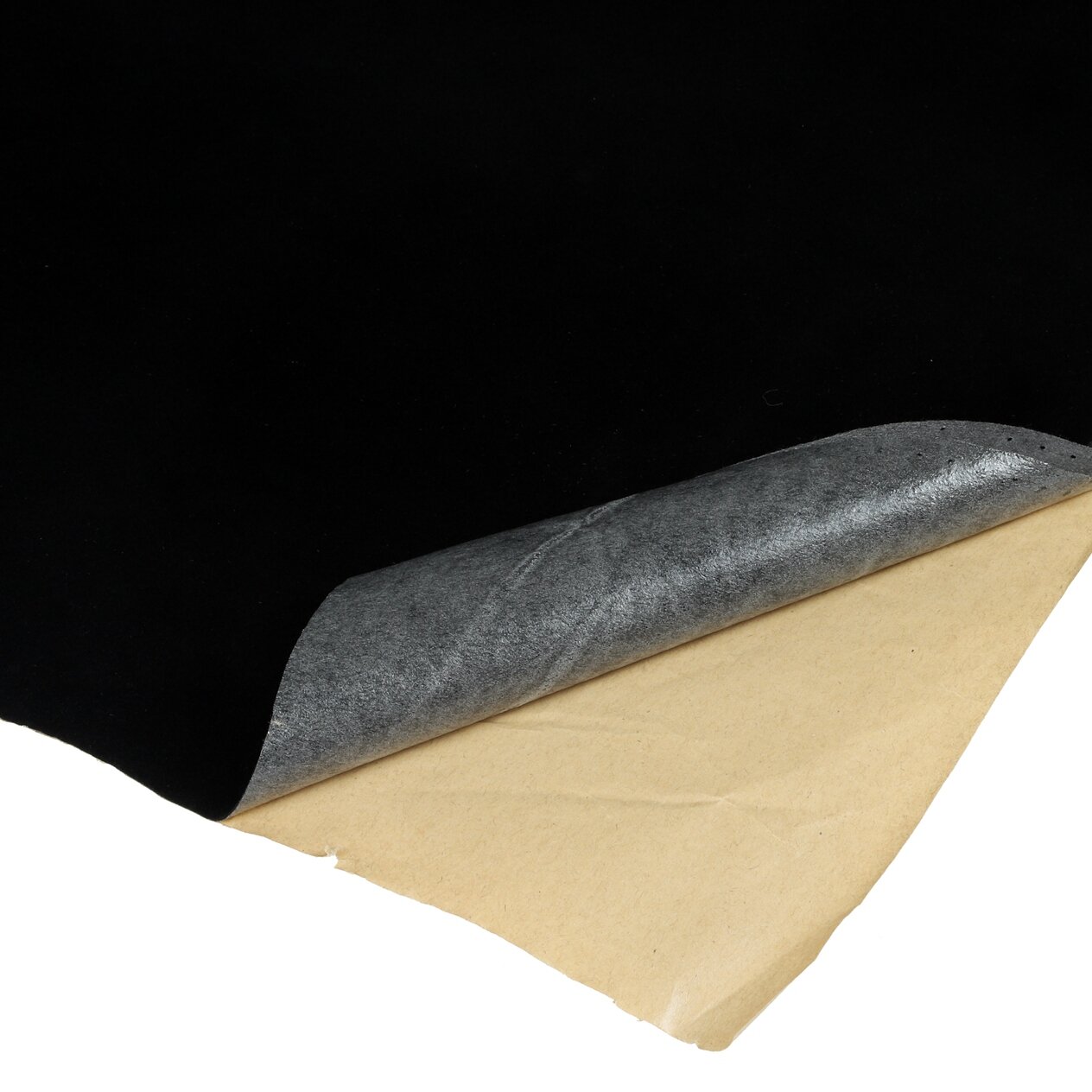
For high-end luxury packaging, heavier weight fabrics such as knitted backing or Holland Velvet (available in 210 GSM and 280 GSM constructions) deliver a rich, velvet touch and high structural resilience. Under high-voltage electrostatic fields of 30 to 50 kilovolts, short fibers are vertically embedded into the adhesive-coated base, achieving pile density controlled to a precision of 0.01 mm. The integrated self-adhesive backing features a pressure-sensitive acrylic system protected by a release liner, allowing direct mounting onto paperboard, wood, plastics, metal, and EVA foam substrates without external glue application.
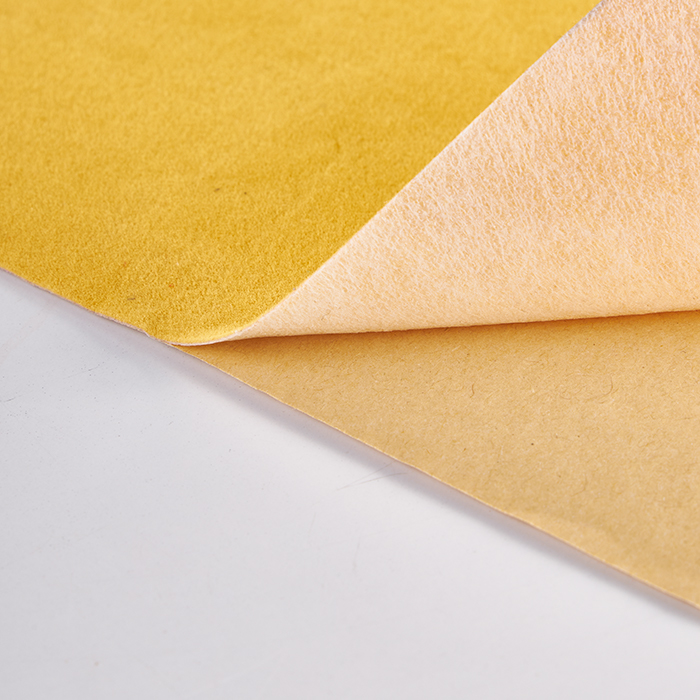
When applying flocking fabrics to enclosed environments such as luxury watch boxes or jewelry containers, chemical composition becomes as vital as physical density. Low-quality flocking adhesives can emit volatile organic acids or residual sulfur, causing rapid tarnish on silver, gold, and delicate watch components. Standardized quality protocols mandate that reactive sulfur remains under 5 ppm and aqueous extract pH is regulated between 5.5 and 7.5. Products must also pass 100,000-cycle abrasion testing and 3M tape 10-cycle peel testing in compliance with FAMA standards to guarantee zero fiber loss over long-term use.
Data/Solution Comparison
The table below summarizes base fabric specifications, typical GSM ranges, recommended pile characteristics, and substrate compatibility for self-adhesive flocking fabric linings:
| Base Fabric Type | Average Weight / Density | Pile Height Range | Target Substrates & Applications | Adhesive & Compliance Parameters |
|---|---|---|---|---|
| Nonwoven Base | 80 - 150 GSM | 0.3 mm - 0.6 mm | General gift packaging, storage boxes, industrial trays | Water-based acrylic, peel strength ≥ 2 N/25mm, REACH compliant |
| Spunlace Base | 150 - 220 GSM | 0.3 mm - 0.8 mm | Luxury jewelry boxes, eyewear cases, cosmetic packaging | Solvent-free, reactive sulfur < 5 ppm, pH 5.5–7.5, anti-tarnish |
| Knitted / Holland Velvet | 210 - 280 GSM | 0.5 mm - 1.2 mm | High-end watch display trays, liquor packaging pouches | Peel strength ≥ 2 N/25mm, 100,000-cycle abrasion resistance |
| Cotton-Rayon / Silk Base | 180 - 250 GSM | 0.3 mm - 0.5 mm | Premium jewelry pouches, luxury branding box liners | Zero phthalates, OEKO-TEX standard compliant, low VOC |
Frequently Asked Questions (FAQ)
How does self-adhesive backing affect the overall processing of packaging linings?
The pre-applied pressure-sensitive adhesive layer eliminates downstream manual glue spraying, accelerating assembly line production. With an eco-friendly water-based acrylic formulation, the fabric maintains constant peel adhesion (≥ 2 N/25mm) onto EVA, paperboard, and wood without bubbling or adhesive bleed-through.
What safety and chemical testing standards apply to flocking fabric linings exported to the EU and US?
Export-grade flocking fabrics comply with EU REACH regulations (screening 253 SVHC substances), RoHS 2.0 directive (Directive 2015/863), and EU Packaging and Packaging Waste Regulation (PPWR) limits. For the US market, fabrics conform to TPCH/CONEG heavy metal thresholds (≤ 100 ppm total for heavy metals) and California Proposition 65 requirements.
Can self-adhesive flocking fabrics undergo die-cutting or custom finishing processes?
Yes. Self-adhesive flocking fabrics support precision die-cutting to tolerances of ±0.1 mm, as well as post-processing treatments including hot pressing, gold stamping, silk-screen printing, embossing, and laser engraving positioning flocking.
Final Conclusion & Recommendations
Selecting the optimal GSM density for self-adhesive flocking lining requires matching structural demands with precise chemical safety. Nonwoven bases around 80–150 GSM fulfill functional and economic requirements for standard packaging, whereas spunlace, knitted, and velvet bases between 150 and 280 GSM deliver superior flexibility, scratch resistance, and tactile refinement for luxury jewelry, watch, and eyewear applications. Always verify that pressure-sensitive backing adhesives meet solvent-free acrylic standards with peel strength exceeding 2 N/25mm. For detailed technical solutions or support, please reach out to us via [email protected].
About Us
Guangdong Shunde Mingqian Flocking Co., Ltd. operates under the brand name Mingqian Flocking as a specialized flocking fabric manufacturer. Founded in 2008, the company operates a self-owned 12,000-square-meter manufacturing facility housing five automated electrostatic flocking lines and employing over 100 skilled workers, achieving a monthly production capacity of 3,000,000 yards. The enterprise holds ISO 9001:2015 certification and Global Recycled Standard (GRS Version 4.0) certification, with products verified through third-party SGS testing for REACH and RoHS compliance. The company regularly serves global clients across luxury packaging, automotive, electronics, and home appliance sectors.

Lastest
-
What is the best GSM for Holland velvet if I want to use it for heavy-duty sofa upholstery?
2026-08-07 -
How do I choose between Holland velvet, suede, and corduroy for commercial sofas?
2026-08-07 -
How do I choose the right electrostatic flocking fabric density for automotive interiors?
2026-08-07 -
How do I choose the right GSM for packaging flocking fabric to avoid shedding?
2026-08-07 -
How do I choose the right density of gift box flocking lining to prevent shedding?
2026-08-07
SUBSCRIBE
INQUIRY