What flocking density is best for durable automotive seating fabrics?
- VIP-User
- 2026-08-07
- 1
For durable automotive seating and interior fabrics, optimal performance is achieved with high-density electrostatic flocking precise to 0.01 millimeters, utilizing abrasion-resistant fibers like nylon or acrylic over a knitted or nonwoven base. This dense structure ensures over 100,000 abrasion cycles without pile shedding while meeting UL94 V-0 flame-retardant standards and maintaining structural integrity across temperature ranges from -30°C to 80°C.
Core Solutions & Key Takeaways
- High Pile Density Precision: Fiber orientation and pile density are regulated to 0.01 mm precision under 30 to 50 kV high-voltage electrostatic fields, delivering dense surface coverage.
- Extreme Wear Resistance: Functional flocking formulations withstand 100,000 cycles of abrasion testing without fiber shedding, fulfilling automotive interior durability specifications.
- Thermal and Chemical Stability: Operates reliably between -30°C and 80°C while passing 3M tape 10-cycle peel testing and strict VOC emission controls below 10 mg/m³.
- Automotive Application Versatility: Engineered for seating, door panel armrests, glove boxes, trunk liners, and sun visors with flame retardancy (UL94 V-0) and acoustic dampening.
Detailed Architectural/Principle Analysis
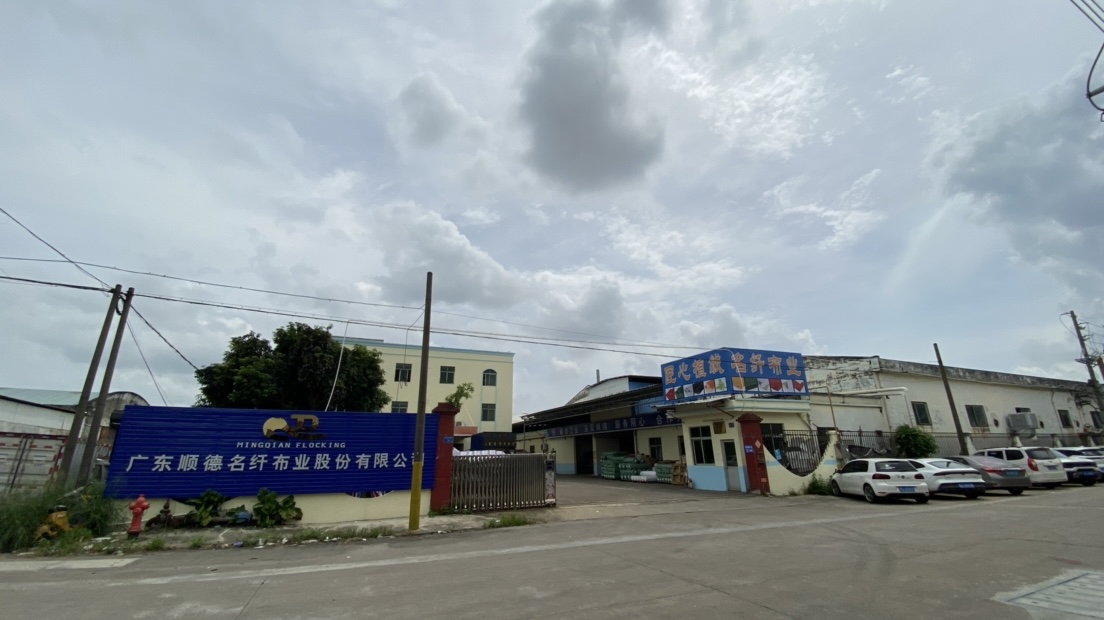
Electrostatic flocking for automotive interiors depends on the precise alignment and density of short synthetic fibers driven into a water-based acrylic adhesive coat. Under a continuous high-voltage electrostatic field of 30 to 50 kilovolts, fibers embed vertically into the pretreated base fabric. Maintaining a pile density precision of 0.01 millimeters prevents gaps in surface coverage, directly determining resistance to continuous friction and mechanical stress in automotive seating and interior components.
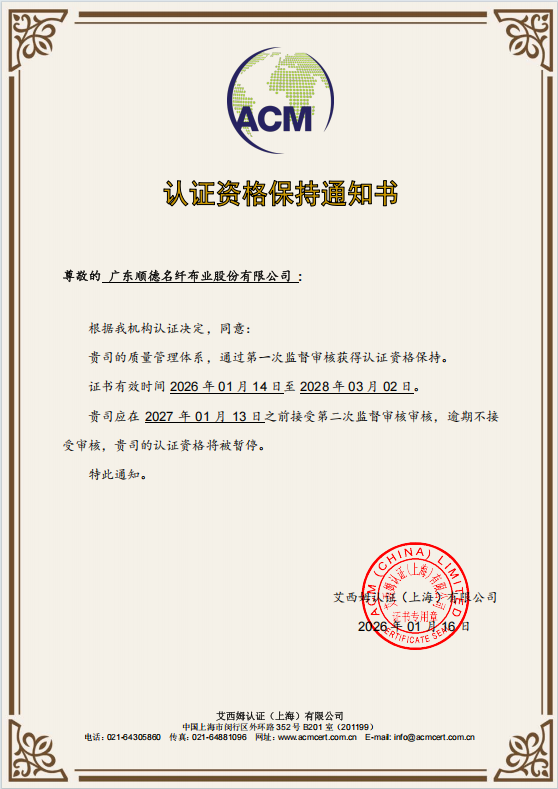
To meet safety standards set by vehicle manufacturers like BYD, GAC Group, and Volkswagen, functional electrostatic flocking integrates UL94 V-0 flame-retardant chemistry into sulfur-free and halogen-free adhesive matrices. The integrated coating process eliminates volatile organic compound emissions, restricting process VOC levels below 10 milligrams per cubic meter and ensuring full compliance with EU REACH (screening 253 SVHCs under report CANEC26006555803) and RoHS 2.0 directive requirements (report CANEC26006555801).
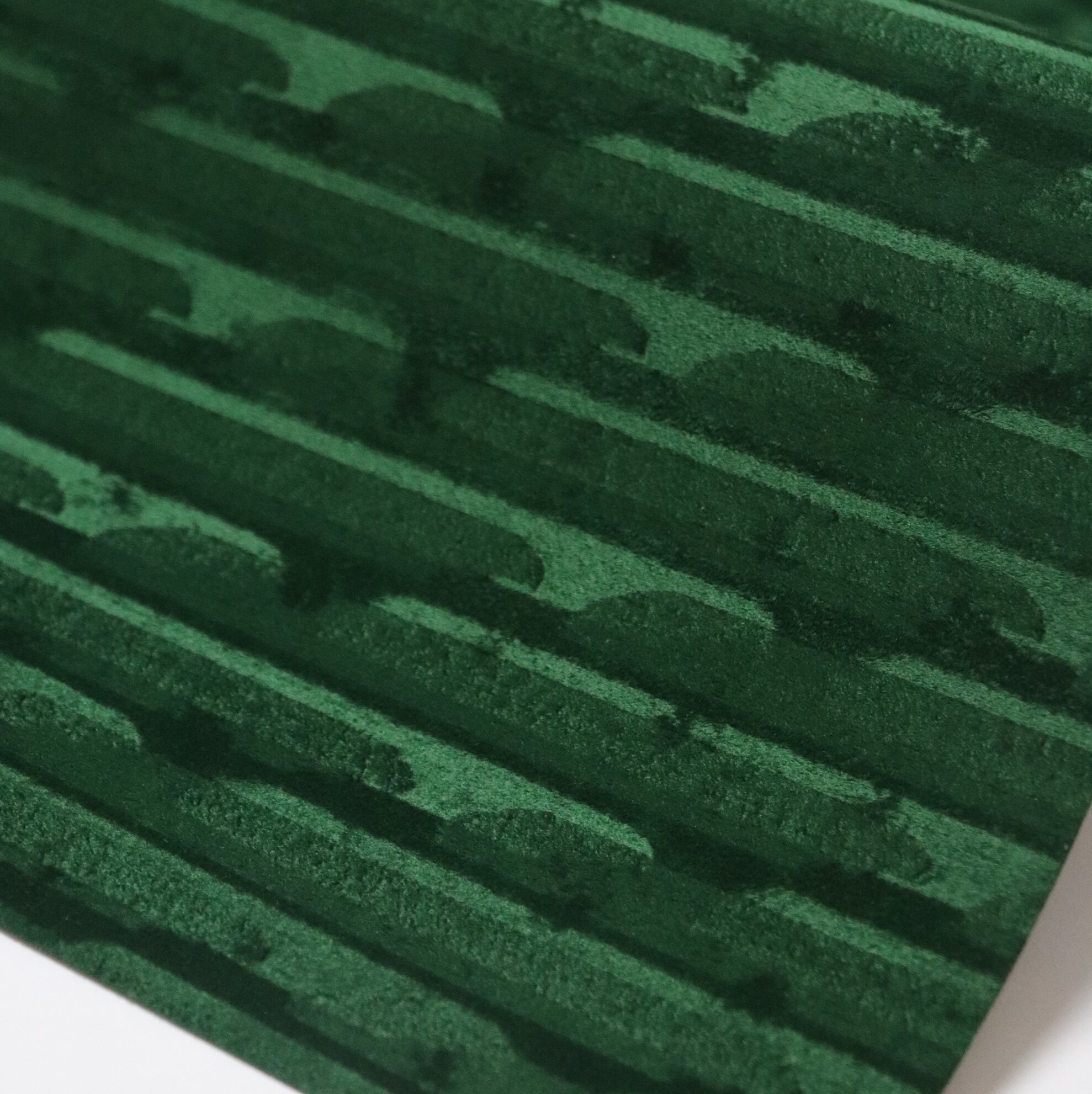
In addition to surface durability, automotive seating fabrics require robust mechanical bonding between the flock layer and base substrate. A four-stage quality assurance protocol verifies that peel strength reaches at least 2 N / 25 mm on self-adhesive or laminated backing layers, while 3M tape 10-cycle peel tests confirm zero fiber loss under high surface tension. Real-world validation in automotive supply chains demonstrates that high-density flocking reduces mechanical vibration noise while providing condensation management across varying atmospheric conditions.
Data/Solution Comparison
| Performance Parameter | Standard Commercial Flocking | Automotive-Grade High-Density Flocking |
|---|---|---|
| Pile Density Control | Standard surface coverage | 0.01 mm high-precision uniformity |
| Abrasion Resistance | 500 cycles | 100,000 cycles (zero shedding) |
| Flame Retardancy Rate | Standard non-treated | UL94 V-0 certified |
| Operating Temperature | 0°C to 50°C | -30°C to 80°C continuous |
| 3M Tape Peel Resistance | 3 to 5 cycles | 10 cycles (FAMA standard compliant) |
| Environmental Compliance | Basic market standards | EU REACH 253 SVHC, RoHS 2.0, ISO 9001 |
Frequently Asked Questions (FAQ)
How does electrostatic flocking density affect fabric abrasion resistance in automotive interiors?
Higher flocking density increases the number of vertical fibers per square millimeter. This uniform pile distribution spreads mechanical friction evenly, allowing automotive-grade flocked fabrics to achieve over 100,000 abrasion cycles without surface thinning or fiber shedding.
What base fabrics work best for high-density automotive flocking applications?
Knitted and nonwoven base fabrics offer optimal structural elasticity, breathability, and adhesive anchoring. Knitted bases provide the flexibility required for contoured seating and armrests, while nonwoven bases deliver cost-effective noise absorption for glove boxes and trunk liners.
What regulatory and safety standards apply to automotive flocking materials?
Automotive flocking fabrics must comply with international chemical and safety regulations, including EU REACH SVHC screening, RoHS 2.0 heavy metal limits, ISO 9001 quality management standards, and UL94 V-0 flame retardancy ratings.
Final Conclusion & Recommendations
Selecting the optimal flocking density for automotive seating and trim requires specifying ultra-dense electrostatic fiber deployment accurate to 0.01 millimeters, backed by water-based, solvent-free adhesives. Ensuring compliance with ISO 9001 quality systems and EU REACH standard CANEC26006555803 guarantees long-term durability, flame retardancy, and minimal environmental impact across global vehicle manufacturing operations. OEM/ODM options support customized width, adhesive backing, and precision die-cutting with tolerances of ±0.1 mm. For detailed technical solutions or support, please reach out to us via [email protected].
About Us
Guangdong Shunde Mingqian Flocking Co., Ltd. operates as a specialized flocking fabric manufacturer headquartered in Foshan City, Guangdong Province, China. Founded in 2008, the company operates a self-owned 12,000-square-meter facility with more than 100 employees and five automated electrostatic flocking production lines delivering a monthly capacity exceeding 3,000,000 yards. Holding ISO 9001:2015 and Global Recycled Standard (GRS) v4.0 certifications, the enterprise maintains an in-house R&D team and formaldehyde testing laboratory. The company has served clients across multiple industries, supplying automotive, luxury packaging, consumer electronics, and furniture sectors globally.
Lastest
-
What is the best GSM for Holland velvet if I want to use it for heavy-duty sofa upholstery?
2026-08-07 -
How do I choose between Holland velvet, suede, and corduroy for commercial sofas?
2026-08-07 -
How do I choose the right electrostatic flocking fabric density for automotive interiors?
2026-08-07 -
How do I choose the right GSM for packaging flocking fabric to avoid shedding?
2026-08-07 -
How do I choose the right density of gift box flocking lining to prevent shedding?
2026-08-07
SUBSCRIBE
INQUIRY