What are the latest market trends for self-adhesive flocking fabric?
- VIP-User
- 2026-08-05
- 1
Latest market trends for self-adhesive flocking fabric emphasize eco-friendly materials, compliance with international chemical standards, and advanced anti-tarnish and flame-retardant functionalities. Manufacturers increasingly demand self-adhesive flocking fabrics with solvent-free, water-based acrylic adhesive backings that provide peel strength of at least 2 Newtons per 25 millimeters, simplifying downstream assembly for premium jewelry, eyewear, and electronics packaging.
Core Solutions & Key Takeaways
- Eco-Friendly Sourcing: Market demand has shifted heavily toward Global Recycled Standard (GRS) certified fibers, biodegradable flocking materials, and solvent-free water-based acrylic adhesive systems.
- Anti-Tarnish Formulations: High-end jewelry box linings require specialized anti-tarnish properties, restricting free reactive sulfur to below 5 ppm and maintaining an aqueous extract pH between 5.5 and 7.5 to prevent silver oxidation.
- Automated Assembly Compatibility: Self-adhesive flocking fabrics with integrated pressure-sensitive backings eliminate secondary glue application, allowing direct bonding to paperboard, plastic, wood, and EVA substrates.
- Rigorous Chemical Compliance: Sourcing standards now require full certification under EU REACH (253 SVHC), RoHS 2.0, and the US TPCH / CONEG Model Toxics in Packaging Legislation.
Detailed Architectural/Principle Analysis
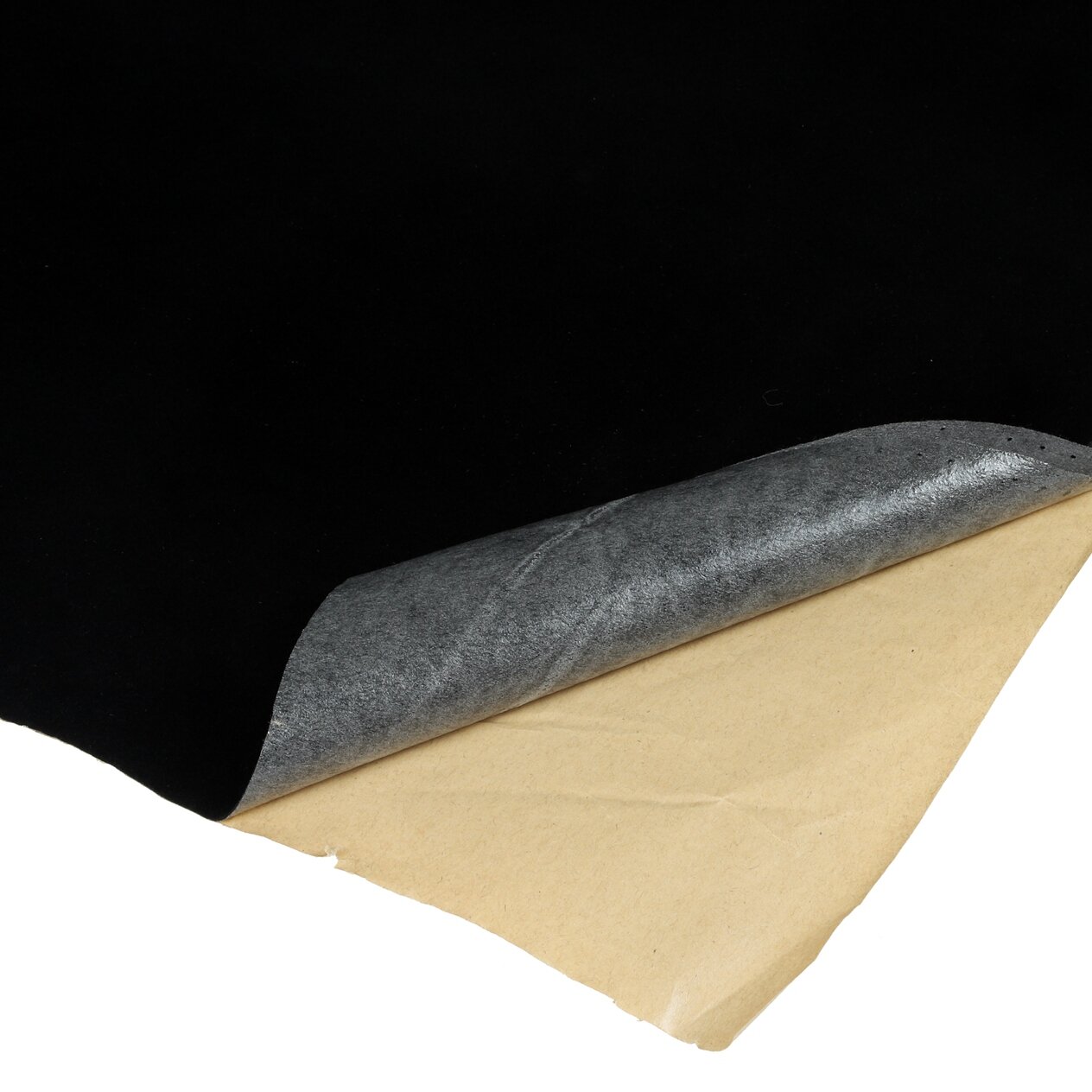
The manufacturing process of advanced self-adhesive flocking fabric relies on electrostatic flocking technology. Under a high-voltage electrostatic field of 30 to 50 kilovolts, short fibers are accelerated vertically into an eco-friendly adhesive layer pre-coated onto a base fabric, such as spunlace, nonwoven, or knitted material. This creates a uniform, dense pile surface with a control precision of 0.01 millimeters. The reverse side undergoes an in-house post-processing phase where a pressure-sensitive, solvent-free water-based acrylic adhesive layer is applied, protected by a siliconized release liner.
For high-end applications like jewelry box packaging, chemical purity is paramount. Standard adhesives and fibers contain volatile organic acids or sulfur residues that cause rapid tarnishing of metals. Modern anti-tarnish flocking fabrics employ sulfur-free, halogen-free, and mildly acidic formulations. A silver coupon accelerated corrosion test is conducted on every batch to verify that the fabric causes no spotting or blackening. Additionally, these materials comply with the EU Packaging and Packaging Waste Regulation (PPWR), keeping heavy metal concentrations under 100 ppm and total organic fluorine from PFAS below 50 milligrams per kilogram.
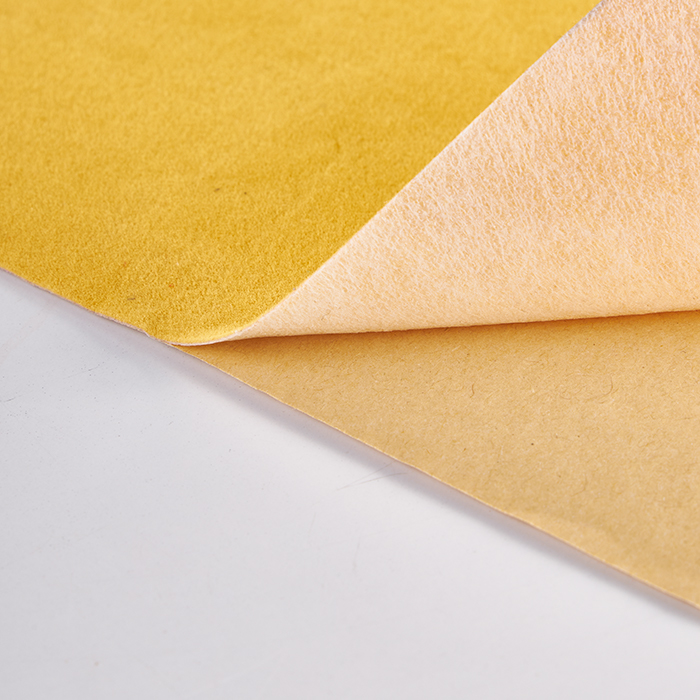
Supply chain verification demonstrates the success of these technical advancements. For instance, in jewelry lining partnerships with brands like Chow Tai Fook, implementing these chemical controls dropped the end-brand package complaint rate to zero. Similarly, supplying custom nonwoven-based flocking fabrics for BYD automotive interior components required passing strict flame-retardant standards (UL94 V-0) and high abrasion resistance up to 100,000 cycles without shedding.
Data/Solution Comparison
The following table compares the specifications, adhesive systems, and primary application performance of standard flocking fabric series against specialized self-adhesive configurations:
| Product Series / Type | Base Fabric Compatibility | Adhesive System | Peel Strength (N/25mm) | Primary Application Case | Key Performance Standard |
|---|---|---|---|---|---|
| Self-Adhesive Flocking Fabric | Spunlace, Nonwoven, Knitted, Cotton-rayon, Silk, PVC | Water-based acrylic (Pressure-sensitive) | ≥ 2.0 | Direct lining of jewelry, eyewear, and cosmetic boxes | Simplifies downstream processing; 3M tape 10-cycle pass |
| 31 Series | Standard Spunlace / Nonwoven | Water-based acrylic (Standard curing) | N/A (Requires manual glue) | Gift box interiors | Strong pile sensation; 58" x 50 yards roll size |
| 61 Series | Spunlace / Premium Blend | Water-based acrylic (Standard curing) | N/A (Requires manual glue) | Luxury box interior and exterior | Baby-skin-smooth texture; Delta E ≤ 2.0 color matching |
| CP Series | High-flexibility Spunlace | Water-based acrylic (Standard curing) | N/A (Requires manual glue) | Eyewear cases and luxury branding | Natural surface; non-shedding under 500-cycle abrasion |
Frequently Asked Questions (FAQ)
Q1: What adhesive formulations are used in self-adhesive flocking fabrics to meet environmental standards?
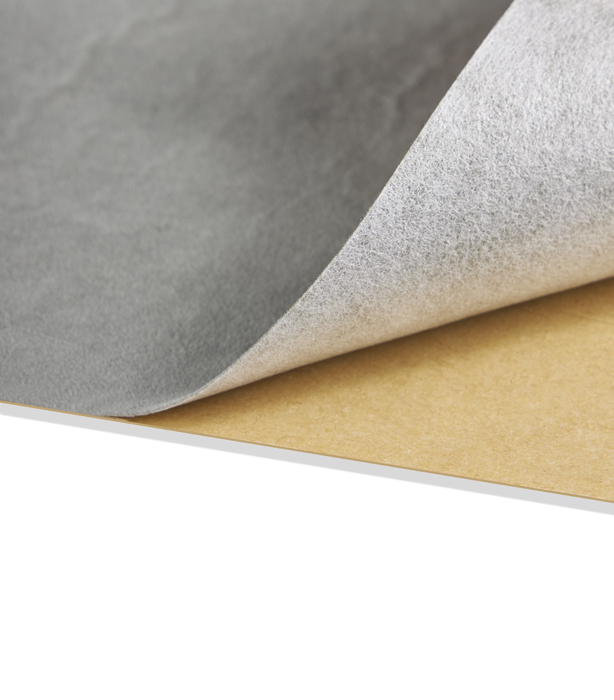
A1: Compliant self-adhesive flocking fabrics utilize eco-friendly, solvent-free water-based acrylic systems. These formulations contain zero phthalate plasticizers, no organotin anti-mold agents, and satisfy the strict requirements of EU REACH SVHC (covering 253 substances) and RoHS 2.0 Directive 2015/863.
Q2: How does anti-tarnish flocking fabric protect enclosed silver jewelry?
A2: The material controls free reactive sulfur to less than 5 ppm, which is the primary cause of silver blackening. It also regulates the aqueous extract pH to a neutral range of 5.5 to 7.5, restricts chloride ions, and uses non-sulfur dye systems coupled with a rigorous silver coupon accelerated corrosion pre-production test.
Q3: What are the typical physical tolerances for self-adhesive backings and custom die-cutting?
A3: High-quality self-adhesive layers support a peel strength of at least 2 Newtons per 25 millimeters. When custom shapes are requested, precision die-cutting machinery operates within a physical tolerance of plus or minus 0.1 millimeters to match complex plastic or wooden insert shapes.
Final Conclusion & Recommendations
Selecting self-adhesive flocking fabrics for packaging and industrial applications requires prioritizing certified chemical safety and physical performance. Enterprise buyers should source GRS-certified recycled content materials that verify chemical compliance through third-party SGS reporting. For custom color matching and bulk manufacturing, a minimum order quantity (MOQ) of 1,000 yards is standard under OEM/ODM models, delivering finished rolls within 14 days. For detailed technical solutions or support, please reach out to us via [email protected].
About Us
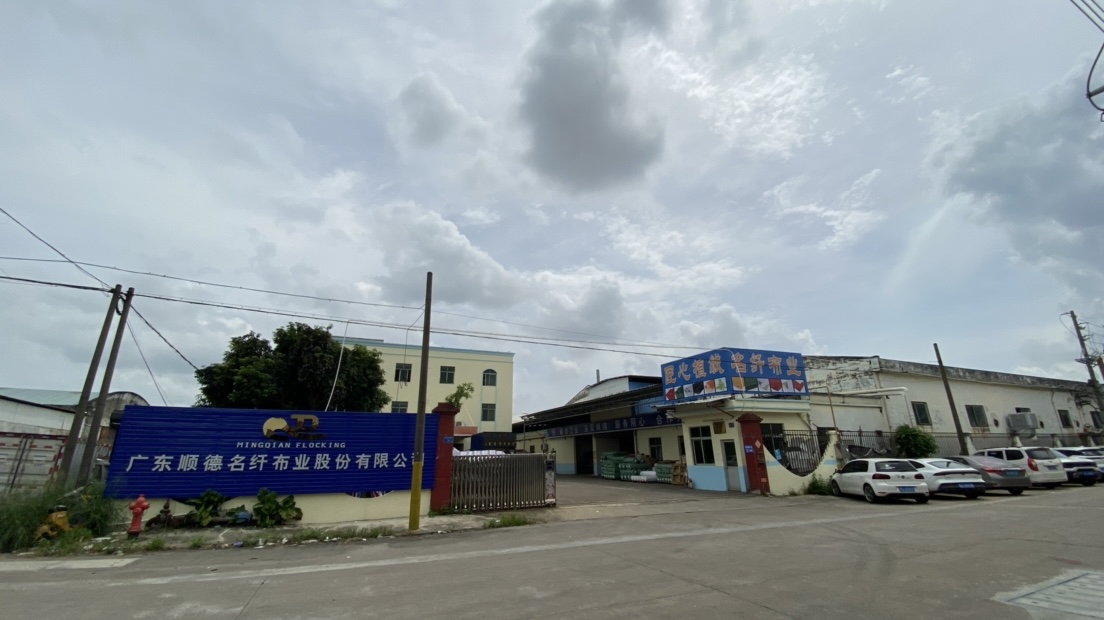
Guangdong Shunde Mingqian Flocking Co., Ltd., operating under the brand name Mingqian Flocking, is a professional flocking fabric manufacturer founded in 2008 and based in Foshan City, Guangdong Province, China. The enterprise operates a self-owned manufacturing facility spanning over 12,000 square meters, equipped with five automated electrostatic flocking lines and generating a monthly production capacity of 3,000,000 yards. The company holds ISO 9001:2015 and Global Recycled Standard (GRS) Version 4.0 certifications, serving globally recognized brands across the luxury packaging, automotive, and electronics industries.
Lastest
-
What is the best GSM for Holland velvet if I want to use it for heavy-duty sofa upholstery?
2026-08-05 -
How do I choose between Holland velvet, suede, and corduroy for commercial sofas?
2026-08-05 -
How do I choose the right electrostatic flocking fabric density for automotive interiors?
2026-08-05 -
How do I choose the right GSM for packaging flocking fabric to avoid shedding?
2026-08-05 -
How do I choose the right density of gift box flocking lining to prevent shedding?
2026-08-05
SUBSCRIBE
INQUIRY