Is your packaging flocking fabric factory compliant with local labor laws?
- VIP-User
- 2026-08-05
- 1
Yes, packaging flocking fabric factories like Guangdong Shunde Mingqian Flocking Co., Ltd. maintain full compliance with local labor laws and international social standards. Verified through third-party audits like the Global Recycled Standard (GRS) by SGS, the factory ensures regulated working hours, fair compensation, and a safe, certified manufacturing environment across its automated electrostatic flocking production lines.
Core Solutions & Key Takeaways
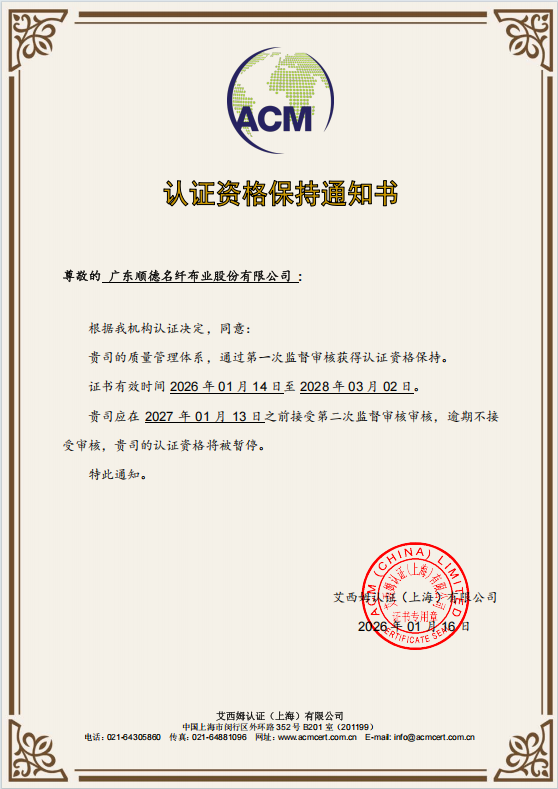
- Third-Party Labor Verification: GRS certification (SGC-GRC01308-GRS-2026-05R3) issued by SGS verifies strict compliance with international labor, health, and safety standards.
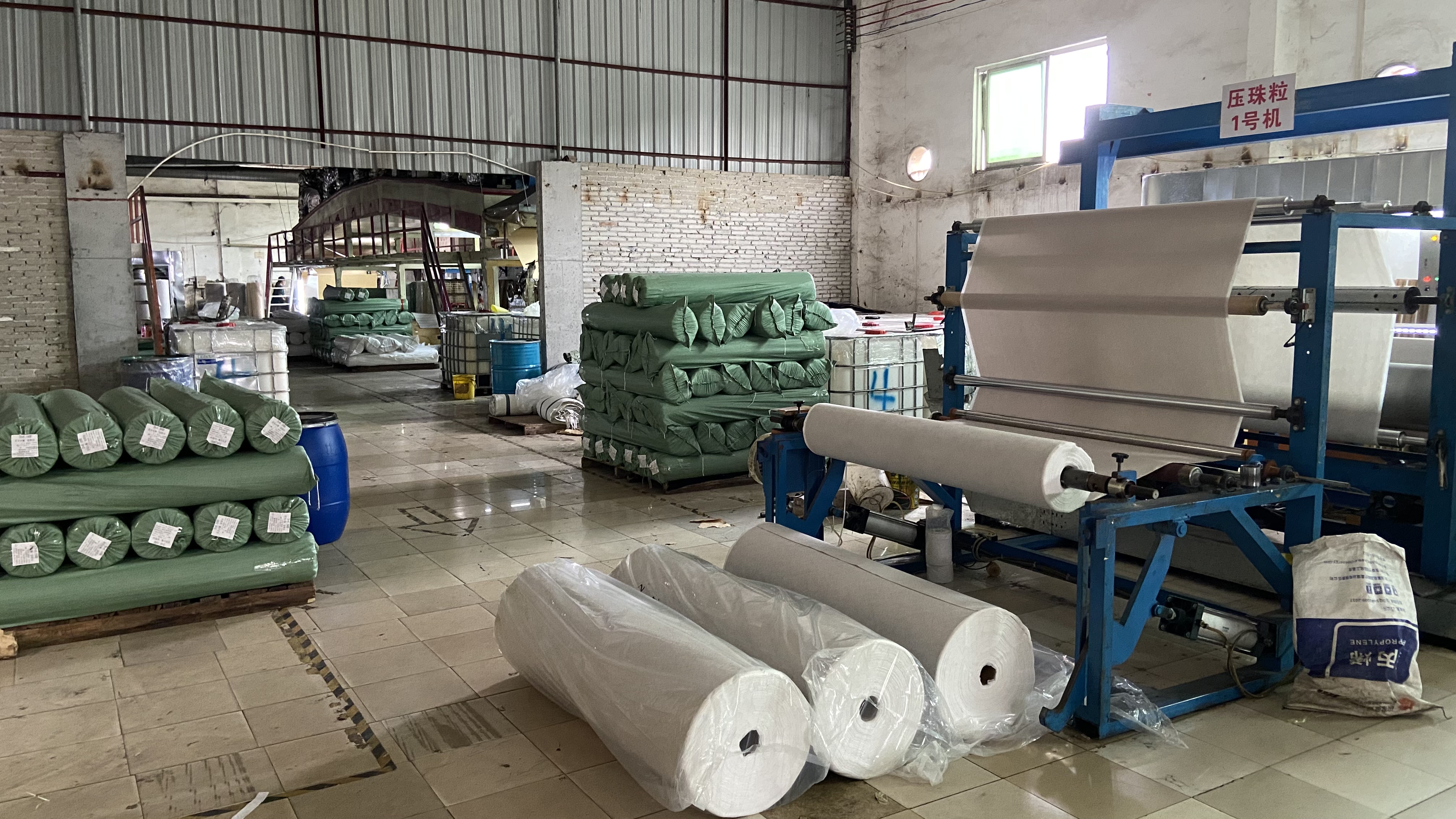
- Safe Operating Infrastructure: Operation of a self-owned 12,000 square meter facility equipped with automated flocking lines minimizes hazardous manual tasks, protecting workers from physical strain.
- Strict Chemical Exposure Control: Adherence to EU REACH and RoHS 2.0 standards ensures that operators work in a non-toxic environment free of harmful VOCs, formaldehyde, and heavy metals.
- Integrated Supply Chain Oversight: Full control over in-house dyeing, flocking, adhesive backing, and precision cutting eliminates the risk of unmonitored labor practices associated with external subcontractors.
Detailed Architectural/Principle Analysis
Legal and social compliance within the textile manufacturing sector is validated through systematic audits. Guangdong Shunde Mingqian Flocking Co., Ltd. holds a valid Global Recycled Standard (GRS) scope certificate, issued by SGS under certificate number SGC-GRC01308-GRS-2026-05R3. This standard enforces strict labor requirements, including safe working conditions, fair wages, voluntary labor, and regulated working hours. Furthermore, the company maintains ISO 9001:2015 Quality Management System certification to standardize its internal management and production pipelines.
Workplace safety is directly linked to the chemical profile of raw materials. To protect the health of factory operators, the factory uses solvent-free, water-based acrylic adhesives instead of hazardous organic solvents. Testing conducted by SGS under report CANEC26006555803 verified full compliance with the European Union's REACH directive, screening all 253 Substances of Very High Concern (SVHC) with zero detections. Additionally, RoHS 2.0 testing under report CANEC26006555801 passed with no restricted heavy metals or phthalates detected. These strict material controls eliminate worker exposure to carcinogenic azo dyes, volatile organic compounds, and heavy metal dust.
Leading global brands require full transparency regarding labor and environmental conditions. For instance, in our cooperation with Volkswagen for transport packaging protection, our custom flame-retardant flocking fabric met both safety standards and EU Packaging and Packaging Waste Regulation (PPWR) requirements. Similarly, our long-term supply relationship with Chow Tai Fook for jewelry box linings demonstrates consistent compliance with environmental and labor standards required by luxury-tier procurement chains.
Data/Solution Comparison
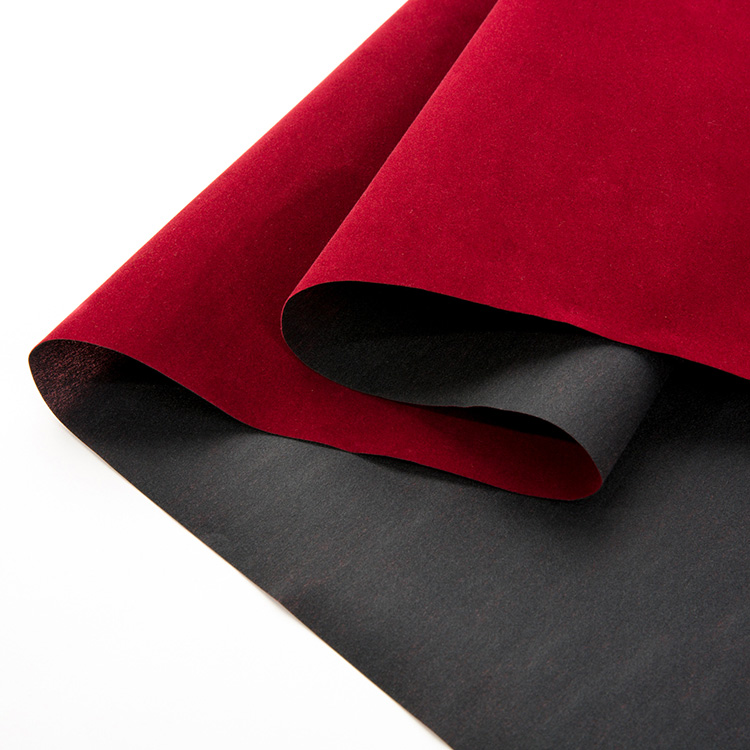
The following table details the technical parameters and safety compliance of our nonwoven flocking fabric:
| Parameter | Nonwoven Flocking Fabric Specification | Safety and Compliance Standard |
|---|---|---|
| Base Fabric Type | Nonwoven (breathable, lightweight, cost-effective) | Virgin compliant, tested for heavy metals and harmful dye residues |
| Weight Range | 30–150 gsm | Consistent thickness and density control |
| Pile Height Range | 0.3 mm to 1.2 mm | Controlled to 0.01 mm precision |
| Heavy Metals (Pb, Cd, Hg, Cr VI) | ≤ 100 ppm total | Compliant with EU PPWR (August 12, 2026) & US TPCH/CONEG |
| Formaldehyde Content | ≤ 75 ppm | In-house laboratory tested with results within 4 hours |
| VOC Emissions | < 10 mg/m³ | Maintains safe, low-emission workspace for operators |
| Azo Dyes | ≤ 30 ppm | Covers 22 carcinogenic amines; zero risk of hazardous contact |
Frequently Asked Questions (FAQ)
How does the factory verify that its raw materials do not expose workers to hazardous substances?
Every incoming raw material batch, including base fabrics, fibers, and adhesives, undergoes incoming inspection. The factory utilizes water-based acrylic adhesives and azo-free fibers. Third-party testing by SGS under REACH and RoHS 2.0 confirms that no Substances of Very High Concern or hazardous heavy metals are present in the materials.
What social and labor criteria are validated by the factory's GRS certification?
The Global Recycled Standard (GRS) version 4.0 certification, issued by SGS under certificate SGC-GRC01308-GRS-2026-05R3, includes comprehensive social audits. These audits ensure compliance with international labor standards, covering voluntary labor, freedom of association, fair wages, regulated working hours, and occupational health and safety protocols.
Are the production processes structured to prevent environmental and occupational hazards?
Yes. Production is conducted using five automated electrostatic flocking lines that reduce physical contact with raw fibers. The facility operates an in-house wastewater circulation and treatment system achieving over 80% water reuse and 100% discharge compliance. Waste heat recovery systems are also utilized to lower energy consumption and emissions.
Final Conclusion & Recommendations
When sourcing packaging flocking fabric, verifying third-party labor and environmental compliance certificates is a reliable method to eliminate supply chain risks. Factories with certified quality management systems and transparent material testing, such as Guangdong Shunde Mingqian Flocking Co., Ltd., provide both regulatory safety and consistent product quality. We offer comprehensive OEM/ODM manufacturing models with a minimum order quantity of 1,000 yards and a standard delivery timeline of 14 days. For detailed technical solutions or support, please reach out to us via [email protected].
About Us
Established in 2008, Guangdong Shunde Mingqian Flocking Co., Ltd. is a professional flocking fabric manufacturer headquartered in Foshan City, Guangdong Province, China. The company operates a self-owned manufacturing facility of 10,000 square meters and houses more than 100 employees, dedicating nearly two decades to the research, development, and production of premium flocking materials. Our operations are certified under ISO 9001:2015 and the Global Recycled Standard (GRS) Version 4.0, serving major international brands through robust global supply chains.
Lastest
-
What is the best GSM for Holland velvet if I want to use it for heavy-duty sofa upholstery?
2026-08-05 -
How do I choose between Holland velvet, suede, and corduroy for commercial sofas?
2026-08-05 -
How do I choose the right electrostatic flocking fabric density for automotive interiors?
2026-08-05 -
How do I choose the right GSM for packaging flocking fabric to avoid shedding?
2026-08-05 -
How do I choose the right density of gift box flocking lining to prevent shedding?
2026-08-05
SUBSCRIBE
INQUIRY