Is packaging flocking fabric safe for indirect contact with food?
- VIP-User
- 2026-08-05
- 1
Packaging flocking fabric manufactured under strict chemical compliance standards is safe for indirect contact with food applications, such as premium tea and liquor gift boxes. High-quality flocking fabrics meet rigorous EU REACH, RoHS 2.0, and PPWR regulations, limiting heavy metals, formaldehyde, and volatile organic compounds to ensure no chemical migration occurs into outer product barriers.
Core Solutions & Key Takeaways
- Compliance-Backed Safety: Certified materials comply with the European Union's Packaging and Packaging Waste Regulation (PPWR) and US TPCH/CONEG, maintaining heavy metals below 100 ppm and utilizing zero intentional PFAS additions.
- Eco-Friendly Adhesive Systems: Sourcing utilizes water-based acrylic adhesive formulations that are solvent-free, containing no phthalate plasticizers or organotin anti-mold agents.
- Zero Fiber Migration: High-performance fabrics pass the 3M tape 10-cycle peel test in accordance with the FAMA standard, ensuring no flocking fibers shed and contaminate packaged food containers.
- Verified Odor and VOC Control: Production processes maintain VOC emissions below 10 milligrams per cubic meter and keep formaldehyde content under 75 ppm, avoiding chemical accumulation inside enclosed boxes.
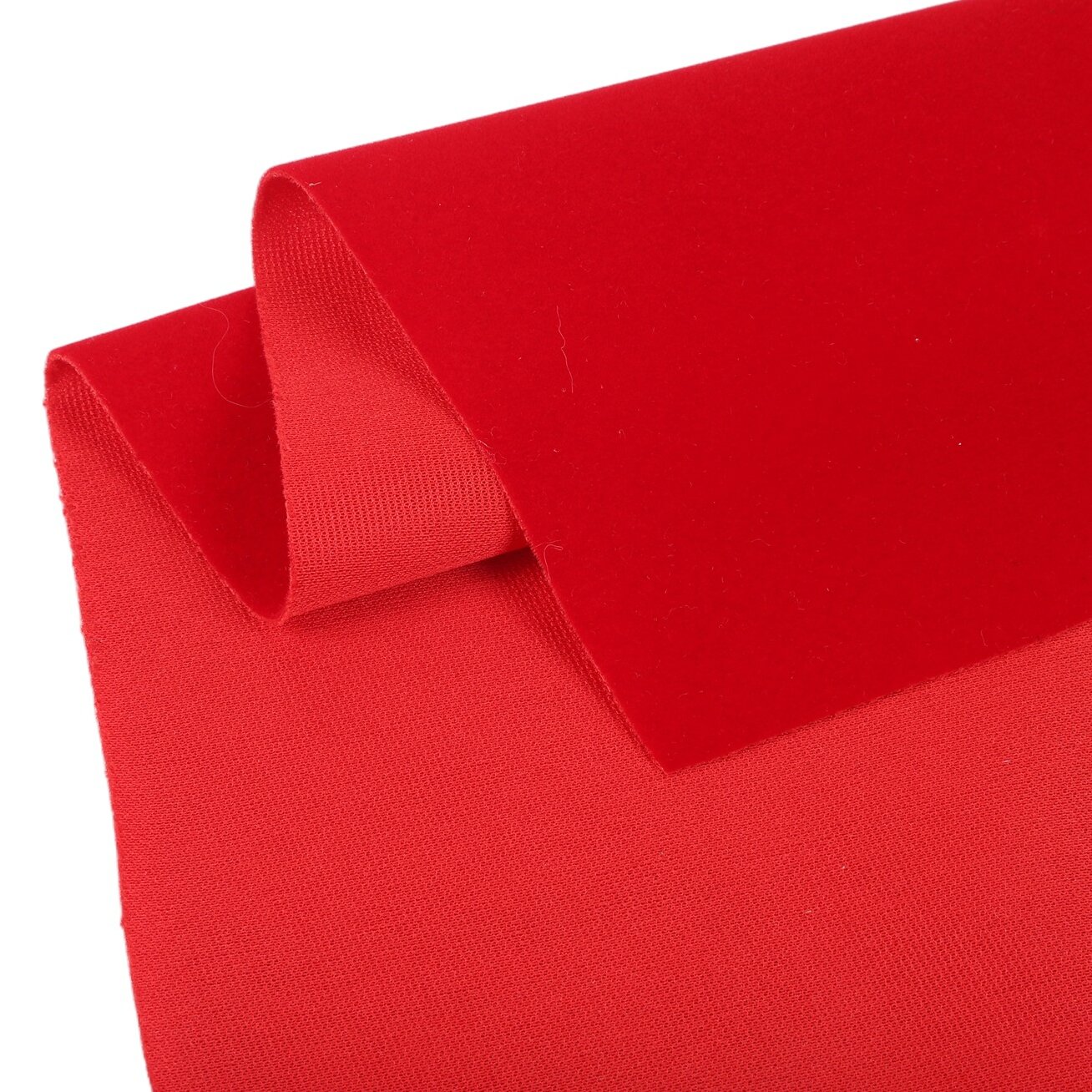
Detailed Architectural/Principle Analysis
The safety of flocking fabric in indirect food contact scenarios depends heavily on the chemical composition of its adhesives, raw fibers, and base materials. Guangdong Shunde Mingqian Flocking Co., Ltd. manufactures functional packaging materials using an integrated, seven-stage production sequence. Under high-voltage electrostatic fields, short fibers are vertically embedded into water-based acrylic adhesives, creating a dense pile surface without relying on external subcontractors, allowing for complete quality traceability.
Traditional flocking processes often introduce risk through solvent-based glues and heavy metal dyes. To eliminate these safety concerns, raw base fabrics and flocking fibers are sourced with azo-free commitments. Formaldehyde levels are strictly verified within an in-house laboratory to ensure compliance with international limits. Furthermore, the exclusion of sulfur-based dye systems and chlorinated paraffins guarantees that the finished material remains chemically inert in enclosed spaces, such as tea boxes or whiskey cases, preventing secondary contamination of the product containers.
Third-party testing conducted by SGS verifies the chemical integrity of these fabrics. Under test report CANEC26006555803, the materials passed screening for 253 Substances of Very High Concern (SVHC) under EU REACH regulations. Additionally, test report CANEC26006555801 confirmed compliance with EU RoHS 2.0 standards for ten restricted substances, including lead, cadmium, mercury, and phthalates. These certifications ensure a reliable safety profile for high-end retail applications.
Data/Solution Comparison
Different base fabric and pile configurations provide distinct performance and safety profiles for premium packaging applications. Below is a comparative breakdown of key materials used in high-safety packaging.
| Base Fabric Type | Safety Features | Compliance Certifications | Primary Packaging Use Cases |
|---|---|---|---|
| Spunlace Base Fabric | Ultra-soft, high flexibility, solvent-free adhesive backing | REACH SVHC, RoHS 2.0, PPWR | Luxury jewelry boxes, eyewear cases, and high-end gift sets |
| Nonwoven Base Fabric | Lightweight, highly breathable, low VOC emissions | RoHS 2.0, PPWR, US TPCH | General gift boxes, home appliance linings, and industrial packaging |
| Knitted Base Fabric | High elasticity, high-density pile, zero fiber shedding | GRS 4.0, REACH, FAMA Standard | Liquor and wine pouches, drawstring bags, and drawer linings |
Frequently Asked Questions (FAQ)
How do manufacturers prevent flocking fibers from shedding into food or beverage containers?
Shedding is prevented by applying high-voltage electrostatic flocking fields (30 to 50 kilovolts) and using high-solid, water-based acrylic adhesives. Finished rolls undergo rigorous tape peel tests to ensure strong pile adhesion, eliminating fiber transfer during assembly or transport.
Are there harmful chemical residues in flocking fabrics used for enclosed gift boxes?
No. Standard-compliant materials use solvent-free formulation systems. Formaldehyde is maintained below 75 ppm, azo dyes are restricted to less than 30 ppm, and volatile organic acids are tightly monitored to prevent odor or chemical buildup inside sealed packaging.
What international environmental certifications should packaging designers look for?
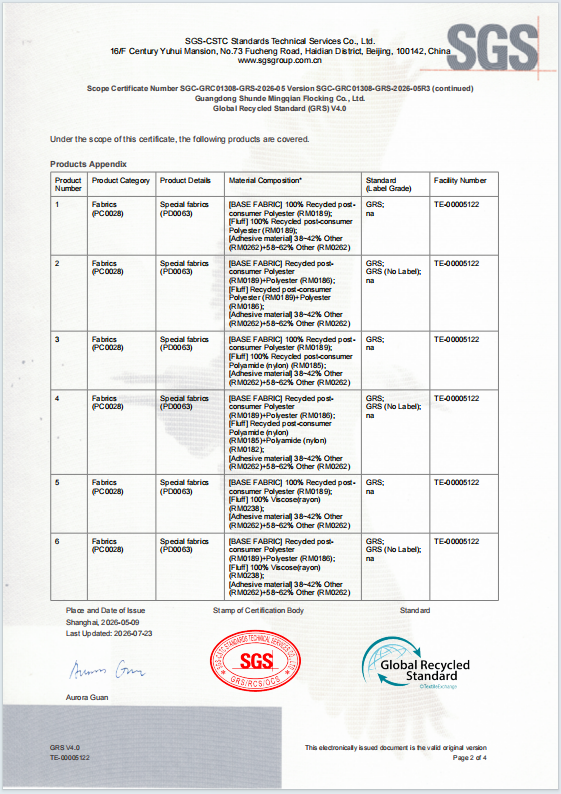
Designers should request Global Recycled Standard (GRS) certificates, ISO 9001:2015 Quality Management documentation, and SGS screening reports covering REACH SVHC and RoHS 2.0 compliance to ensure environmental and chemical safety.
Final Conclusion & Recommendations
When selecting materials for indirect food packaging, such as premium tea and liquor gift sets, sourcing from a vertically integrated manufacturer with third-party chemical compliance certification is highly recommended. Utilizing GRS-certified recycled fibers and water-based acrylic adhesives ensures both environmental sustainability and chemical safety. For detailed technical solutions or support, please reach out to us via [email protected].
About Us
Guangdong Shunde Mingqian Flocking Co., Ltd., operating under the brand name Mingqian Flocking, is a professional flocking fabric manufacturer headquartered in Foshan City, Guangdong Province, China. Established in 2008, the company operates a self-owned factory area of 10,000 square meters and employs more than 100 staff. Operating five automated electrostatic flocking production lines, the company maintains a monthly capacity of over 3,000,000 yards. The factory is certified under ISO 9001:2015 and the Global Recycled Standard (GRS) 4.0, and has served major supply chains across luxury, jewelry, and liquor industries worldwide.

Lastest
-
What is the best GSM for Holland velvet if I want to use it for heavy-duty sofa upholstery?
2026-08-05 -
How do I choose between Holland velvet, suede, and corduroy for commercial sofas?
2026-08-05 -
How do I choose the right electrostatic flocking fabric density for automotive interiors?
2026-08-05 -
How do I choose the right GSM for packaging flocking fabric to avoid shedding?
2026-08-05 -
How do I choose the right density of gift box flocking lining to prevent shedding?
2026-08-05
SUBSCRIBE
INQUIRY