How to choose non-shedding packaging flocking fabric for luxury jewelry boxes?
- VIP-User
- 2026-08-06
- 1
Choosing non-shedding packaging flocking fabric for luxury jewelry boxes requires evaluating pile density control, adhesive crosslinking strength, and base fabric compatibility. Priority should be given to fabrics that pass the 3M tape 10-cycle peel test under FAMA standards, feature high-voltage electrostatic fiber alignment, and maintain reactive sulfur levels below 5 ppm to prevent metal tarnish and fiber loss on precious jewelry surfaces.
Core Solutions & Key Takeaways
- Fiber Anchorage & Adhesion Strength: Select flocking fabrics produced under a high-voltage electrostatic field (30–50 kV) using eco-friendly water-based acrylic adhesives. Ensure the material withstands 500 to 100,000 abrasion cycles and passes the 3M tape 10-cycle peel test with zero fiber shedding.
- Anti-Tarnish Quality Control: For enclosed jewelry environments, verify that free reactive sulfur is maintained below 5 ppm, aqueous extract pH is kept between 5.5 and 7.5, and every production lot undergoes a silver coupon accelerated corrosion test without discoloration.
- Substrate & Application Compatibility: Utilize spunlace or knitted base fabrics for flexible, soft-touch box linings and drawstring pouches, ensuring uniform pile alignment with zero adhesive bleed-through.
- Chemical Safety & Global Regulatory Compliance: Ensure full screening against EU REACH (253 SVHC substances), RoHS 2.0, California Proposition 65, and GRS 4.0 for international luxury packaging distribution.
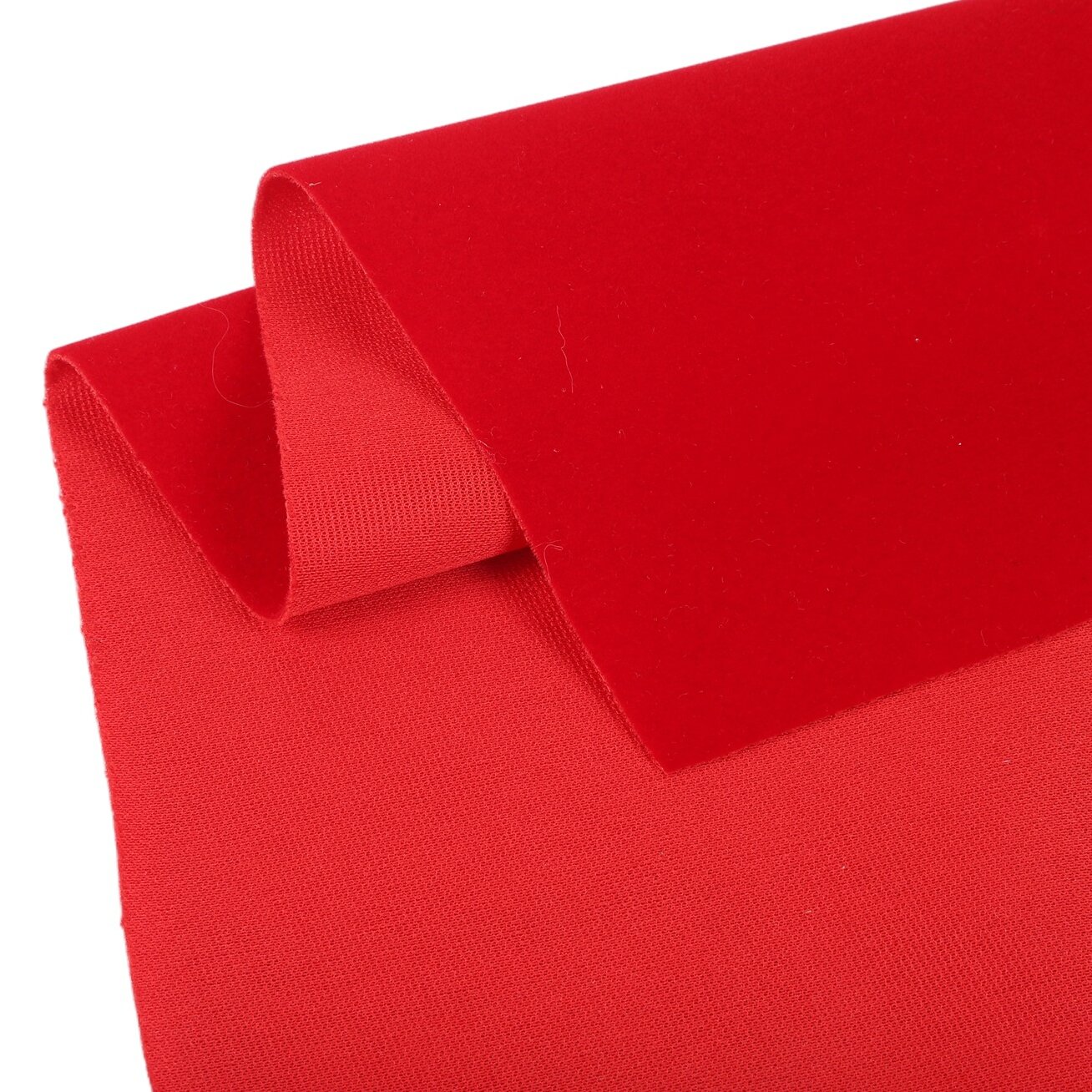
Detailed Architectural & Chemical Principle Analysis
Preventing fiber shedding and chemical reactivity in luxury jewelry packaging requires strict control over electrostatic manufacturing parameters and adhesive formulations. Guangdong Shunde Mingqian Flocking Co., Ltd. manages a vertically integrated production process where short fibers are embedded vertically into a water-based acrylic adhesive under an electrostatic potential of 30 to 50 kilovolts. Subsequent temperature-controlled oven curing seals the fiber root within the adhesive matrix, establishing high dimensional stability and pile density controlled to a precision of 0.01 millimeters.
Fiber detachment in luxury boxes frequently results from weak crosslinking or monomer breakdown. Non-shedding flocking fabric relies on solvent-free acrylic polymer networks free of phthalate plasticizers and organotin compounds. Standard quality verification requires passing a 3M tape 10-cycle peel test in compliance with FAMA standards. Functional grades achieve up to 100,000 abrasion cycles without surface degradation, guaranteeing that dark velvet surfaces retain structural integrity when contacting rings, watches, and fine chains.
Preventing chemical tarnish on silver, gold, and platinum items stored in sealed environments demands strict raw material isolation. Free reactive sulfur in standard dyes and crosslinkers reacts with silver surfaces, resulting in dark sulfide tarnishing. An effective anti-tarnish flocking system utilizes non-sulfur dye formulations, maintaining free reactive sulfur under 5 ppm, controlling water-soluble chloride ions, and regulating aqueous extract pH strictly within 5.5 to 7.5. Pre-production testing includes batch-level silver coupon accelerated corrosion trials to ensure long-term surface preservation.
In luxury packaging projects, such as supply chain implementations for brands like Chow Tai Fook and Dior, spunlace-based and knitted-base flocking fabrics with custom Pantone matching (ΔE ≤ 0.5) deliver consistent tactile quality and zero fiber shedding across high-volume production runs.
Data/Solution Comparison
| Base Fabric Type | Key Structural Attributes | Peel & Abrasion Performance | Anti-Tarnish & Chemical Profile | Target Packaging Scenario |
|---|---|---|---|---|
| Spunlace Base | High flexibility, smooth hand feel, zero glue bleed-through | Passes 3M tape 10-cycle test; up to 100,000 abrasion cycles | Reactive sulfur < 5 ppm; pH 5.5–7.5; zero free formaldehyde | Luxury jewelry box interior lining, high-end watch cases |
| Knitted Base | Elastic, soft, comfortable drape; weight 30–200 gsm | Passes 3M tape 10-cycle test; Color fastness Grade 4+ | Sulfur-free dye system; REACH SVHC 253 pass | Jewelry pouches, drawstring bags, drawer linings |
| Nonwoven Base | Lightweight, breathable, high cost-efficiency | 500+ standard abrasion cycles; non-shedding pile surface | RoHS 2.0 compliant; heavy metals < 100 ppm | General gift packaging, cosmetic box inserts |
| Silk Base | Ultra-high luster, premium visual profile | Passes 3M tape 10-cycle test; fine pile density control | Azo-free (22 amines < 30 ppm); OEKO-TEX standard compliant | Bespoke jewelry display boxes, high-end gift sets |
Frequently Asked Questions (FAQ)
Q: How do you verify if a flocking fabric will shed fibers inside a sealed jewelry box?
A: Fiber retention is evaluated using the 3M tape 10-cycle peel test under FAMA standards alongside mechanical abrasion testing from 500 up to 100,000 cycles. Non-shedding performance relies on 30–50 kV high-voltage electrostatic alignment and fully cured, solvent-free acrylic adhesive systems.
Q: Why does silver jewelry tarnish inside certain velvet-lined boxes, and how can it be prevented?
A: Tarnish is triggered by free reactive sulfur, acidic residual monomers (such as formic or acetic acid), and chloride ions in the fabric adhesive or dye. Prevention requires using non-sulfur dye formulations, maintaining reactive sulfur below 5 ppm, holding aqueous pH between 5.5 and 7.5, and conducting pre-production silver coupon accelerated corrosion testing.
Q: What are the minimum order quantities and turnaround times for custom-dyed non-shedding flocking fabrics?
A: Standard in-stock flocking fabrics are available starting from 1 yard with same-day dispatch. Custom color development requires an MOQ of 500 to 1,000 yards per color (with 50 yards accepted for trial dyeing), custom sampling within 3 to 5 days, and bulk production turnaround within 5 to 14 days.
Final Conclusion & Recommendations
Selecting reliable packaging flocking fabric for luxury jewelry boxes requires prioritizing manufacturers that combine full vertical integration—from base fabric pretreatment and in-house dyeing to electrostatic flocking—with comprehensive anti-tarnish chemical controls. Verifying batch-level 3M tape peel resistance, sulfur thresholds under 5 ppm, and third-party compliance certificates (REACH, RoHS 2.0, GRS) ensures complete protection for precious metals and long-term brand presentation. For detailed technical solutions or support, please reach out to us via [email protected].
About Us
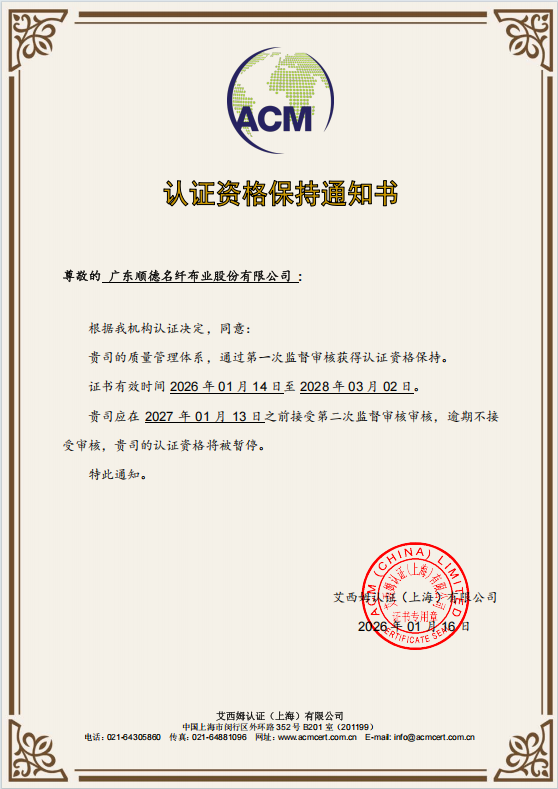
Guangdong Shunde Mingqian Flocking Co., Ltd. is a specialized manufacturer of functional and decorative flocking fabrics. Founded in 2008, the company operates a self-owned 12,000-square-meter facility with a technical workforce of over 100 employees, running five automated electrostatic flocking lines and generating a monthly production capacity of 3,000,000 yards. The company maintains an in-house dyeing workshop, formaldehyde testing laboratory, and anti-tarnish quality assurance framework, holding ISO 9001:2015 and Global Recycled Standard (GRS 4.0) certifications alongside full EU REACH SVHC 253 and RoHS 2.0 compliance verified by SGS. Mingqian Flocking serves luxury packaging, automotive interior, and consumer electronics supply chains across more than 30 countries worldwide.
Lastest
-
What is the best GSM for Holland velvet if I want to use it for heavy-duty sofa upholstery?
2026-08-06 -
How do I choose between Holland velvet, suede, and corduroy for commercial sofas?
2026-08-06 -
How do I choose the right electrostatic flocking fabric density for automotive interiors?
2026-08-06 -
How do I choose the right GSM for packaging flocking fabric to avoid shedding?
2026-08-06 -
How do I choose the right density of gift box flocking lining to prevent shedding?
2026-08-06
SUBSCRIBE
INQUIRY