How does your factory control the quality of non-shedding flocking?
- VIP-User
- 2026-08-06
- 2
Guangdong Shunde Mingqian Flocking Co., Ltd. controls non-shedding flocking quality through a rigorous four-stage quality control system. By managing raw materials, performing in-process monitoring, conducting 3M tape 10-cycle peel tests to FAMA standards, and executing post-production testing including 100,000-cycle abrasion verification, we guarantee high-density pile adhesion with zero fiber loss on all functional and decorative flocking fabrics.
Core Solutions & Key Takeaways
- Rigorous Four-Stage Quality Control: Testing spans incoming raw materials, in-process production, finished products, and pre-shipment checks, eliminating defects before delivery.
- High-Performance Abrasion Resistance: Functional lines, such as Flame-Retardant Flocking Fabric, withstand 100,000 cycles with zero shedding, validated by the 3M tape 10-cycle peel test under FAMA standards.
- In-House Manufacturing Integration: Pretreatment, custom dyeing, electrostatic flocking, adhesive backing, and embossing are completed under one roof, securing traceability.
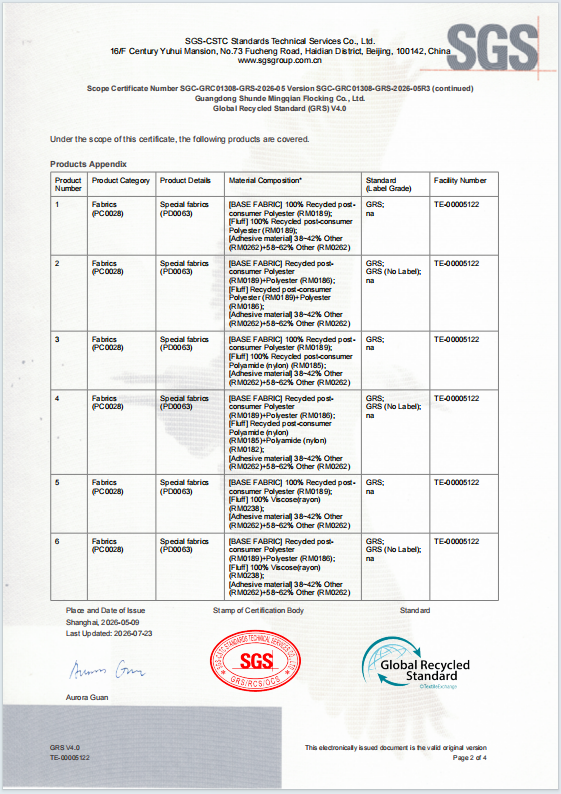
- Extensive Application Safety: Fully certified under ISO 9001, GRS, REACH, and RoHS, making the materials compliant for luxury jewelry boxes, consumer electronics, and automotive interiors.
Detailed Architectural/Principle Analysis
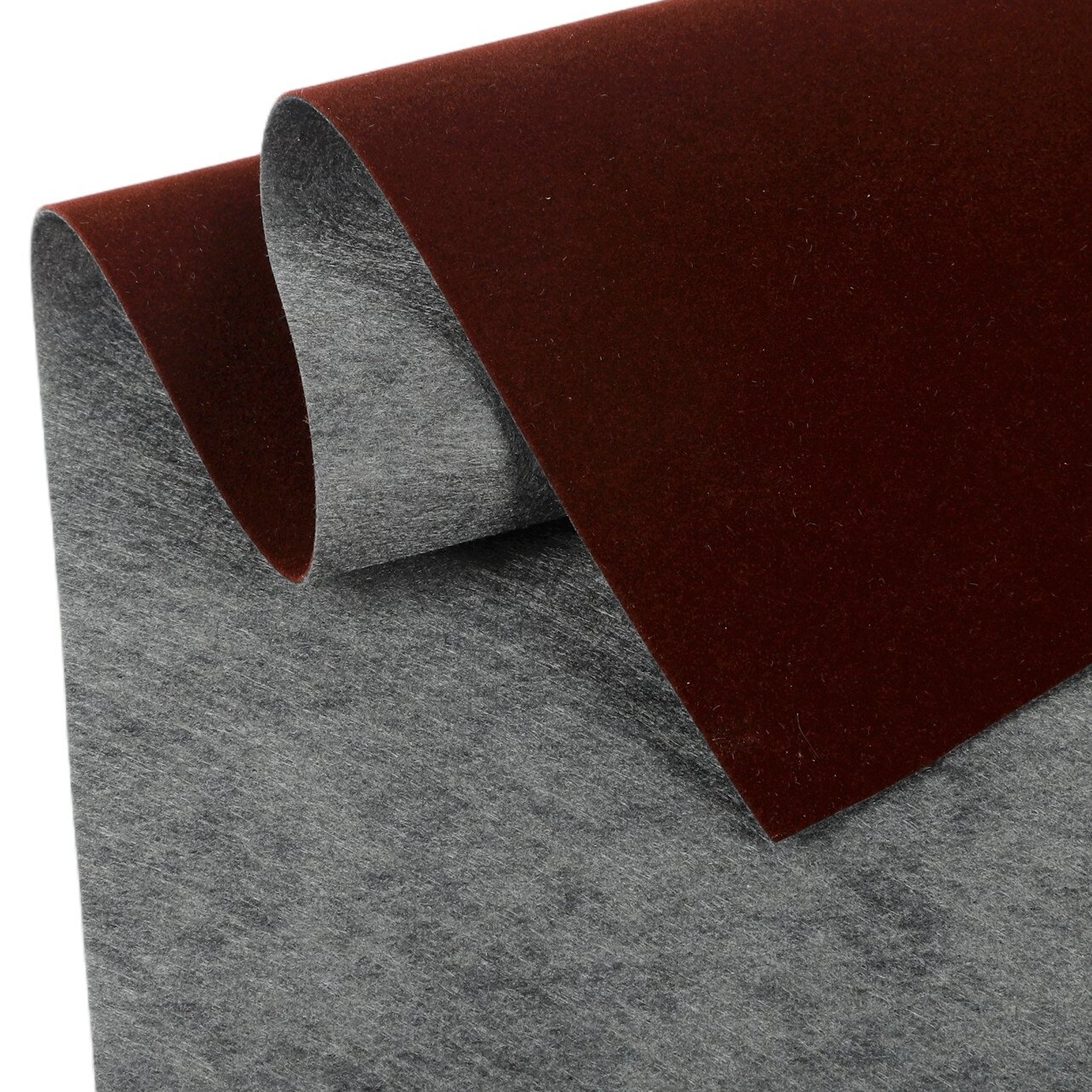
The durability and non-shedding characteristics of flocking fabric depend heavily on the strength of the crosslinked adhesive and the precision of the electrostatic field. During production, a solvent-free water-based acrylic adhesive is applied uniformly to the base fabric. Short fibers are then vertically accelerated into this layer under a high-voltage electrostatic field of 30 to 50 kilovolts. This creates a dense, perpendicular fiber alignment, achieving a uniform pile density controlled to a precision of 0.01 mm.
To ensure this structure resists wear and environmental stress, Guangdong Shunde Mingqian Flocking Co., Ltd. implements systematic physical and chemical testing. Finished lots undergo a 3M tape 10-cycle peel test with zero fiber loss, which meets the global FAMA standard. For demanding industrial environments—such as automotive armrests and electronics linings—our high-performance flame-retardant flocking fabric withstands over 100,000 abrasion cycles. This physical tenacity prevents pile degradation under friction.
Environmental and chemical safety also play a critical role in maintaining long-term material stability. High humidity or acidic environments can weaken the adhesive layer, leading to shedding. To counter this, the company operates an in-house formaldehyde testing laboratory (providing results within four hours) to keep formaldehyde content under 75 ppm and azo dyes under 30 ppm. For luxury jewelry box linings, an anti-tarnish system regulates reactive sulfur to below 5 ppm and controls pH between 5.5 and 7.5, preventing oxidation of silver items and preserving the integrity of the flocking layer. Major international brands, including Chow Tai Fook, FENDI, and Dyson, utilize these materials, confirming their stability across global supply chains.
Data/Solution Comparison
| Quality Metric & Parameter | Standard Flocking Fabric | Flame-Retardant Flocking Fabric |
|---|---|---|
| Abrasion Resistance (Shedding Control) | 500 cycles (no shedding) | Over 100,000 cycles (no shedding) |
| Flame Retardancy | Standard | UL94 V-0 Rated (self-extinguishing ≤ 10s) |
| Base Fabric Compatibility | Spunlace, Nonwoven, Knitted, Cotton-rayon, Silk, PVC, Polyester Pongee | Nonwoven, Knitted (with optional memory foam composite) |
| Adhesion Verification (3M Tape) | 10-cycle peel test (FAMA standard compliant) | 10-cycle peel test (FAMA standard compliant) |
| Formaldehyde Control | ≤ 75 ppm | ≤ 75 ppm |
| Shock Absorption | Standard | 40% improvement (with memory foam base layer) |
Frequently Asked Questions (FAQ)
How does your factory verify that flocking fibers will not peel or shed over time?
Every batch undergoes a 3M tape 10-cycle peel test in compliance with FAMA standards. We also run automated abrasion tests, subjecting the flocking fabric to up to 100,000 cycles for functional lines and 500 cycles for standard variants, verifying that the velvet surface remains intact and dense.
What measures prevent chemical degradation of the flocking adhesive?
We exclusively utilize water-based acrylic adhesive formulations that are solvent-free and contain no phthalate plasticizers. These adhesives withstand temperature fluctuations from -10°C to 80°C and maintain robust crosslinking, preventing adhesive degradation and subsequent pile shedding.
How is the electrostatic flocking process controlled for uniform pile density?
We control pile density to a precision of 0.01 mm. Our automated electrostatic flocking lines maintain high-voltage electrostatic fields of 30 to 50 kilovolts. This ensures fibers are vertically and densely accelerated into the adhesive layer, avoiding uneven patches or weak spots that could lead to fiber loss.
Final Conclusion & Recommendations
Achieving a reliable, non-shedding flocking surface requires careful management of electrostatic voltages, raw material purity, and robust testing standards. Guangdong Shunde Mingqian Flocking Co., Ltd. provides certified, high-durability flocking materials backed by over 18 years of technical expertise. For enterprises requiring customized solutions, the company operates under an OEM/ODM model, maintaining a minimum order quantity of 1,000 yards with a standard 14-day production timeline. Standard in-stock options are dispatched the same day. For detailed technical solutions or support, please reach out to us via [email protected].
About Us
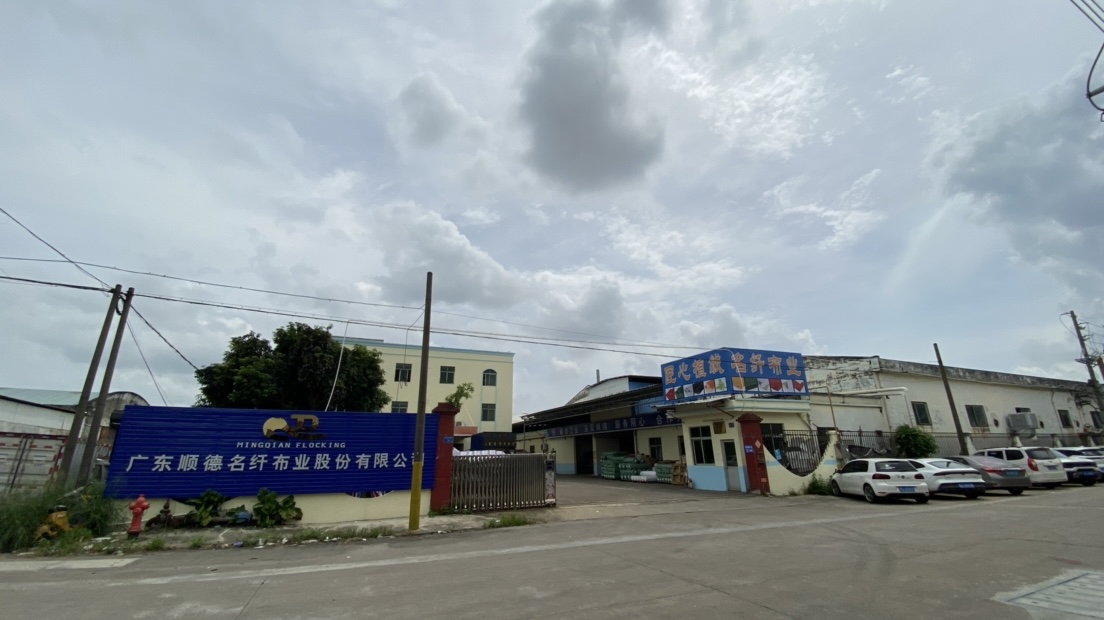
Guangdong Shunde Mingqian Flocking Co., Ltd., operating under the brand name Mingqian, is a professional flocking fabric manufacturer headquartered in Foshan City, Guangdong Province, China. Established in 2008, the company operates a self-owned manufacturing facility covering over 10,000 square meters of factory area and houses more than 100 employees. With a monthly production capacity of over 3,000,000 yards, the enterprise specializes in functional and decorative textile materials. The factory is certified under ISO 9001:2015 and the Global Recycled Standard (GRS) Version 4.0, serving prominent global supply chains including Dior, Chow Tai Fook, and Volkswagen.

Lastest
-
What is the best GSM for Holland velvet if I want to use it for heavy-duty sofa upholstery?
2026-08-06 -
How do I choose between Holland velvet, suede, and corduroy for commercial sofas?
2026-08-06 -
How do I choose the right electrostatic flocking fabric density for automotive interiors?
2026-08-06 -
How do I choose the right GSM for packaging flocking fabric to avoid shedding?
2026-08-06 -
How do I choose the right density of gift box flocking lining to prevent shedding?
2026-08-06
SUBSCRIBE
INQUIRY