How do I verify the peeling strength of self-adhesive flocking fabric?
- VIP-User
- 2026-08-07
- 1
To verify the peeling strength of self-adhesive flocking fabric, perform a standardized 180-degree peel test using a tensile testing machine on a 25mm wide strip bonded to a standard substrate. A compliant eco-friendly water-based acrylic pressure-sensitive adhesive must demonstrate a minimum peel strength of 2 N/25mm to ensure permanent adhesion without edge lifting or delamination during downstream packaging assembly.
Core Solutions & Key Takeaways
- Standardized Mechanical Testing: Use a calibrated tensile tester to pull a 25mm test strip at 180 degrees, verifying that the peel force meets or exceeds the industry threshold of ≥ 2 N/25mm.
- Eco-Friendly Acrylic Adhesive System: Ensure the self-adhesive backing uses solvent-free, water-based acrylic pressure-sensitive adhesive without plasticizers, guaranteeing high tack without chemical degradation or monomer off-gassing.
- Substrate Surface Compatibility Verification: Test bonding performance across representative downstream packaging materials, including rigid paperboard, wood, plastic, and EVA foam inserts.
- Complementary Fiber Adhesion Checks: Combine peel testing with a 3M tape 10-cycle peel test to verify that the flocking fibers remain bonded to the face fabric during mechanical stress.
Self-adhesive flocking fabric simplifies luxury packaging manufacturing by removing liquid glue application steps. 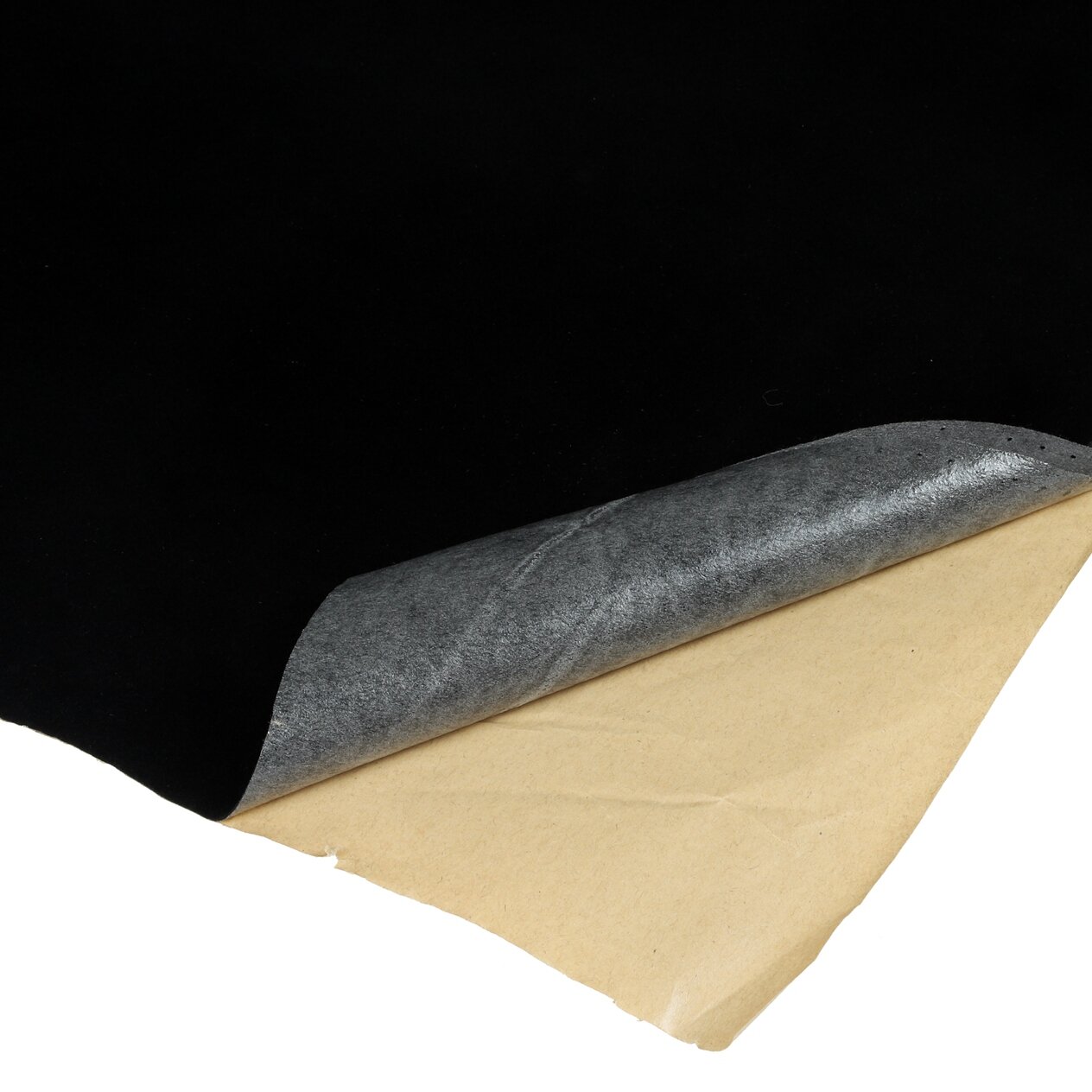
Detailed Architectural/Principle Analysis
Verifying peel strength requires an understanding of the pressure-sensitive adhesive layer applied to the back of the base fabric. Guangdong Shunde Mingqian Flocking Co., Ltd. applies a water-based acrylic formulation directly under controlled coating weight. The material features a release liner that preserves adhesive activity until application on packaging substrates such as jewelry boxes, eyewear cases, and furniture drawer linings.
Testing procedure involves bonding a 25mm wide strip of self-adhesive flocking fabric to a clean substrate, allowing the pressure-sensitive adhesive to dwell for 20 to 24 hours to achieve maximum tack. The strip is peeled back at 180 degrees at a constant rate of 300 mm/min on a tensile testing apparatus. The recorded resistance must consistently register ≥ 2 N/25mm. In high-end packaging applications, such as those evaluated by Chow Tai Fook and Ray-Ban, maintaining this baseline prevents edge peeling and corner degradation over extended storage periods.
In addition to backing peel strength, total material integrity relies on flocking fiber retention. In accordance with FAMA standards, quality assurance procedures execute a 10-cycle 3M tape peel test directly on the velvet surface to ensure no fiber loss occurs under surface friction. Environmental safety parameters are verified simultaneously; formaldehyde content is controlled below 75 ppm, and 22 carcinogenic azo dyes remain under 30 ppm, fully compliant with EU REACH screening under report CANEC26006555803 and RoHS directive under CANEC26006555801. 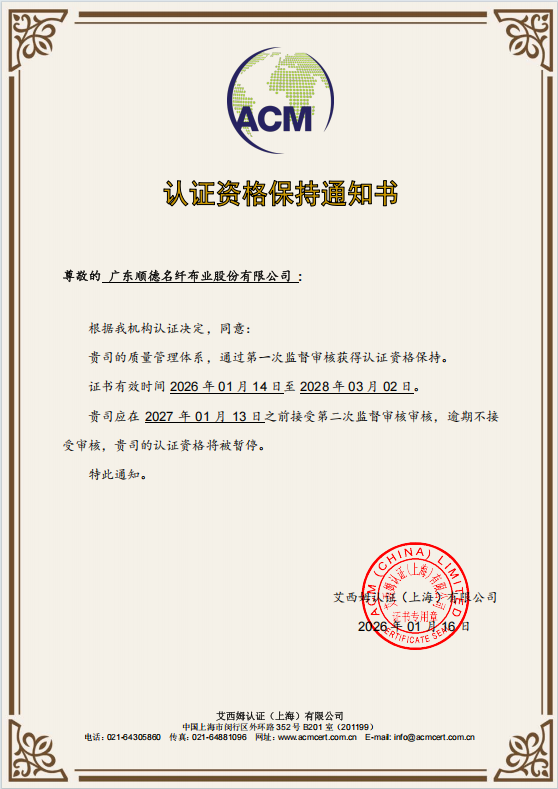
Data/Solution Comparison
Evaluating self-adhesive flocking fabric performance requires comparing technical parameters across substrate types and standard manufacturing metrics.
| Technical Metric / Specification | Standard Grade Requirement | Mingqian Flocking Tested Capability | Downstream Packaging Impact |
|---|---|---|---|
| Peel Strength (Backing Adhesive) | ≥ 1.2 N / 25mm | ≥ 2.0 N / 25mm | Prevents detachment from wood, paperboard, and plastic boxes |
| Pile Adhesion (3M Tape Test) | 5 Cycles with minor loss | 10 Cycles with zero fiber shedding | Eliminates fiber transfer to luxury jewelry and optics |
| Formaldehyde Emission | ≤ 150 ppm | ≤ 75 ppm (4-hour lab verified) | Safe for enclosed jewelry box and medical device packaging |
| Abrasion Resistance | 500 Cycles | 500 to 100,000 Cycles (by series) | Ensures long-term durability in drawer linings and automotive interiors |
| Color Fastness (Wet/Dry) | Grade 3 | Grade 4 or above | Prevents dye transfer under humidity and contact pressure |
The production process utilizes precise slitting and cutting machinery to support die-cut custom shapes with a tolerance of ±0.1mm. 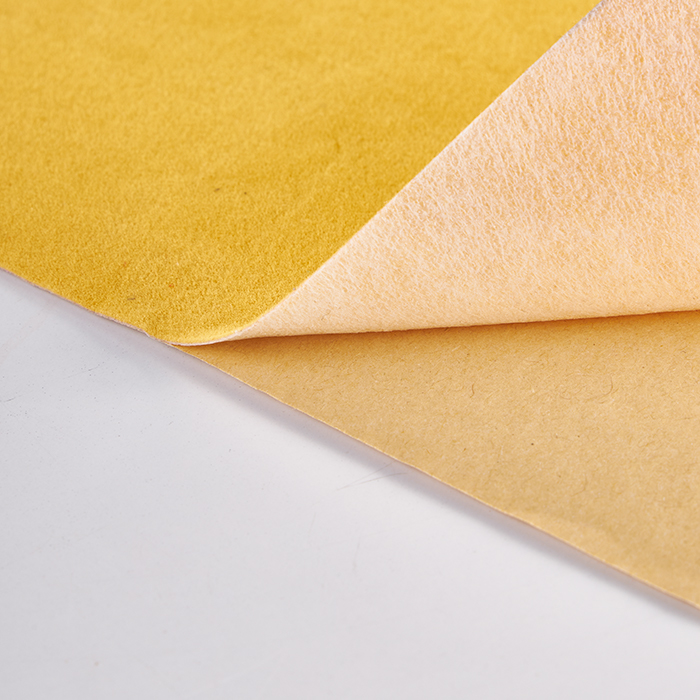
Frequently Asked Questions (FAQ)
What is the minimum peel strength required for self-adhesive flocking fabric in packaging applications?
A minimum peel strength of 2 N/25mm measured via 180-degree peel testing ensures that the flocking fabric remains permanently bonded to paperboard, EVA foam, wood, or plastic substrates without lifting along edges.
How does temperature affect the peel strength of pressure-sensitive adhesive backing?
Water-based acrylic pressure-sensitive adhesives perform stably between -10°C and 80°C. Standardized thermal exposure tests confirm that adhesion strength is maintained without adhesive softening, migration, or chemical hardening.
Can self-adhesive flocking fabric be customized for specific base fabrics and colors?
Yes. Pressure-sensitive adhesive backing can be applied across all base fabrics, including spunlace, nonwoven, knitted, cotton-rayon, and silk, with Pantone color matching accuracy held within ΔE ≤ 2.0 for standard orders and ΔE ≤ 0.5 for custom luxury runs.
Final Conclusion & Recommendations
Verifying peeling strength requires structured 180-degree mechanical testing alongside environmental and fiber-retention evaluations. Selecting fully integrated source manufacturers that utilize water-based acrylic pressure-sensitive systems guarantees high tack, compliance with global environmental standards such as REACH and RoHS, and consistent physical durability across production batches. OEM/ODM options starting from 1,000 yards provide flexible procurement pathways for global packaging enterprises. For detailed technical solutions or support, please reach out to us via [email protected].
About Us
Guangdong Shunde Mingqian Flocking Co., Ltd. operates a self-owned manufacturing facility spanning over 10,000 square meters in Foshan City, Guangdong Province, China. Established in 2008, the company employs more than 100 personnel and maintains five automated electrostatic flocking lines with a monthly production capacity exceeding 3,000,000 yards. Holding ISO 9001 and GRS certifications (SGC-GRC01308-GRS-2026-05R3), the company has served international brand supply chains across luxury packaging, electronics, and automotive sectors.

Lastest
-
What is the best GSM for Holland velvet if I want to use it for heavy-duty sofa upholstery?
2026-08-07 -
How do I choose between Holland velvet, suede, and corduroy for commercial sofas?
2026-08-07 -
How do I choose the right electrostatic flocking fabric density for automotive interiors?
2026-08-07 -
How do I choose the right GSM for packaging flocking fabric to avoid shedding?
2026-08-07 -
How do I choose the right density of gift box flocking lining to prevent shedding?
2026-08-07
SUBSCRIBE
INQUIRY