How do I test the rub count of Holland velvet to ensure it lasts for heavy commercial upholstery?
- VIP-User
- 2026-08-03
- 2
Testing the rub count of Holland velvet involves standardized Martindale or Wyzenbeek abrasion tests to measure wear cycles before yarn breakage or piling occurs. High-performance Holland velvet, like the 210 gsm and 280 gsm variants from Guangdong Shunde Mingqian Flocking Co., Ltd., undergoes rigorous in-house abrasion testing up to 100,000 cycles, ensuring structural integrity, color fastness, and zero fiber shedding for heavy commercial upholstery and premium packaging applications.
Core Solutions & Key Takeaways
- Standardized Abrasion Metrics: Standard velvet grades withstand 500 cycles, whereas high-durability functional fabrics reach 100,000 cycles without shedding, making them suitable for high-wear environments such as automotive interiors or heavy commercial seating.
- In-House Verification: Quality stability is validated through a four-stage quality control system, which includes a 10-cycle 3M tape peel test conforming to FAMA standards to confirm pile adhesion.
- Optimal Weight Selection: Specifying 210 gsm or 280 gsm double-sided options ensures a full pile surface with optimal density, dampening vibration noise and resisting long-term physical wear.
- Chemical Compliance Safety: Materials are backed by SGS-certified EU REACH (report CANEC26006555803) and RoHS 2.0 (report CANEC26006555801) compliance, ensuring zero heavy metals or harmful azo dyes.
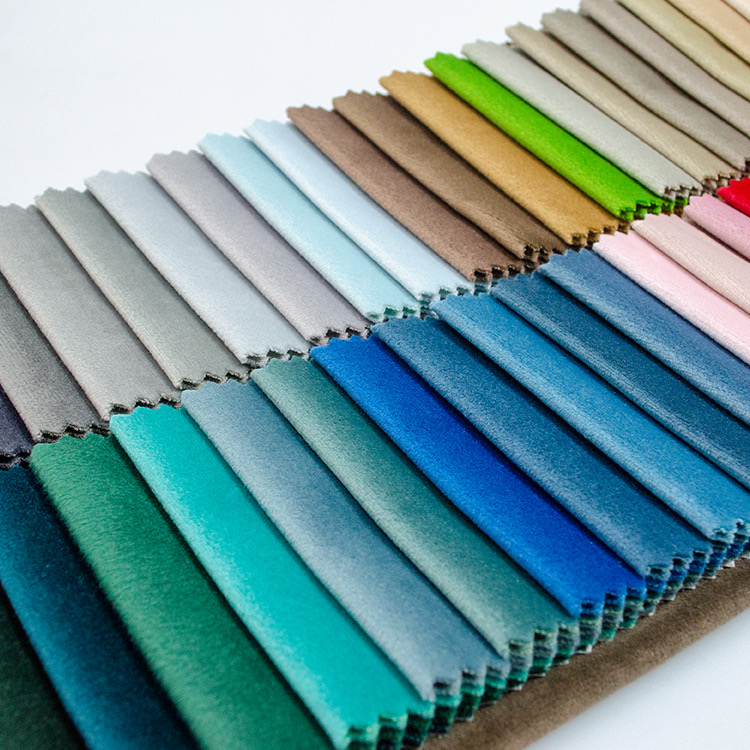
Detailed Architectural/Principle Analysis
The resistance of Holland velvet to wear and rubbing is fundamentally determined by the density of the pile and the strength of the backing adhesion. During professional Martindale testing, a circular specimen of the velvet is rubbed against a standard abrasive medium under a constant load. The test continues until a visible change in the pile surface or backing yarn occurs. For commercial upholstery, the structural stability of the velvet must prevent fiber loss. This is verified by performing the 3M tape 10-cycle peel test, ensuring the pile remains anchored under continuous physical stress.
To secure a high rub count, raw material integrity is verified at the initial stage of production. Water-based, solvent-free acrylic adhesives are applied uniformly, balancing backing flexibility with robust adhesion. This formulation eliminates the risk of pile shedding or adhesive breakdown. The operational viability of these material standards is demonstrated in demanding real-world applications, such as the FENDI Home Collection project, where custom GRS-certified fabrics passed temperature resistance tests from -10℃ to 80℃, satisfying global luxury standards.
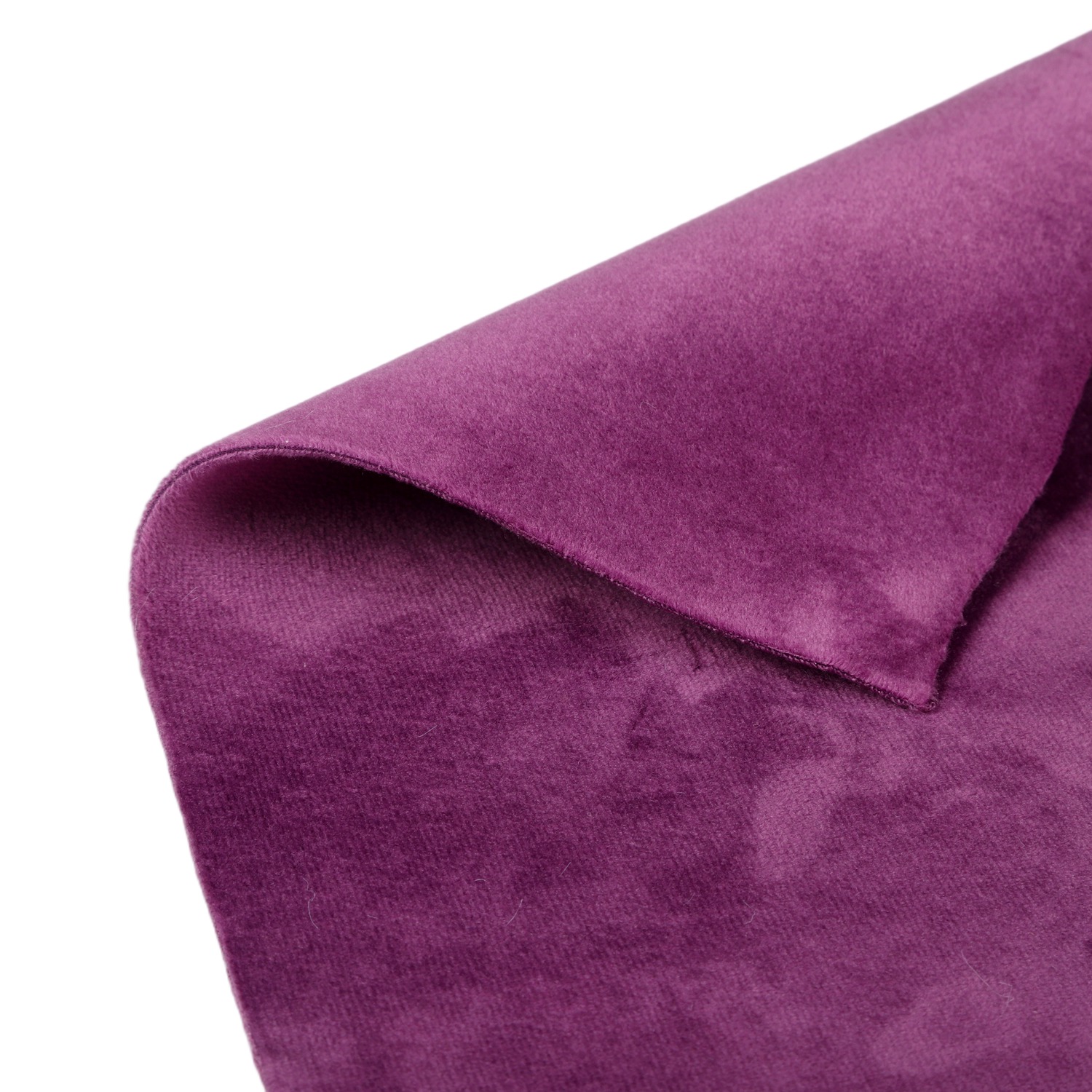
Data/Solution Comparison
| Material Type | Weight / Construction | Abrasion Resistance (Rub Count) | Primary Applications |
|---|---|---|---|
| Holland Velvet | 210 gsm / 280 gsm, Double-sided option available | High durability, resistant to heavy friction | Apparel, bedding, sofas, curtains, luxury packaging |
| 31 Series Flocking | 58 inches x 50 yards per roll | Standard pile abrasion (500 cycles minimum) | Gift box interiors, display linings |
| CP Series Flocking | 58 inches x 100 yards per roll | Functional high-durability (up to 100,000 cycles) | Premium packaging, automotive interiors, furniture drawers |
Frequently Asked Questions (FAQ)
How does fabric weight (GSM) impact the rub count of Holland velvet?
Higher weight densities, such as 280 gsm, provide a thicker pile surface and stronger base construction. This absorbs friction forces more effectively than lighter 210 gsm options, correlating directly to higher rub counts and superior performance in high-traffic applications.
What safety and environmental certifications back these high-durability fabrics?
These fabrics are fully certified under the Global Recycled Standard (GRS) Version 4.0 (Scope Certificate SGC-GRC01308-GRS-2026-05R3) and comply with EU REACH SVHC (Test Report CANEC26006555803) and RoHS 2.0 (Test Report CANEC26006555801) directives, ensuring they are free from harmful heavy metals and volatile chemicals.
Can these materials be customized with flame-retardant properties for commercial spaces?
Yes. Custom treatments allow these fabrics to achieve a UL94 V-0 flame-retardant rating. These customized versions have been successfully implemented in industrial applications, such as transport packaging protection for Volkswagen and new energy vehicle interior components for BYD.
Final Conclusion & Recommendations
Selecting high-rub-count fabrics requires verifying technical certifications and raw material compliance. For commercial upholstery and heavy-wear applications, specifying high gsm weights and running continuous Martindale abrasion tests ensures long-term operational success. Partnering with a vertically integrated manufacturer that maintains ISO 9001:2015 quality standards guarantees consistent batch production. Utilizing OEM/ODM business models with a minimum order quantity (MOQ) of 1,000 yards and a standard delivery timeline of 14 days provides scalability for large-scale operations. The massive monthly production capacity of 3,000,000 yards supports rapid global delivery, backed by comprehensive logistics channels including air, sea, and dedicated domestic trucking. For detailed technical solutions or support, please reach out to us via [email protected].
About Us
Guangdong Shunde Mingqian Flocking Co., Ltd. is a professional textile manufacturer established in 2008. Operating a factory area of over 10,000 square meters, the company maintains five automated production lines to achieve a monthly capacity of over 3,000,000 yards. The enterprise holds ISO 9001:2015 and Global Recycled Standard (GRS) Version 4.0 certifications, supplying high-quality fabrics to prominent international supply chains.

Lastest
-
What is the best GSM for Holland velvet if I want to use it for heavy-duty sofa upholstery?
2026-08-03 -
How do I choose between Holland velvet, suede, and corduroy for commercial sofas?
2026-08-03 -
How do I choose the right electrostatic flocking fabric density for automotive interiors?
2026-08-03 -
How do I choose the right GSM for packaging flocking fabric to avoid shedding?
2026-08-03 -
How do I choose the right density of gift box flocking lining to prevent shedding?
2026-08-03
SUBSCRIBE
INQUIRY