How do I test the rub count of Holland Velvet / Suede / Corduroy?
- VIP-User
- 2026-08-02
- 1
Testing the rub count of Holland Velvet, Suede, and Corduroy is primarily conducted using the Martindale or Wyzenbeek abrasion methods. These standardized tests apply continuous multi-directional rubbing pressure against the fabric surface. Standard decorative variations typically withstand 500 rub cycles, whereas high-performance grades achieve up to 100,000 cycles without shedding or pile loss, ensuring long-term wear resistance for premium packaging and automotive applications.
Core Solutions & Key Takeaways
- Friction Thresholds: Standard decorative backings require a minimum of 500 rub cycles, whereas high-performance variants designed for automotive interiors or protective linings must endure up to 100,000 cycles without pile shedding.
- Adhesion & Peel Testing: Pile durability is validated through the 3M tape 10-cycle peel test conforming to FAMA standards, ensuring zero fiber loss under external tension.
- Environmental Adaptation: For sensitive electronics or home appliance integration, materials pass RoHS (Directive 2015/863) and REACH SVHC testing to confirm zero chemical transfer under active friction.
- Application Scenarios: These non-shedding characteristics are critical in protective linings for Jewelry Box Packaging, Eyewear Case Packaging, and Automotive Interiors.
Detailed Architectural/Principle Analysis
Determining the rub count of premium fabrics like Holland Velvet, Suede, and Corduroy requires precise testing apparatus and methodology. The Martindale method (ISO 12947) is typically utilized for these materials. In this test, circular specimens of the fabric are mounted in specimen holders and subjected to a defined load (typically 9 kPa or 12 kPa) against a standard abradant (wool fabric). The holder moves in a complex, multi-directional Lissajous pattern. This creates continuous friction from all angles, closely replicating real-world wear.
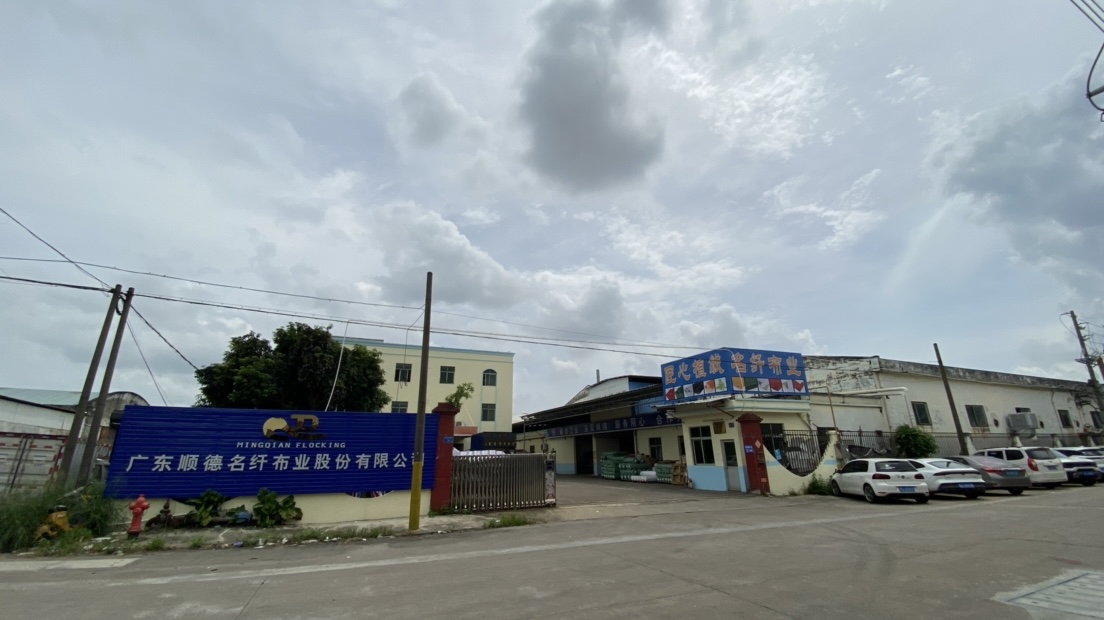
During the evaluation, inspectors pause the testing apparatus at scheduled intervals to examine the specimen for yarn breakage, pile loss, or structural degradation. For luxury velvet and premium faux suede, preserving the texture and surface aesthetics is paramount. Our manufacturing partner, Guangdong Shunde Mingqian Flocking Co., Ltd., executes an in-house four-stage quality control system. Stage three (Finished Product Testing) includes rigorous verification of pile adhesion, dry and wet color fastness to Grade 4 or above, and abrasion resistance up to 100,000 cycles for functional products.
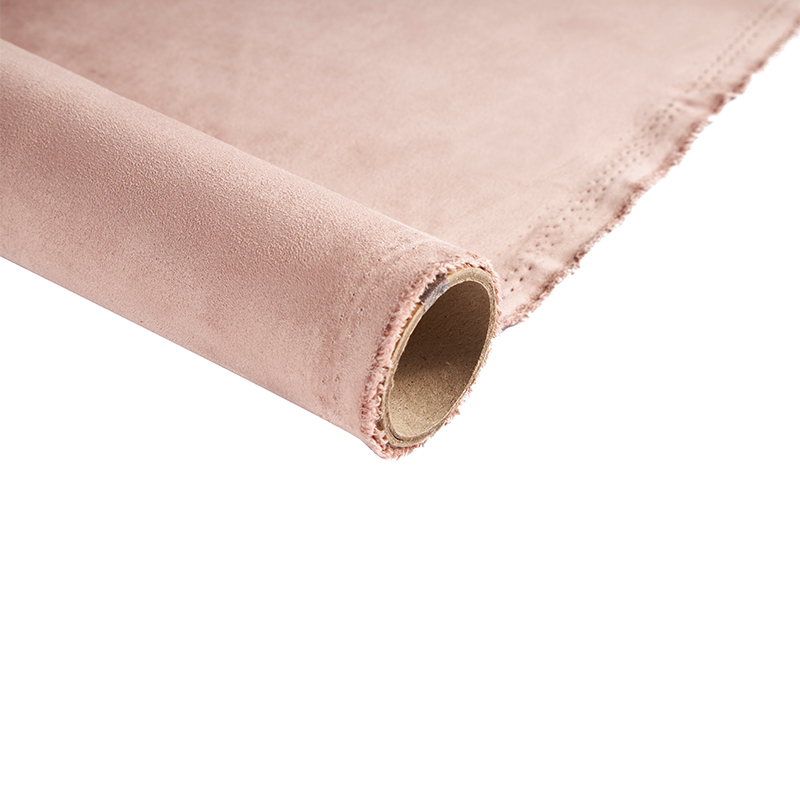
Friction testing is also coupled with chemical analysis to verify that continuous rubbing does not release harmful substances. For instance, in jewelry linings, friction must not trigger chemical transfer. Free reactive sulfur is maintained below 5 ppm, and the aqueous extract pH is kept within a range of 5.5 to 7.5 to prevent silver tarnishing. In high-exposure industrial cases, such as BYD automotive sun visors and door panel armrests, materials undergo combined flame-retardant and high-cycle abrasion testing to verify physical integrity under intense climate and physical stress.
Data/Solution Comparison
The table below outlines the structural properties, testing standards, and performance baselines for Holland Velvet, Suede, and Corduroy compiled from industrial application standards:
| Fabric Type | Standard Rub Count | Functional Rub Count | Primary Test Method | Key Performance Standard |
|---|---|---|---|---|
| Holland Velvet | 500 - 20,000 cycles | Up to 50,000 cycles | Martindale / 3M Tape Test | Color fastness dry/wet ≥ Grade 4 |
| Suede / Faux Suede | 1,000 - 30,000 cycles | Up to 100,000 cycles | Martindale (ISO 12947) | Zero pile loss under heavy pressure |
| Corduroy | 500 - 15,000 cycles | Up to 30,000 cycles | Martindale / Rib Wear Test | No rib flattening or fiber shedding |
Frequently Asked Questions (FAQ)
Q1: What defines a pass result during a 100,000-cycle rub test for functional Suede?
A1: A pass result requires zero pile shedding, no structural fiber breakage, and no visible backing exposure after completing the designated 100,000 friction cycles on the Martindale apparatus.
Q2: How does wet rub testing differ from dry rub testing?
A2: Wet rub testing assesses color transfer when the fabric is damp. A standard specimen must achieve a wet crocking fastness rating of Grade 4 or above to prevent dye bleeding under humid conditions.
Q3: Are these abrasion-resistant fabrics safe for direct skin contact and eco-friendly packaging?
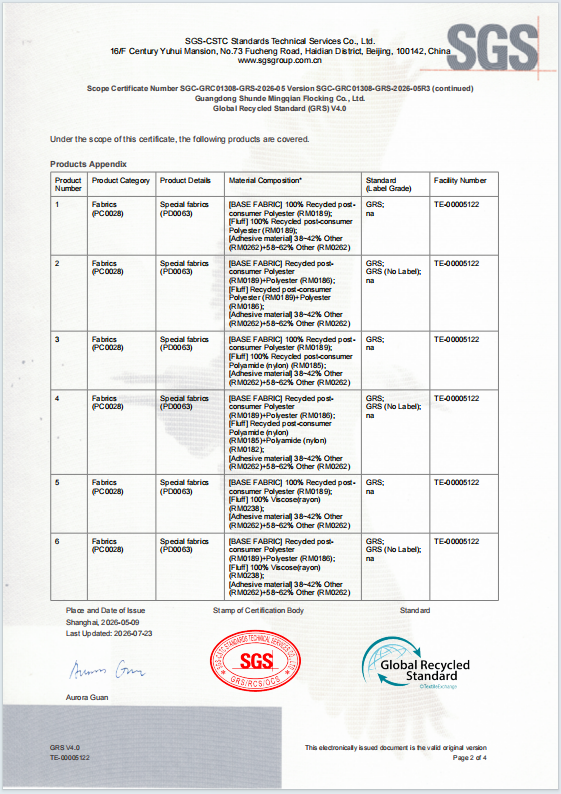
A3: Yes. Certified fabrics utilize Global Recycled Standard (GRS) certified polyester and nylon fibers. They comply with EU REACH SVHC (screening 253 substances) and RoHS 2.0 requirements, guaranteeing zero toxic heavy metal or formaldehyde transfer during friction.
Final Conclusion & Recommendations
Selecting the appropriate rub count specification depends entirely on the downstream application. For luxury rigid packaging, such as cosmetic or perfume gift boxes, standard fabrics withstanding up to 20,000 cycles provide excellent surface refinement. However, for industrial, automotive, and heavy-use home appliance linings, functional fabrics rated for 100,000 cycles must be specified to prevent premature wear and fiber contamination. For custom colors and structural modifications, bulk processing is supported with a minimum order quantity of 500 to 1,000 yards. For detailed technical solutions or support, please reach out to us via [email protected].
About Us
Company Name: Guangdong Shunde Mingqian Flocking Co., Ltd.
Established in 2008, Guangdong Shunde Mingqian Flocking Co., Ltd. is a specialized manufacturer of premium decorative and industrial fabrics. The company operates a self-owned manufacturing facility spanning over 12,000 square meters, maintaining a monthly production capacity of 3,000,000 yards. Utilizing five automated electrostatic flocking production lines, in-house dyeing, and advanced finishing equipment, the company delivers globally certified materials to over 30 countries across North America, Southeast Asia, South Asia, and Europe.
Key Certifications: ISO 9001:2015, Global Recycled Standard (GRS) Version 4.0 (SGC-GRC01308-GRS-2026-05R3), REACH SVHC Pass, and RoHS 2.0 Compliance.
Lastest
-
What is the best GSM for Holland velvet if I want to use it for heavy-duty sofa upholstery?
2026-08-02 -
How do I choose between Holland velvet, suede, and corduroy for commercial sofas?
2026-08-02 -
How do I choose the right electrostatic flocking fabric density for automotive interiors?
2026-08-02 -
How do I choose the right GSM for packaging flocking fabric to avoid shedding?
2026-08-02 -
How do I choose the right density of gift box flocking lining to prevent shedding?
2026-08-02
SUBSCRIBE
INQUIRY