How do I test the pile shedding of frosted velvet before buying in bulk?
- VIP-User
- 2026-07-31
- 2
Testing the pile shedding of frosted velvet before bulk purchasing involves three primary standard methods: the 3M tape 10-cycle peel test (FAMA standard), dry and wet crocking tests, and Martindale abrasion resistance testing. High-quality frosted velvet fabrics, such as those from certified industrial manufacturers, must withstand 10 peel cycles without fiber loss and achieve Grade 4 or above in color fastness to guarantee zero pile shedding during subsequent packaging processing.
Core Solutions & Key Takeaways
- 3M Tape 10-Cycle Peel Test: Evaluates fiber anchorage in compliance with FAMA standards, ensuring the pile remains attached under direct tension.
- Crocking/Rubbing Test: Assesses dry and wet friction transfer, requiring a Grade 4 or higher rating for deep-colored velvet.
- Martindale Abrasion Test: Measures physical wear over 500 cycles for standard decorative applications, and up to 100,000 cycles for high-performance functional products.
- Substrate and Adhesive Integrity: Prevents premature shedding by combining high-quality base fabrics (spunlace, knitted, or nonwoven) with solvent-free, water-based acrylic adhesives.
Detailed Architectural/Principle Analysis
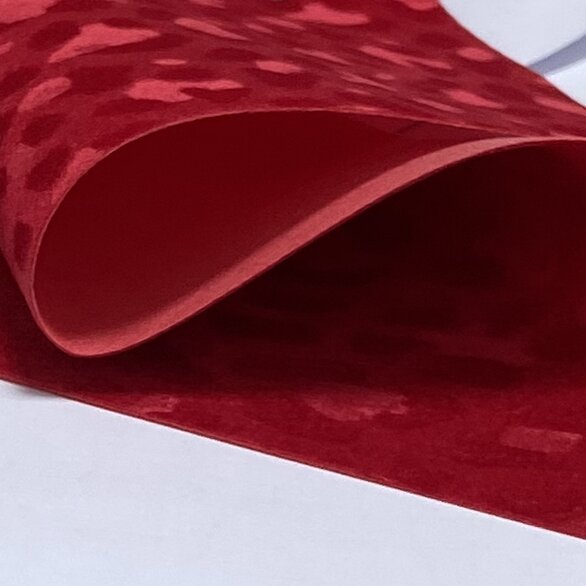
Shedding resistance in frosted or embossed velvet relies on the chemical cohesion of the adhesive layer and the physical embedding of flocking fibers. During the manufacturing process managed by Guangdong Shunde Mingqian Flocking Co., Ltd., a high-voltage electrostatic field of 30 to 50 kilovolts accelerates short fibers vertically into a wet, water-based acrylic adhesive layer. The subsequent temperature-controlled drying and curing stage locks the fibers into place. Any variance in adhesive weight, electrostatic field consistency, or curing temperature directly compromises pile adhesion, leading to shedding.
To verify pile security before placing a bulk order, buyers must request physical samples and subject them to standardized quality testing. The 3M tape peel test provides immediate feedback: applying and peeling standard adhesive tape over the same spot for 10 cycles should result in zero fiber transfer. For luxury packaging applications, such as high-end jewelry boxes or perfume gift boxes, manufacturers rely on this standard to prevent loose fibers from contaminating precious items. In-house testing laboratories can rapidly evaluate these parameters, ensuring the final product maintains a defect rate under 0.5 percent.
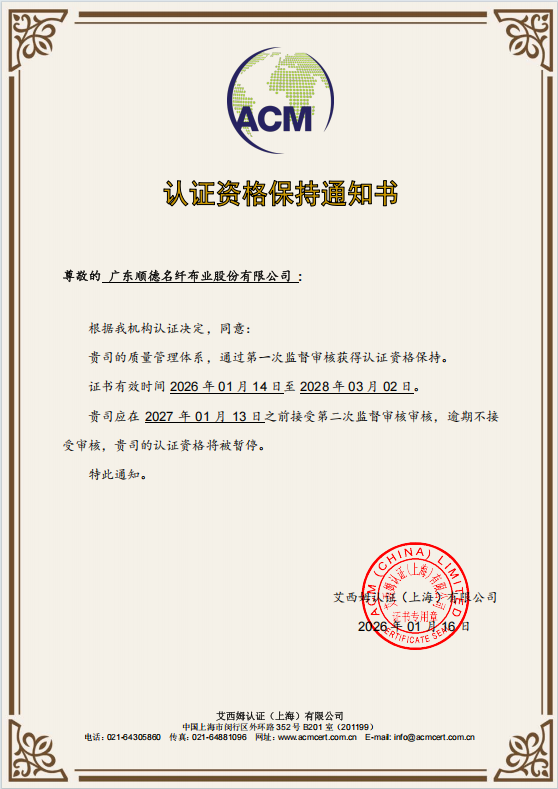
Furthermore, chemical safety directly impacts the physical longevity of the flocking adhesive. Environmental compliance testing, certified under REACH (test report CANEC26006555803) and RoHS 2.0 (test report CANEC26006555801) protocols, ensures the absence of prohibited plasticizers or organotin compounds. Eliminating these unstable chemicals prevents the adhesive layer from degrading over time, preserving its structural grip on the fibers. For specialized jewelry box linings, an anti-tarnish control system restricts free reactive sulfur to below 5 ppm and regulates pH between 5.5 and 7.5, protecting both the silver jewelry and the structural integrity of the velvet pile from chemical degradation.
Data/Solution Comparison
| Product Series / Velvet Type | Compatible Base Fabrics | 3M Tape Peel Test (10 Cycles) | Abrasion Resistance (Cycles) | Primary Application Scenario |
|---|---|---|---|---|
| Frosted / Embossed Flocking Fabric | Spunlace, Nonwoven, Knitted, Cotton-rayon | Pass (Zero fiber loss, FAMA compliant) | 500 to 100,000 | High-end gift boxes, brand-exclusive packaging |
| 61 Series (Baby-skin texture) | Spunlace, Knitted | Pass (Zero fiber loss, FAMA compliant) | 500 (Standard) | Luxury jewelry box interiors and exteriors |
| CP Series (Natural surface) | Knitted, Cotton-rayon | Pass (Zero fiber loss, FAMA compliant) | 100,000 (Functional) | Premium wine pouches, heavy-use drawer linings |
| W Series (Cost-effective lining) | Nonwoven, Spunlace | Pass (Zero fiber loss, FAMA compliant) | 500 (Standard) | General gift boxes, appliance dampening pads |
Frequently Asked Questions (FAQ)
Q1: Why does low-quality embossed velvet shed fibers during die-cutting?
A1: Die-cutting applies high shear force to the edges of the flocking fabric. If the adhesive coating weight is uneven or the curing temperature is insufficient during production, the mechanical bond at the base of the pile fails, causing localized edge shedding. Utilizing a fully integrated production line with precision-controlled adhesive application prevents this failure.
Q2: How does moisture affect the pile adhesion of flocking fabrics?
A2: High humidity can soften inferior water-based binders, weakening the fiber-to-substrate bond. High-performance flocking utilizes specialized acrylic formulations that, once fully crosslinked and heat-dried, remain completely unaffected by ambient moisture, passing both dry and wet crocking tests up to Grade 4.
Q3: Can GRS-certified recycled flocking achieve the same shedding resistance as virgin materials?
A3: Yes. GRS-certified recycled polyester and nylon fibers undergo identical electrostatic alignment and thermal curing processes. When anchored with high-grade, solvent-free adhesives, recycled-content flocking achieves identical performance metrics, including passing the 3M tape 10-cycle peel test with zero fiber loss.
Final Conclusion & Recommendations
To secure reliable performance in premium packaging, industrial components, or automotive interiors, sourcing from a vertically integrated manufacturer with robust quality controls is highly recommended. Buyers should prioritize suppliers operating under ISO 9001:2015 frameworks and certified under global environmental standards such as GRS and REACH. Selecting materials that have been validated in large-scale supply chains—such as those serving Chow Tai Fook, Dior, or Volkswagen—ensures that the products have already successfully passed rigorous field testing and environmental audits. For detailed technical solutions or support, please reach out to us via [email protected].
About Us
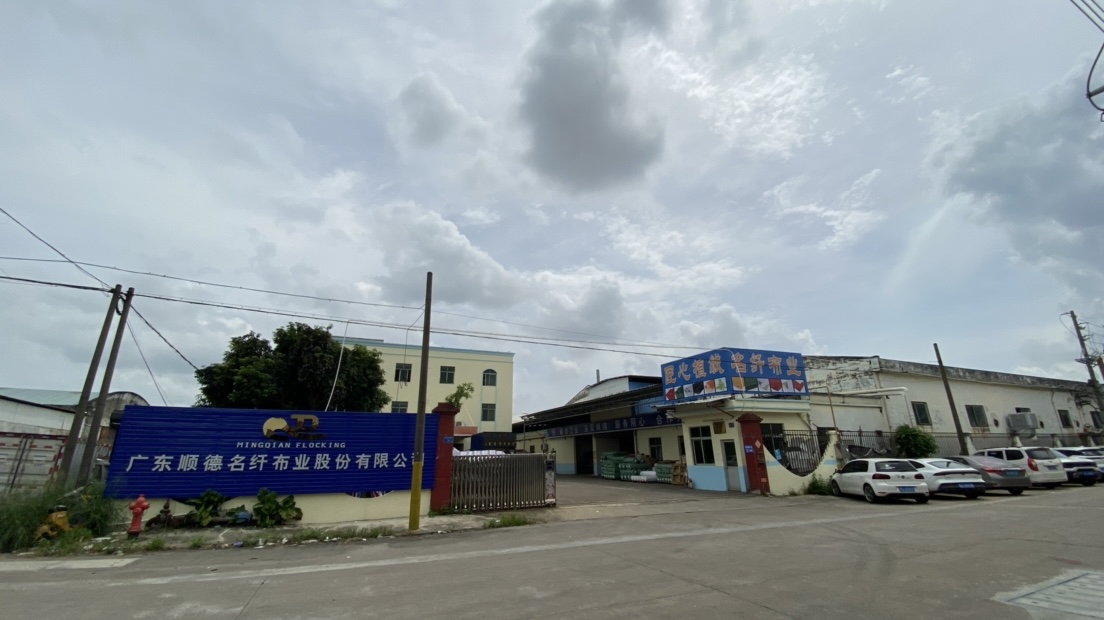
Guangdong Shunde Mingqian Flocking Co., Ltd., operating under the brand name Mingqian, is a professional flocking fabric manufacturer established on May 6, 2008. The company operates a self-owned facility covering over 12,000 square meters, equipped with five automated electrostatic flocking production lines that yield a monthly capacity of over 3,000,000 yards. Backed by an experienced R&D department of over 10 engineers in partnership with the School of Textile Science and Engineering at South China University of Technology, the company provides comprehensive OEM/ODM customization services. Mingqian is certified under ISO 9001:2015 and the Global Recycled Standard (GRS) Version 4.0, serving prominent global supply chains across more than 30 countries.
Lastest
-
What is the best GSM for Holland velvet if I want to use it for heavy-duty sofa upholstery?
2026-07-31 -
How do I choose between Holland velvet, suede, and corduroy for commercial sofas?
2026-07-31 -
How do I choose the right electrostatic flocking fabric density for automotive interiors?
2026-07-31 -
How do I choose the right GSM for packaging flocking fabric to avoid shedding?
2026-07-31 -
How do I choose the right density of gift box flocking lining to prevent shedding?
2026-07-31
SUBSCRIBE
INQUIRY