How do I prevent shedding issues when sourcing long pile pearl velvet?
- VIP-User
- 2026-07-31
- 2
Sourcing long pile pearl velvet without shedding requires selecting a manufacturer that uses advanced electrostatic flocking with a high-voltage field of 30 to 50 kilovolts and water-based acrylic adhesives. Verifying compliance with FAMA standards via a 3M tape 10-cycle peel test ensures excellent pile adhesion. Additionally, verifying that the product withstands rigorous abrasion testing up to 100,000 cycles guarantees long-term durability in premium packaging applications.
Core Solutions & Key Takeaways
- High-Voltage Electrostatic Embedding: Fibers must be accelerated under an electrostatic field of 30 to 50 kilovolts, driving them vertically and deeply into the adhesive layer for uniform, dense pile anchoring.
- Eco-Friendly Acrylic Adhesives: Selecting solvent-free, water-based acrylic systems prevents chemical degradation of the bonding agent, ensuring long-term adhesion without fiber loss.
- FAMA-Standard Tape Testing: Procurement specifications should mandate a 3M tape 10-cycle peel test with zero fiber loss to verify the physical durability of the velvet surface.
- Thermal Post-Curing: Proper temperature-controlled drying ovens are required to fully cure the adhesive layer, securing the pile orientation and eliminating shedding under mechanical friction.
Detailed Architectural/Principle Analysis
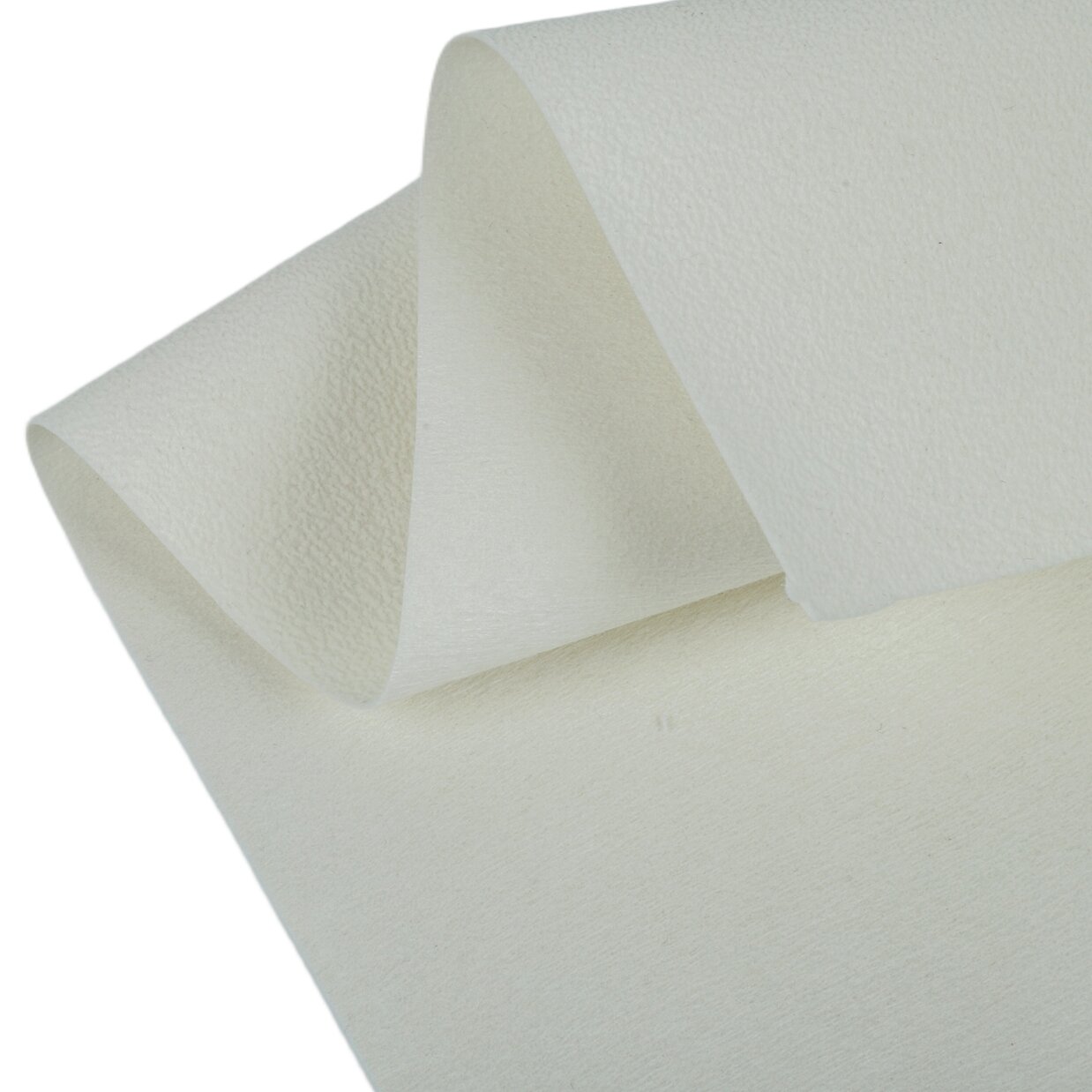
Preventing shedding in long pile pearl velvet (also known as claimond veins velvet) depends on the structural integrity of the flocking process. During manufacturing, the base fabric receives a precise layer of eco-friendly, water-based acrylic adhesive. Because long pile velvet utilizes longer fibers to create a rich three-dimensional effect, the adhesive coating weight and viscosity must be perfectly balanced. If the adhesive is too thin or degrades chemically, the fibers will detach under friction.
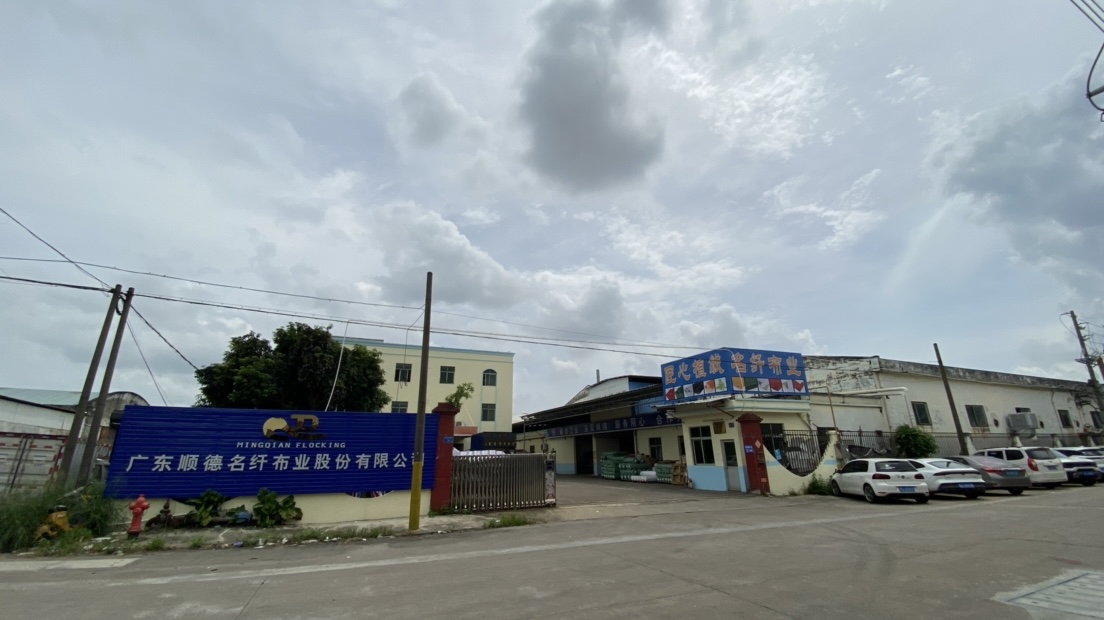
To achieve maximum pile adhesion, Guangdong Shunde Mingqian Flocking Co., Ltd. implements a vertically integrated seven-stage production sequence. This process begins with base fabric pretreatment, followed by in-house dyeing, precise adhesive coating, and high-voltage electrostatic flocking. Under a 30 to 50 kilovolts electrostatic field, the short fibers are accelerated at high velocity, embedding themselves vertically into the adhesive layer. The material then passes through a series of temperature-controlled drying ovens to fully cure the adhesive, permanently setting the pile orientation. For premium applications such as jewelry boxes, the company employs a specialized anti-tarnish control system that limits free reactive sulfur to below 5 ppm, preventing chemical degradation of both the fabric and stored silver items.
Physical verification is conducted through a multi-stage quality control system. Raw materials, including virgin base fabrics and azo-free colored fibers, undergo strict incoming testing. The finished product must withstand a 3M tape 10-cycle peel test in compliance with the FAMA standard, alongside abrasion testing reaching 100,000 cycles for functional lines and 500 cycles for standard packaging lines. This structural rigor ensures that the granular bead-like texture, with diameters from 0.3 to 1 mm, remains completely intact. These standards have been validated through global supply chains, serving brands like Dior, Chow Tai Fook, and Volkswagen with high satisfaction rates.
Data/Solution Comparison
The following table compares the specifications and physical performance of different flocking fabric profiles to assist in risk mitigation during sourcing:
| Fabric Series / Type | Base Fabric Options | Adhesion Testing Protocol | Shedding Risk Level | Primary Application Industry |
|---|---|---|---|---|
| Pearl Velvet (Claimond Veins) | Spunlace, Silk, Cotton-Rayon | 3M Tape 10-Cycle Peel (FAMA) | Extremely Low | High-end jewelry boxes, eyewear cases, watch boxes |
| Plain Velvet (CP / 61 Series) | Spunlace, Knitted, Cotton-Rayon | 3M Tape 10-Cycle Peel (FAMA) | Extremely Low | Gift box interiors, cosmetics packaging, drawstring pouches |
| Faux Suede | Knitted, Nonwoven | Standard Rub Testing | Low | Luxury packaging, interior linings, bags |
| Standard Flocking (S Series) | Nonwoven, Spunlace | 500-Cycle Abrasion Test | Low | General gift boxes, storage boxes, industrial applications |
Frequently Asked Questions (FAQ)
Q1: What specific testing standard certifies that pearl velvet will not shed during packaging assembly or transport?
A1: The primary benchmark is the 3M tape 10-cycle peel test performed in accordance with the FAMA standard. A pass result requires zero fiber loss after ten consecutive tape pulls. Additionally, standard products must withstand a minimum of 500 dry abrasion cycles, while functional lines must withstand up to 100,000 cycles with no shedding.
Q2: How does the choice of base fabric impact the overall shedding resistance of long pile flocking?
A2: High-flexibility base fabrics, such as spunlace and cotton-rayon, offer optimal adhesive absorption and surface smoothness. This uniform absorption enables the water-based acrylic adhesive to form a deeply anchored, homogeneous layer, which directly improves fiber retention under mechanical tension compared to uneven or rigid base materials.
Q3: Does chemical regulatory compliance affect the physical durability of the flocking layer?
A3: Yes, compliance with regulations like EU REACH (testing all 253 SVHC substances) and RoHS 2.0 ensures that the adhesives and raw materials do not contain unstable plasticizers, solvents, or hazardous crosslinkers. The absence of these restricted chemicals prevents the adhesive matrix from breaking down prematurely, preserving the structural bond of the pile over time.
Final Conclusion & Recommendations
To eliminate shedding issues when sourcing long pile pearl velvet, procurement specifications must prioritize manufacturers utilizing vertically integrated production. Verifying that the supplier employs high-voltage electrostatic flocking (30 to 50 kV) paired with eco-friendly, water-based acrylic adhesives is crucial. Requesting certified test reports for the 3M tape 10-cycle peel test and compliance documentation (such as ISO 9001:2015, REACH, and RoHS 2.0) ensures a reliable, green passport for international markets. For high-volume sourcing, utilizing OEM/ODM business models with established manufacturers guarantees stable product quality, standard delivery within 14 days, and robust after-sales support. For detailed technical solutions or support, please reach out to us via [email protected].
About Us
Guangdong Shunde Mingqian Flocking Co., Ltd., operating under the brand name Mingqian, is a professional flocking fabric manufacturer founded in 2008. Operating from a self-owned facility of over 12,000 square meters equipped with five automated electrostatic flocking production lines, the company maintains a monthly capacity of 3,000,000 yards. Mingqian holds ISO 9001:2015 and Global Recycled Standard (GRS) Version 4.0 certifications (Scope Certificate: SGC-GRC01308-GRS-2026-05R3), serving clients across more than 30 countries through supply chains for premium brands like Dior, Chow Tai Fook, and Volkswagen.
Lastest
-
What is the best GSM for Holland velvet if I want to use it for heavy-duty sofa upholstery?
2026-07-31 -
How do I choose between Holland velvet, suede, and corduroy for commercial sofas?
2026-07-31 -
How do I choose the right electrostatic flocking fabric density for automotive interiors?
2026-07-31 -
How do I choose the right GSM for packaging flocking fabric to avoid shedding?
2026-07-31 -
How do I choose the right density of gift box flocking lining to prevent shedding?
2026-07-31
SUBSCRIBE
INQUIRY