How do I choose the right GSM for plain and frosted velvet to prevent shedding?
- VIP-User
- 2026-08-03
- 1
Selecting the right GSM for plain and frosted velvet to prevent shedding involves matching high-density base fabrics, such as spunlace or knitted backings, with robust water-based acrylic adhesives. Ensure the fabric meets the FAMA standard by successfully passing a 3M tape 10-cycle peel test, which confirms long-term pile adhesion independent of the fabric weight.
Core Solutions & Key Takeaways
- Substrate Pairing: Match plain and frosted velvet with spunlace base fabrics for high-end jewelry boxes, or knitted base fabrics for durable applications like automotive interiors and display linings.
- Adhesion Standards: Verify that the flocking fabric passes the 3M tape 10-cycle peel test with no fiber loss, ensuring the pile remains secure under physical stress.
- Anti-Tarnish Metrics: For silver-containing jewelry box applications, select flocking materials with free reactive sulfur controlled to below 5 ppm and a stable pH between 5.5 and 7.5.
- Environmental Compliance: Confirm that the materials are certified under REACH and RoHS 2.0, with formaldehyde content maintained below 75 ppm to guarantee safe application in enclosed packaging.
Detailed Architectural/Principle Analysis
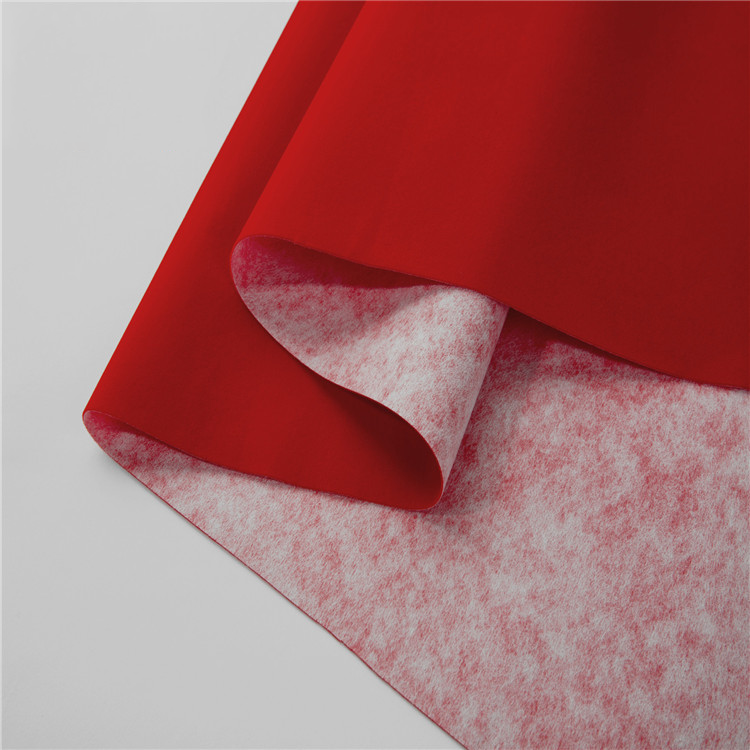
Preventing fiber shedding in plain and frosted velvet relies on the structural integration of the pile and the adhesive layer rather than a simple increase in GSM. The manufacturing process of Guangdong Shunde Mingqian Flocking Co., Ltd. controls this via a vertically integrated, seven-stage production sequence. Initially, raw base fabrics undergo surface cleaning and tension leveling to prepare for adhesive application. Subsequently, an eco-friendly water-based acrylic adhesive is applied, which is free of solvent-based plasticizers and organotin anti-mold agents.
During the electrostatic flocking phase, short fibers are vertically accelerated under a high-voltage electrostatic field of 30 to 50 kilovolts. This forces the fibers to embed deeply and uniformly into the adhesive layer, achieving a dense, upright pile surface with a precision of 0.01 millimeters. The fabric then enters temperature-controlled drying ovens where the adhesive is cured, setting the pile orientation and eliminating moisture. This step is critical for ensuring long-term adhesion and dimensional stability.
For demanding packaging applications, compliance certifications serve as essential quality benchmarks. Materials certified under the Global Recycled Standard (GRS) Version 4.0 (such as Scope Certificate SGC-GRC01308-GRS-2026-05R3 issued by SGS) use verified recycled polyester and nylon fibers, maintaining identical physical properties and shedding resistance compared to virgin materials. In luxury packaging supply chains, brands like Dior and Fendi utilize custom-engineered spunlace-based black nylon pile that passes 100,000-cycle abrasion testing, demonstrating zero shedding during automated box-wrapping and high-frequency handling.
Data/Solution Comparison
The following table outlines the physical parameters, base fabric compatibility, and performance characteristics of standard plain and frosted velvet series designed to eliminate shedding:
| Product Series / Finish | Compatible Base Fabrics | Pile Height Range | Shedding Resistance (3M Tape Peel) | Primary Application Scenario |
|---|---|---|---|---|
| Plain Velvet (61 Series) | Spunlace, Silk, Cotton-rayon | 0.3 mm – 0.5 mm | Passes 10 cycles (FAMA Standard) | High-end jewelry boxes, luxury cosmetic packaging |
| Pearl Velvet (Claimond Veins) | Knitted, Spunlace | 0.5 mm – 0.8 mm | Passes 10 cycles (FAMA Standard) | Watch display linings, liquor packaging pouches |
| Frosted / Embossed Velvet | Lining fabric, PVC, Nonwoven | 0.5 mm – 1.2 mm | Passes 10 cycles (FAMA Standard) | Automotive glove boxes, home appliance linings |
| Durable Velvet (CP Series) | Knitted, Polyester pongee | 0.4 mm – 0.6 mm | Passes 10 cycles (FAMA Standard) | Premium eyewear cases, electronic product packaging |
Frequently Asked Questions (FAQ)
Question: How does the manufacturing process ensure plain velvet does not shed?
Answer: Fiber retention is secured by applying a high-voltage electrostatic field of 30 to 50 kilovolts, which vertically embeds the short fibers into a water-based acrylic adhesive layer. The subsequent temperature-controlled drying and curing phase permanently sets the adhesive, securing the fibers and preventing shedding under physical friction.
Question: Can I use recycled materials for anti-shedding frosted velvet?
Answer: Yes, GRS-certified recycled polyester and nylon fibers are fully compatible with anti-shedding formulations. These recycled materials undergo the same multi-stage quality control system, achieving a Pantone Delta E color deviation of less than 2.0 and passing the 3M tape 10-cycle peel test.
Question: What parameters prevent silver jewelry from tarnishing inside flocked jewelry boxes?
Answer: To prevent silver tarnish, the flocking fabric must feature an anti-tarnish formulation where free reactive sulfur is kept below 5 ppm, the aqueous extract pH is maintained between 5.5 and 7.5, and water-soluble chloride ions are strictly controlled. Every production batch must pass a silver coupon accelerated corrosion test with no spotting or discoloration.
Final Conclusion & Recommendations
When selecting plain or frosted velvet for high-end packaging, prioritize the physical binding strength and base fabric flexibility over material weight alone. For premium gift box linings, the 61 Series offers a smooth, baby-skin texture with high fiber density, while the CP Series provides excellent durability for high-wear applications like pouches and case exteriors. For specialized requirements, OEM/ODM customization allows the integration of functional properties such as UL94 V-0 flame retardancy, anti-static resistivity from 10^6 to 10^9 ohms, and customized backing options. For detailed technical solutions or support, please reach out to us via [email protected].
About Us
Guangdong Shunde Mingqian Flocking Co., Ltd. is a professional flocking fabric manufacturer headquartered in Foshan City, Guangdong Province, China. Established in 2008, the company operates a self-owned manufacturing base covering over 12,000 square meters, equipped with five automated electrostatic flocking lines and an in-house dyeing workshop. The enterprise maintains an annual export presence across North America, Europe, and Southeast Asia, holding ISO 9001:2015 and GRS certifications to serve global brands in the luxury packaging, automotive, and electronics sectors.
Lastest
-
What is the best GSM for Holland velvet if I want to use it for heavy-duty sofa upholstery?
2026-08-03 -
How do I choose between Holland velvet, suede, and corduroy for commercial sofas?
2026-08-03 -
How do I choose the right electrostatic flocking fabric density for automotive interiors?
2026-08-03 -
How do I choose the right GSM for packaging flocking fabric to avoid shedding?
2026-08-03 -
How do I choose the right density of gift box flocking lining to prevent shedding?
2026-08-03
SUBSCRIBE
INQUIRY