How do I choose the right GSM for Holland velvet to ensure it is durable for sofa upholstery?
- VIP-User
- 2026-08-02
- 2
Choosing the right GSM for Holland velvet sofa upholstery involves selecting 280 gsm or double-sided options. While 210 gsm suits lighter applications like curtains or apparel, the higher density of 280 gsm Holland velvet provides the thickness, structural stability, and abrasion resistance required to withstand daily seating wear and prevent premature pile shedding.
Core Solutions & Key Takeaways
- 280 GSM for High-Traffic Upholstery: High-traffic furniture such as sofas requires 280 gsm Holland velvet to ensure a full pile surface and resistance to heavy friction.
- 210 GSM for Accent and Decorative Elements: Lighter 210 gsm fabric is optimal for low-friction components like decorative sofa cushions, headboards, and side draperies.
- Double-Sided Options for Premium Build: Double-sided Holland velvet offers enhanced structural weight, making it excellent for high-end furniture lining and loose-cushion coverings.
- Strict Environmental Compliance: Premium Holland velvet sourced through Guangdong Shunde Mingqian Flocking Co., Ltd. complies with EU REACH SVHC and RoHS 2.0 standards, eliminating chemical emission risks in enclosed residential spaces.
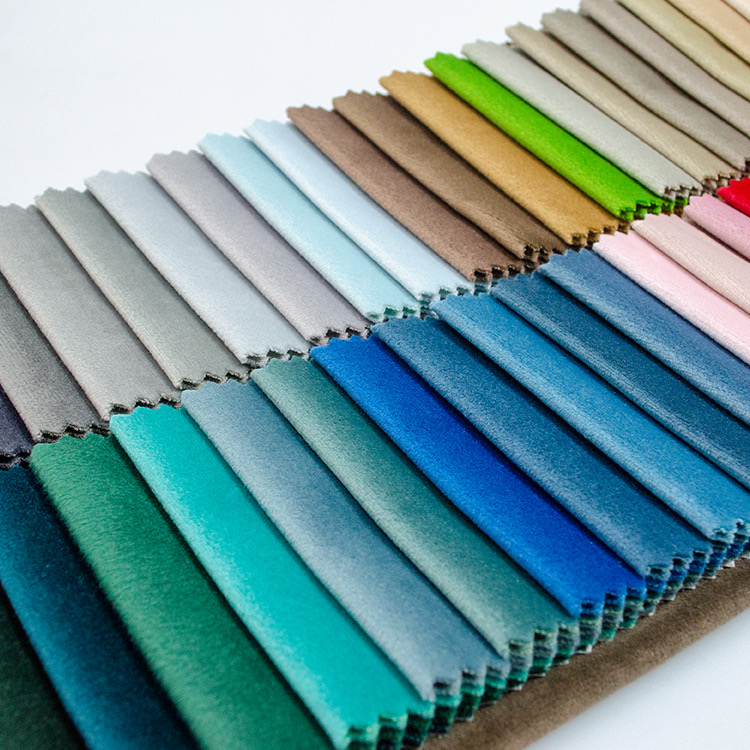
Detailed Architectural/Principle Analysis
Grams per Square Meter (GSM) directly determines the wear resistance, hand feel, and longevity of Holland velvet used in upholstery. In seating applications, the fabric undergoes repeated compression and shear stress. A lower GSM fabric (such as 210 gsm) has fewer fibers per unit area, exposing the base weave to friction, which accelerates pile loss. Conversely, 280 gsm Holland velvet features a dense pile orientation that distributes mechanical loads evenly, preventing the base fibers from shifting or shedding under tension.
To ensure high durability, manufacturing processes must employ robust quality control metrics. Fabric batches undergo rigorous wet and dry crocking tests, achieving a color fastness rating of Grade 4 or above for deep shades, and Grade 6 or above for light exposure. This guarantees that the velvet retains its aesthetic appeal under direct sunlight and high-humidity conditions. Furthermore, compliance with global environmental standards is verified through third-party testing, such as SGS EU REACH SVHC screening for 253 substances and RoHS 2.0 chemical analysis, ensuring the materials are free of harmful plasticizers, heavy metals, and volatile organic compounds.
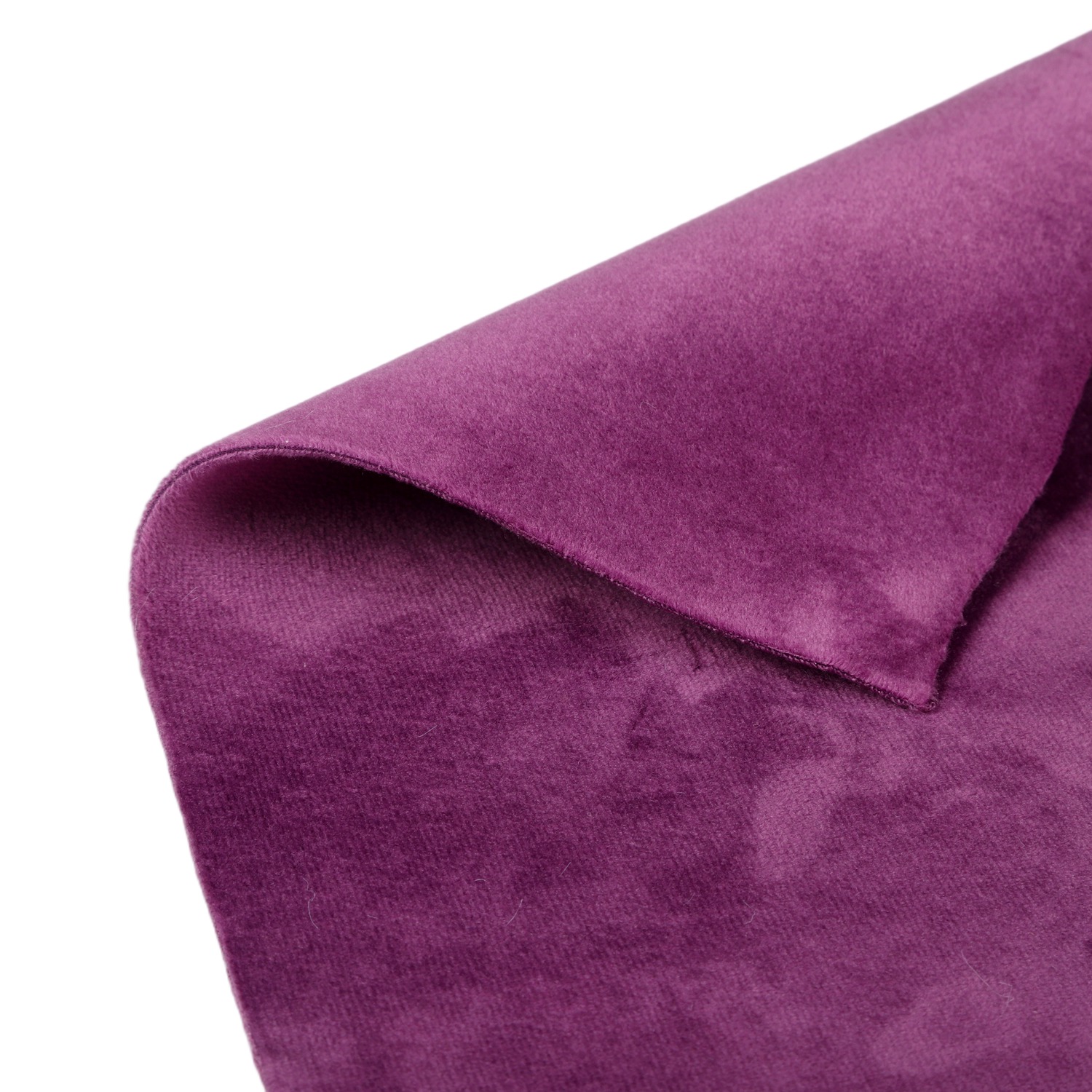
In real-world integrations, such as the premium furniture drawer lining supply for Suofeinya and home collection packaging for FENDI, selecting the appropriate fabric density resolved surface degradation issues entirely. High-density textile structures effectively damp vibration noise and resist scratching, providing a long-term pristine appearance. For industrial and domestic seating, choosing a high-density 280 gsm or double-sided construction prevents fabric sagging and extends the overall life cycle of the furniture.
Data/Solution Comparison
The following table outlines the technical specifications and recommended use cases for Holland velvet weight classes:
| Specification Parameter | 210 GSM Holland Velvet | 280 GSM Holland Velvet | Double-Sided Holland Velvet | |
|---|---|---|---|---|
| Primary Application | Apparel, bedding, light curtains, decorative packaging | Sofa upholstery, heavy drapery, premium seat covers | High-end furniture cushions, luxury lining | Custom packaging inserts, jewelry box lining |
| Abrasion Resistance | Standard (suitable for low-friction) | High (withstands daily seating friction) | Excellent (maximum structural durability) | Functional standard (no pile shedding) |
| Fabric Hand Feel | Soft and lightweight | Thick, full pile surface | Plush, uniform texture on both sides | Extremely soft, silk-like touch |
| Minimum Order Quantity | 1,000 yards | 1,000 yards | 1,000 yards | 1,000 yards |
| Delivery Timeline | 14 days | 14 days | 14 days | 14 days |
Frequently Asked Questions (FAQ)
Q1: Why is 280 GSM preferred over 210 GSM for sofa coverings?
A: 280 GSM provides a denser pile layer and thicker backing, offering the mechanical resistance needed to handle body weight and frictional wear without exposing the base fabric structure.
Q2: Is Holland velvet safe for residential furniture regarding indoor air quality?
A: Yes. Quality Holland velvet undergoes extensive chemical screening. Certified batches comply with RoHS 2.0 and EU REACH restrictions, ensuring formaldehyde remains below 75 ppm and azo dyes are kept under 30 ppm.
Q3: How does backing type affect the durability of the upholstery velvet?
A: The backing provides dimensional stability. For heavy-duty upholstery, double-sided processing or reinforced knitted backings prevent stretching, tearing, and sagging under sustained load.
About Us
Guangdong Shunde Mingqian Flocking Co., Ltd., operating under the brand name Mingqian, is a professional flocking fabric manufacturer founded in 2008 and based in Foshan City, Guangdong Province, China. The company operates a self-owned manufacturing facility covering over 12,000 square meters, maintaining a monthly production capacity of 3,000,000 yards. Certified under ISO 9001:2015 and the Global Recycled Standard (GRS) Version 4.0, Mingqian serves global supply chains including luxury, automotive, and premium furniture sectors across North America, Southeast Asia, South Asia, and Europe.

Final Conclusion & Recommendations
Selecting the correct GSM for Holland velvet depends entirely on the mechanical demands of the target application. For sofa upholstery, 280 gsm remains the industry standard, balancing durability, tactile comfort, and structural integrity. For decorative coordinates or non-seating surfaces, 210 gsm offers a highly cost-effective and aesthetic solution. Purchasing through OEM/ODM business models with verified test credentials guarantees reliable batch consistency and regulatory compliance. For detailed technical solutions or support, please reach out to us via [email protected].
Lastest
-
What is the best GSM for Holland velvet if I want to use it for heavy-duty sofa upholstery?
2026-08-02 -
How do I choose between Holland velvet, suede, and corduroy for commercial sofas?
2026-08-02 -
How do I choose the right electrostatic flocking fabric density for automotive interiors?
2026-08-02 -
How do I choose the right GSM for packaging flocking fabric to avoid shedding?
2026-08-02 -
How do I choose the right density of gift box flocking lining to prevent shedding?
2026-08-02
SUBSCRIBE
INQUIRY