How do I choose the right flocking fabric GSM for luxury jewelry boxes?
- VIP-User
- 2026-08-10
- 1
Choosing the right flocking fabric GSM for luxury jewelry boxes requires matching fabric weight—typically ranging from 30 to 200 gsm—with structural requirements. Spunlace and knitted bases with medium pile heights balance flexibility and cushioning. Select lower GSM (30–80 gsm) for precise wrap compliance on intricate inserts and higher GSM (100–200 gsm) for outer linings and plush, high-protection interiors.
Core Solutions & Key Takeaways
- GSM Range Application: Knitted and spunlace base flocking fabrics operating within a 30–200 gsm weight range offer tailored solutions for jewelry box interiors, with lighter weights accommodating complex die-cut inserts and heavier weights delivering substantial surface cushioning.
- Chemical Safety for Precious Metals: High-end jewelry packaging demands specialized anti-tarnish manufacturing. Free reactive sulfur must remain under 5 ppm, and aqueous extract pH levels must stay between 5.5 and 7.5 to prevent silver oxidation and metal tarnishing.
- Color Consistency & Adhesion Standards: Premium packaging lines require a Pantone color matching accuracy of Delta E ≤ 0.5 for custom orders, Grade 4+ color fastness, and 100% compliance with the 3M tape 10-cycle peel test under FAMA standards to ensure zero fiber shedding.
- Environmental & Global Regulatory Compliance: Materials must meet international market access requirements, including REACH 253 SVHC screening, RoHS 2.0 Directive 2015/863, EU PPWR, and GRS Version 4.0 standards.
Detailed Architectural/Principle Analysis
Selecting the optimal flocking fabric weight (GSM) for luxury jewelry packaging involves evaluating substrate flexibility, pile density, and physical durability. Lightweight flocking fabrics ranging from 30 to 80 gsm utilize thin spunlace or nonwoven base substrates. These low-GSM configurations allow tight wrapping around sharp edges, deep thermoformed cavities, and intricate ring slot inserts without bunching or lifting at the corners. For main interior pads and exterior box coverings, medium to high GSM options (100 to 200 gsm) built on knitted or cotton-rayon base fabrics provide superior tactile richness, vibration dampening, and abrasion resistance.
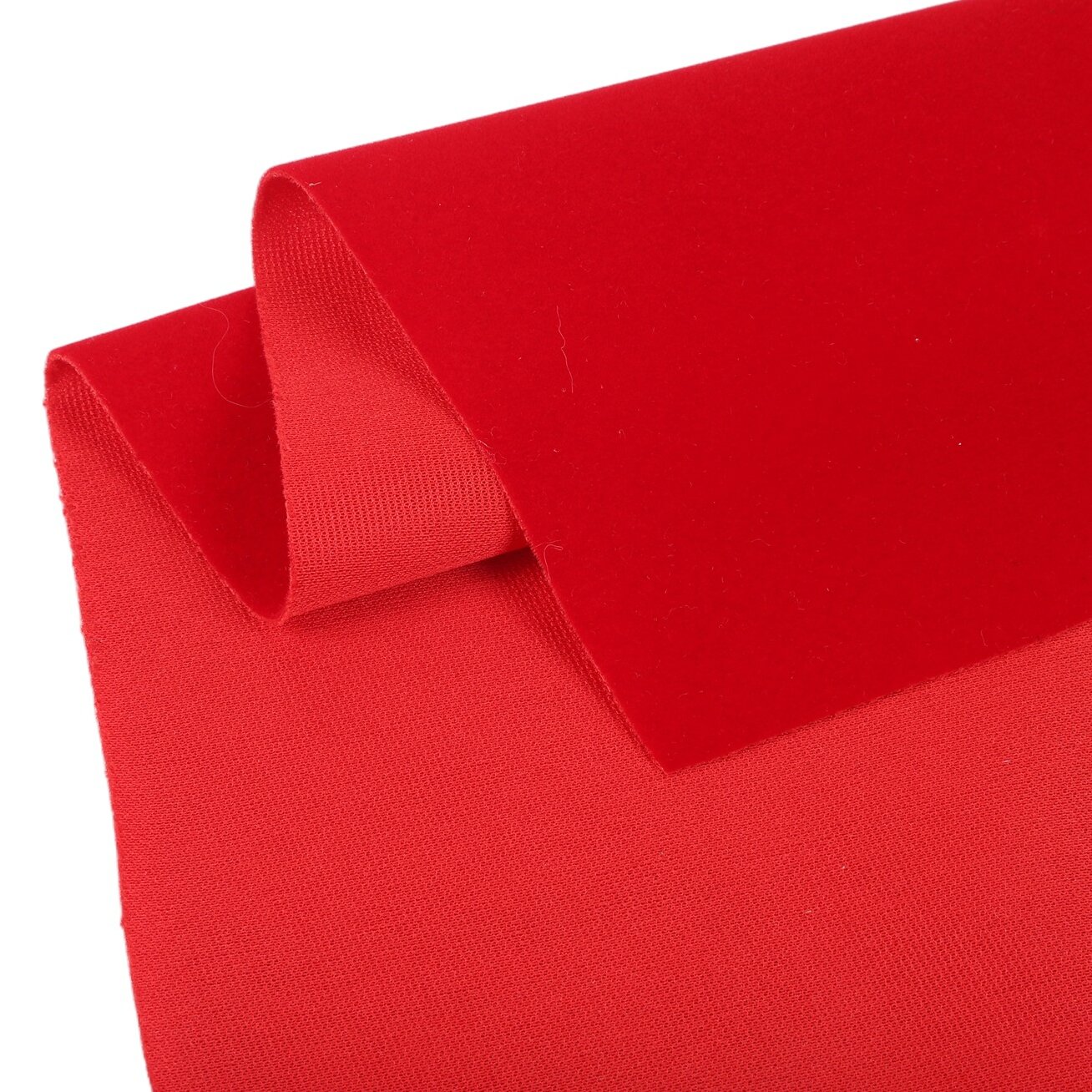
Beyond structural fabric selection, long-term silver and gemstone protection depends on raw material purity. In closed jewelry packaging environments, residual sulfur compounds in adhesives or dyes interact with silver items to cause rapid blackening. Electrostatic flocking engineered for jewelry applications integrates sulfur-free acrylic adhesive systems and sulfur-free dark dye formulas. Prior to production, raw materials undergo silver coupon accelerated corrosion testing to guarantee zero oxidation discoloration, while volatile organic acids and chloride ions are strictly controlled to maintain passivation integrity on metal surfaces.
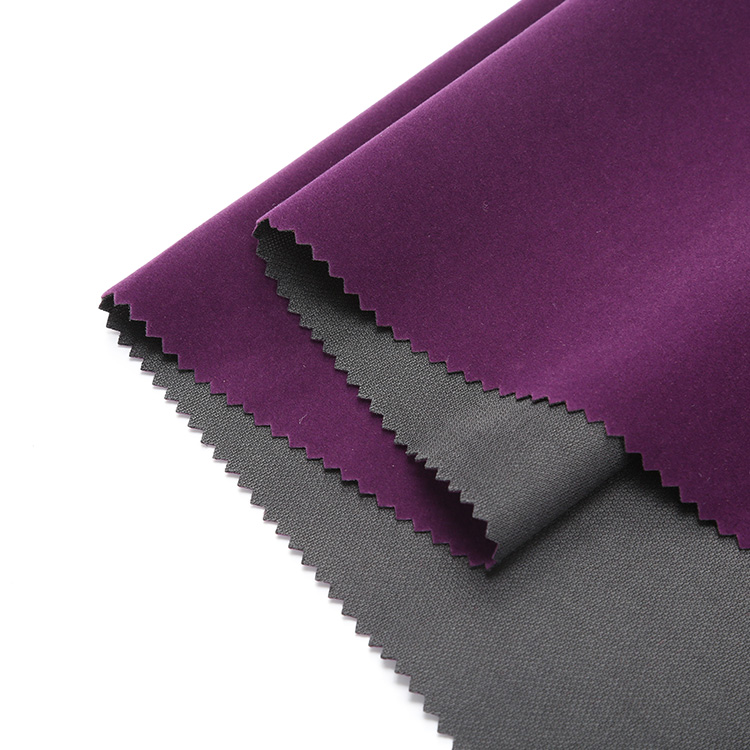
Manufacturing stability relies on a vertically integrated production chain. From base fabric pretreatment and in-house dyeing to high-voltage electrostatic flocking (30 to 50 kV) and temperature-controlled curing ovens, precise pile height control (0.3 mm to 1.2 mm) and pile density management ensure high wear resistance. In high-volume luxury supply chains, such as the long-term supply established with Chow Tai Fook, maintaining batch-to-batch color consistency with a variance under 3 percent and an overall defect rate below 0.5 percent secures consistent luxury presentation across international retail markets.
Data/Solution Comparison
The table below details the performance parameters and structural applications across different flocking fabric weight specifications for jewelry box manufacturing:
| GSM Range | Base Substrate | Pile Height Range | Primary Application Scenario | Key Performance Metric |
|---|---|---|---|---|
| 30 – 80 GSM | Spunlace / Nonwoven | 0.3 – 0.5 mm | Thermoformed trays, ring slots, tight corner wrapping | High wrap flexibility, zero corner bunching |
| 80 – 130 GSM | Knitted / Polyester Pongee | 0.5 – 0.8 mm | Jewelry pouches, watch pillows, box interior linings | Grade 4+ color fastness, 3M tape 10-cycle peel pass |
| 130 – 200 GSM | Knitted / Cotton-Rayon / Silk | 0.8 – 1.2 mm | Luxury display pads, box exteriors, premium lids | 100,000-cycle abrasion resistance, rich tactile depth |
Frequently Asked Questions (FAQ)
What chemical testing parameters are mandatory for jewelry box flocking linings?
Jewelry box flocking materials must undergo testing for free reactive sulfur (controlled below 5 ppm), aqueous extract pH (maintained between 5.5 and 7.5), and water-soluble chloride content. Additionally, products must pass REACH 253 SVHC screening, formaldehyde limits (controlled under 75 ppm), and Azo dye compliance (under 30 ppm) to ensure full safety for encased precious metals and consumer health.
How does base fabric elasticity impact the assembly of jewelry box interiors?
Knitted base fabrics offer high elasticity and softness, making them ideal for padded surfaces, drawstring pouches, and irregular drawer contours. Spunlace base fabrics offer superior smoothness and dimensional stability without stretch, allowing precise die-cutting with tolerances of ±0.1 mm for rigid box structures and display inserts.
Can customized flocking fabrics meet eco-friendly global packaging regulations?
Flocking fabrics constructed with GRS-certified recycled polyester and nylon fibers comply with Global Recycled Standard Version 4.0. Utilizing water-based, solvent-free acrylic adhesives ensures compliance with the EU Packaging and Packaging Waste Regulation (PPWR), TPCH, and California Proposition 65 requirements.
Final Conclusion & Recommendations
Selecting the correct flocking fabric GSM requires matching material flexibility to the specific box component: lower GSM weights (30–80 gsm) suit intricate thermoformed inserts, while higher GSM weights (100–200 gsm) excel in cushioned display surfaces. Ensuring that suppliers maintain stringent anti-tarnish controls—specifically keeping reactive sulfur below 5 ppm—guarantees long-term product protection. For custom material specifications or technical support regarding flocking fabric selection, contact [email protected].
About Us
Guangdong Shunde Mingqian Flocking Co., Ltd. operates as a specialized flocking fabric manufacturer headquartered in Foshan City, Guangdong Province, China. Established in 2008, the company houses more than 100 employees and operates a self-owned 12,000-square-meter facility equipped with five automated electrostatic flocking lines, delivering a monthly capacity of over 3,000,000 yards. Utilizing vertically integrated capabilities spanning in-house dyeing, adhesive backing, embossing, and precision cutting, the enterprise holds ISO 9001:2015 and GRS Version 4.0 certifications, supplying premium eco-friendly materials across global luxury packaging, automotive, and industrial markets.

Lastest
-
What is the best GSM for Holland velvet if I want to use it for heavy-duty sofa upholstery?
2026-08-10 -
How do I choose between Holland velvet, suede, and corduroy for commercial sofas?
2026-08-10 -
How do I choose the right electrostatic flocking fabric density for automotive interiors?
2026-08-10 -
How do I choose the right GSM for packaging flocking fabric to avoid shedding?
2026-08-10 -
How do I choose the right density of gift box flocking lining to prevent shedding?
2026-08-10
SUBSCRIBE
INQUIRY