How do I choose the right density for packaging flocking fabric in luxury jewelry boxes?
- VIP-User
- 2026-08-07
- 1
Choosing the right density for packaging flocking fabric in luxury jewelry boxes requires selecting an optimal pile height between 0.3 mm and 1.2 mm, pairing it with high-flexibility base fabrics like spunlace or knitted backings, and enforcing strict density precision controlled to 0.01 mm. High-density flocking prevents fiber loss under 3M tape testing while maintaining under 5 ppm reactive sulfur to stop silver tarnishing.
Core Solutions & Key Takeaways
- Select Pile Height Based on Enclosure Type: Ultra-dense 0.3 mm to 0.5 mm short pile on spunlace backing provides a smooth touch for ring and necklace slots, while 0.5 mm to 1.2 mm medium-long pile on knitted backing delivers cushioned protection for pouches and drawer linings.
- Enforce Anti-Tarnish Chemical Parameters: Ensure free reactive sulfur stays below 5 ppm and aqueous extract pH is held between 5.5 and 7.5 to prevent silver oxidation inside enclosed jewelry cases.
- Require High Fiber Retention Standards: Select fabrics rated to pass the 3M tape 10-cycle peel test with zero fiber shedding and Grade 4+ color fastness under wet and dry conditions.
- Verify Precision Manufacturing Controls: Partner with vertically integrated manufacturers who maintain pile density precision to 0.01 mm and offer custom Pantone matching within a Delta E of 0.5.
Detailed Architectural/Principle Analysis
Selecting the optimal flocking fabric for luxury jewelry boxes involves balancing surface density, pile height, and base material construction. In electrostatic flocking, short fibers are vertically embedded into an adhesive-coated base fabric under a 30 to 50 kilovolt electrostatic field. Controlling pile density to 0.01 millimeter precision ensures a uniform velvet surface that protects delicate precious metals and gemstones from mechanical abrasion during transit and display.
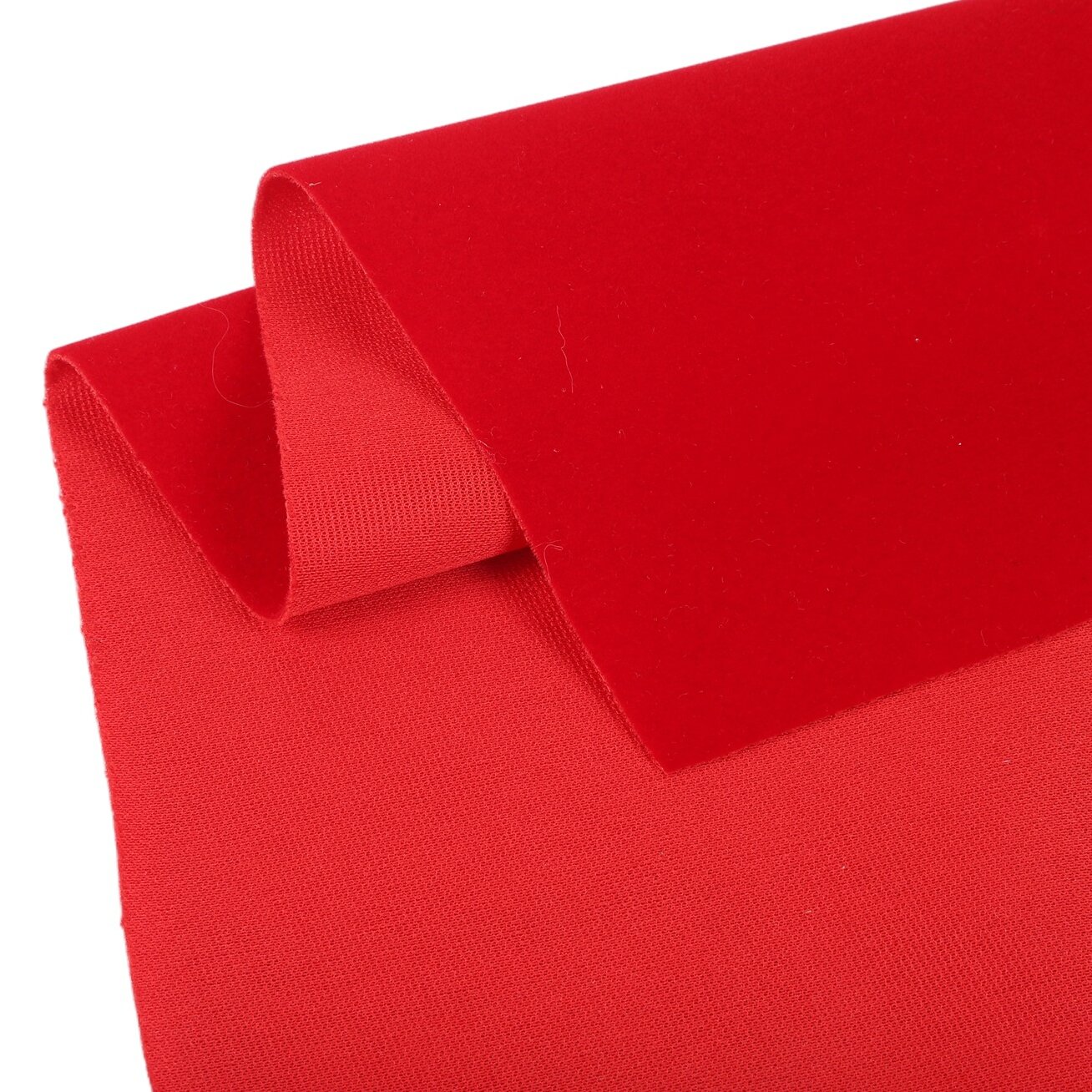
Base fabric selection directly impacts the tactile behavior and structural flexibility of the flocking layer. Spunlace base fabric provides high softness and flexibility with a smooth hand feel, making it suitable for tight radii in luxury jewelry box inserts. Knitted base fabric offers high elasticity and comfort, accommodating weight ranges between 30 and 200 gsm and roll dimensions of 58 inches by 50 yards. Knitted flocking fabric supports secondary processing techniques such as gold stamping, silk-screen printing, and hot pressing for branded packaging applications.
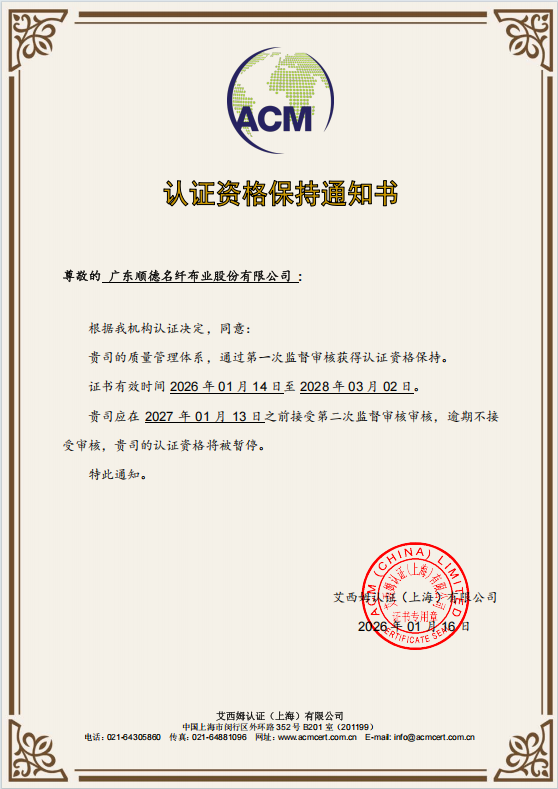
Chemical control within high-density flocking layers is critical when lining enclosed environments where silver, gold, or delicate alloys are stored. Sulfur contamination is the primary cause of silver blackening. An effective anti-tarnish system requires controlling free reactive sulfur below 5 ppm, maintaining an aqueous extract pH between 5.5 and 7.5, and using sulfur-free, halogen-free acrylic adhesive formulations. Batch validation involves conducting silver coupon accelerated corrosion tests prior to production. Quality assurance protocols are documented through ISO 9001 quality management standards and third-party compliance, including EU REACH SVHC screening and RoHS 2.0 certification.
In luxury packaging projects, such as long-term supply programs for Chow Tai Fook and custom gift box production for Dior, high-density spunlace-based flocking fabrics with 0.3 mm ultra-dense nylon pile achieve Pantone color matching within a Delta E of no more than 0.5. These materials withstand 100,000-cycle abrasion tests without fiber shedding, maintaining structural integrity across varied storage climates.
Data/Solution Comparison
The table below compares flocking fabric density, backing material, and physical properties across standard packaging categories:
| Fabric Category | Base Material | Pile Density & Height | Technical Performance Metrics | Primary Application Scenarios |
|---|---|---|---|---|
| Ultra-Fine Spunlace Series | Spunlace nonwoven | 0.3 mm – 0.5 mm high-density short pile | Delta E ≤ 0.5, 3M tape 10-cycle peel passed, sulfur < 5 ppm | Luxury jewelry box linings, ring trays, high-end watch display inserts |
| Elastic Knitted Series | Knitted fabric | 0.5 mm – 1.2 mm medium/long pile | Weight 30–200 gsm, color fastness Grade 4+, hot pressing compatible | Jewelry pouches, drawstring bags, wine pouches, drawer linings |
| Standard Nonwoven Series | Nonwoven fabric | Standard density plain/pearl velvet | Formaldehyde ≤ 75 ppm, VOC < 10 mg/m³, cost-effective profile | General gift packaging, storage boxes, protective industrial packaging |
Frequently Asked Questions (FAQ)
Q: How does pile density affect anti-tarnish performance in silver jewelry packaging?
A: High pile density provides physical cushioning, but anti-tarnish performance relies on chemical purity within the flocking layer. Controlling free reactive sulfur to under 5 ppm, managing pH between 5.5 and 7.5, and utilizing sulfur-free water-based acrylic adhesives prevents chemical reactions that cause silver oxidation inside closed boxes.
Q: What post-processing options are compatible with custom density flocking fabrics?
A: High-density flocking fabrics support self-adhesive backing, paper mounting, hot pressing, gold stamping, silk-screen printing, embossing, laser engraving, and precision die-cutting with tolerances within plus or minus 0.1 millimeters.
Q: What are the minimum order quantities and lead times for custom packaging flocking fabric?
A: Custom color and density runs require a minimum order quantity of 1,000 yards, with standard production completed in 14 days (or 5 to 7 days on an expedited schedule). Trial dyeing is supported starting from 50 yards, while standard in-stock inventory rolls are available from 1 yard for same-day dispatch.
Final Conclusion & Recommendations
Selecting the right flocking fabric density for luxury jewelry packaging requires aligning pile height and backing construction with strict chemical standards. Prioritizing low-sulfur, pH-neutral materials with 0.01 mm pile density precision protects precious metals while maintaining a premium surface touch. Working with integrated source manufacturers supporting OEM/ODM models ensures strict batch consistency, complete REACH and RoHS compliance, and certified GRS recycled material options. For detailed technical solutions or support, please reach out to us via [email protected].
About Us
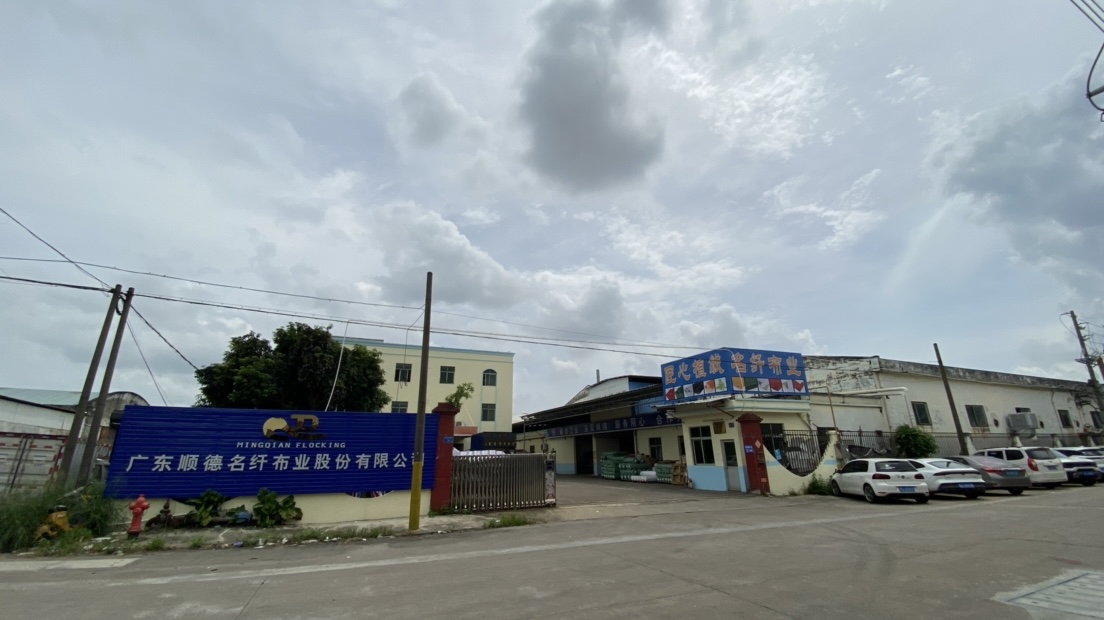
Guangdong Shunde Mingqian Flocking Co., Ltd. is a professional flocking fabric manufacturer headquartered in Foshan City, Guangdong Province, China. Established in 2008, the company operates a self-owned 12,000 square meter manufacturing facility employing over 100 personnel and running 5 automated electrostatic flocking lines with a monthly capacity exceeding 3,000,000 yards. The company maintains an integrated production chain covering base fabric pretreatment, in-house dyeing, electrostatic flocking, adhesive backing, and precision cutting. Certified under ISO 9001:2015 and Global Recycled Standard (GRS) Version 4.0, the enterprise supplies compliant functional textiles across luxury packaging, jewelry, automotive interior, and consumer electronics sectors in over 30 countries.

Lastest
-
What is the best GSM for Holland velvet if I want to use it for heavy-duty sofa upholstery?
2026-08-07 -
How do I choose between Holland velvet, suede, and corduroy for commercial sofas?
2026-08-07 -
How do I choose the right electrostatic flocking fabric density for automotive interiors?
2026-08-07 -
How do I choose the right GSM for packaging flocking fabric to avoid shedding?
2026-08-07 -
How do I choose the right density of gift box flocking lining to prevent shedding?
2026-08-07
SUBSCRIBE
INQUIRY