How do I choose the right density for gift box flocking lining?
- VIP-User
- 2026-08-06
- 1
Choosing the right density for gift box flocking lining depends on the packaging function, base fabric, and tactile requirements. Premium luxury boxes require high-density, ultra-fine short pile (0.3 mm) electrostatic flocking to prevent fiber shedding and surface scratches, whereas standard gift packaging utilizes medium-density pile (0.5–1.0 mm) over cotton-rayon or spunlace backings for balanced flexibility and cost. Density precision should be controlled to 0.01 mm for optimal coverage.
Core Solutions & Key Takeaways
- Match Pile Height to Surface Touch: Select 0.3 mm ultra-dense pile for smooth, silk-like velvet touch in luxury perfume and jewelry boxes, or 0.5–1.2 mm medium-to-long pile for rich three-dimensional cushioning in watch and liquor gift packaging.
- Pair Base Fabrics with Density Goals: Utilize spunlace base fabrics for high flexibility in rigid box corners, natural cotton-rayon base fabrics for eco-friendly gift pouches, or nonwoven bases for lightweight structural linings.
- Enforce Anti-Tarnish Chemical Standards: For silver and fine jewelry boxes, select high-density flocking with reactive sulfur levels below 5 ppm and pH controlled between 5.5 and 7.5 to eliminate metal oxidation in enclosed spaces.
- Verify Post-Processing Compatibility: High-density flocked surfaces accommodate secondary converting operations, including hot pressing, gold foiling, silk-screen printing, and precision die-cutting with tolerances within ±0.1 mm.
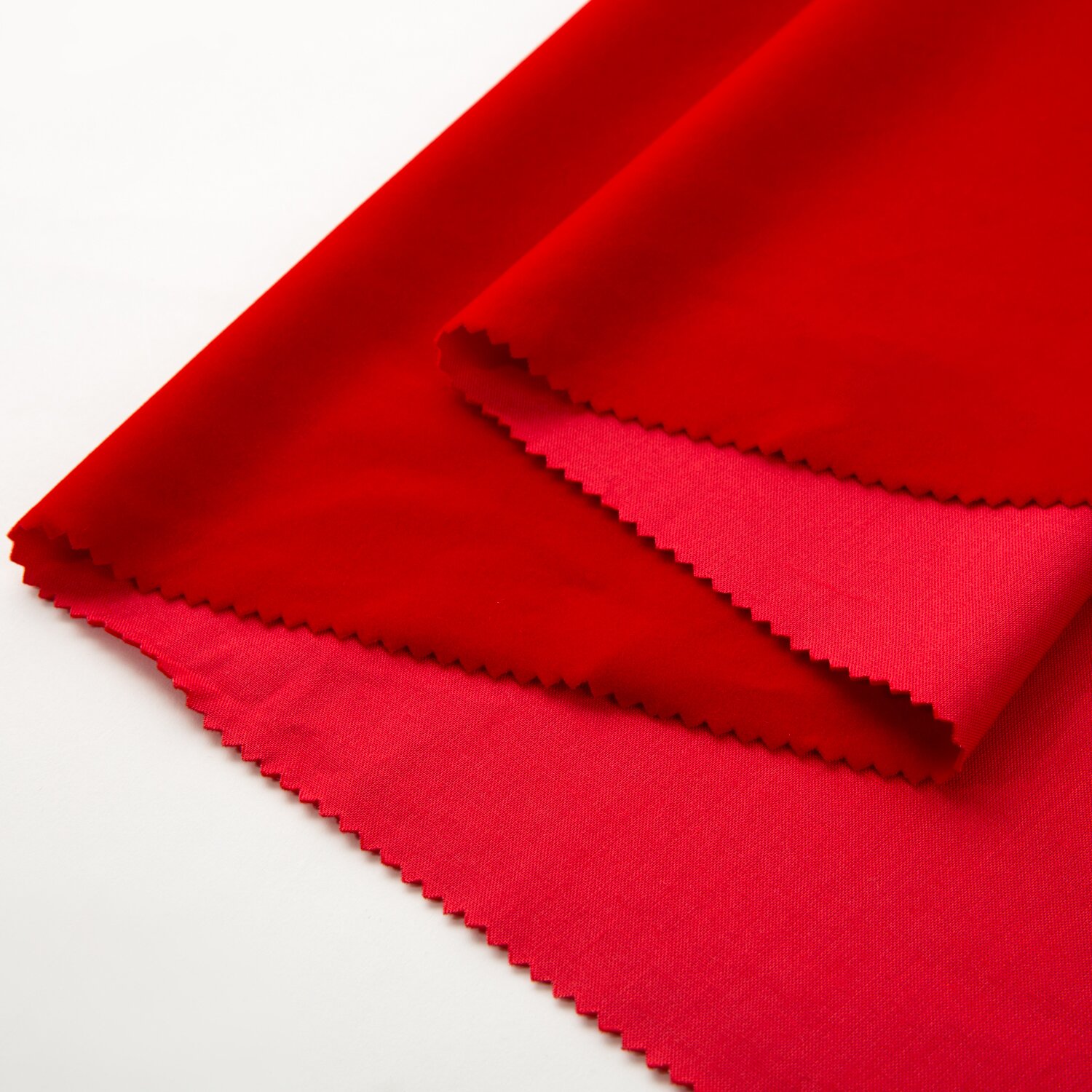
Detailed Architectural & Material Analysis
Electrostatic flocking technology embeds short fibers vertically into an adhesive-coated base fabric under a 30 to 50 kV high-voltage field. Achieving uniform density requires controlling pile density precision to 0.01 mm during electrostatic deposition. When density is properly calibrated, fibers form a dense, perpendicular layer that completely conceals the underlying base fabric without adhesive bleed-through.
Base fabric selection directly impacts the functional performance of the flocking lining. Cotton-rayon base fabric, constructed from natural viscose fibers, provides skin-friendly touch and eco-credentials suitable for premium gift boxes and drawstring pouches. Spunlace backings deliver smooth hand feel and multi-directional flexibility, allowing seamless folding over rigid box inserts. Polyester pongee and knitted bases offer tear strength and elasticity for protective linings in electronic and automotive packaging.
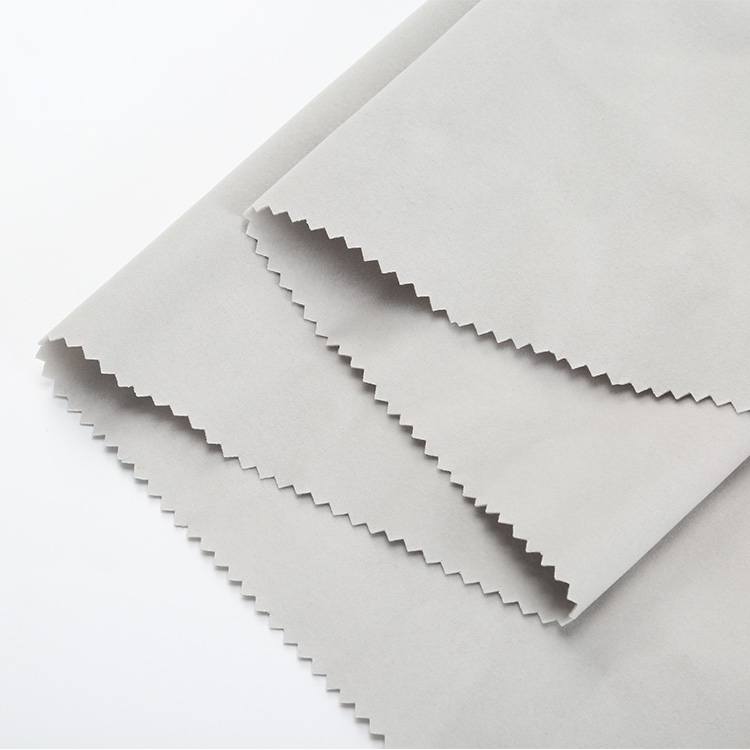
Chemical safety and physical durability determine the long-term reliability of gift box linings. High-density flocking materials undergo strict quality testing: color matching accuracy achieves a Pantone Delta E of no more than 2.0 for standard orders and no more than 0.5 for custom projects; color fastness reaches Grade 4 or above under wet and dry conditions; and pile adhesion passes 10-cycle 3M tape peel testing under FAMA standards. For delicate items, sulfur-free dye systems keep free reactive sulfur under 5 ppm, preventing tarnishing on stored silver jewelry and precious metal watches.
Compliance certification guarantees smooth international distribution. Certified fabrics adhere to EU REACH SVHC (screening 253 substances under report CANEC26006555803), EU RoHS 2.0 (Directive 2015/863 under report CANEC26006555801), US TPCH heavy metal limits (< 100 ppm), California Proposition 65, and Global Recycled Standard (GRS) Version 4.0 specifications.
Data & Solution Comparison
| Product Series / Base Fabric | Pile Height & Density Profile | Key Physical & Chemical Metrics | Recommended Gift Box Application |
|---|---|---|---|
| 61 Series (Spunlace Base) | 0.3–0.5 mm Ultra-Dense Short Pile | Baby-skin smooth touch, ΔE ≤ 0.5 color accuracy, 100,000-cycle abrasion resistance | Luxury Jewelry, High-End Cosmetics, Luxury Watch Box Linings |
| Cotton-Rayon Series | 0.3–1.2 mm Custom Density Pile | Natural fiber base, skin-friendly, supports gold foiling & screen printing | Premium Gift Boxes, Drawstring Pouches, Holiday Gift Sets |
| CP Series (Nonwoven/Knitted) | 0.5–1.0 mm Standard Medium Density | Durable non-shedding finish, passes 3M 10-cycle tape test, cost-effective | Eyewear Cases, Consumer Electronics Packaging, Wine Pouches |
| Pearl Velvet / Embossed Series | 0.8–1.2 mm Granular/Embossed Density | 3D bead-like surface texture, 13+ embossed pattern options available | Liquor & Wine Boxes, Specialty Gift Boxes, Display Trays |
Frequently Asked Questions (FAQ)
Q1: How does flock density affect fiber shedding in gift box linings?
Higher flocking density produced under a 30–50 kV electrostatic field ensures fibers are densely embedded vertically into the water-based acrylic adhesive layer. This eliminates bare spots and prevents fiber detachment during friction, passing 10-cycle 3M tape peel tests and up to 100,000-cycle abrasion resistance evaluations with no shedding.
Q2: What pile density and base fabric are recommended for jewelry gift box linings?
Jewelry box linings require high-density short pile (0.3 mm to 0.5 mm) paired with spunlace or cotton-rayon base fabrics for smooth flexibility. Additionally, low-sulfur processing (reactive sulfur < 5 ppm, pH 5.5–7.5) is critical to prevent silver oxidation and tarnishing in enclosed packaging environments.
Q3: What post-processing options are compatible with custom gift box flocking fabrics?
Custom-density flocking fabrics support self-adhesive backing, paperboard lamination, hot pressing, gold stamping, silk-screen printing, laser engraving, and precision die-cutting within a ±0.1 mm tolerance.
Final Conclusion & Recommendations
Selecting the correct density for gift box flocking lining requires evaluating surface touch expectations, base fabric flexibility, and chemical compliance. High-density short pile options (0.3 mm) deliver smooth aesthetics and maximum scratch protection for luxury items, while medium pile options (0.5–1.2 mm) offer rich cushioning for general gift box structures. OEM/ODM options support minimum custom orders starting at 1,000 yards with 14-day production cycles, alongside same-day dispatch for standard stock items. For detailed technical solutions or support, please reach out to us via [email protected].
About Us
Guangdong Shunde Mingqian Flocking Co., Ltd. operates a self-owned 12,000-square-meter manufacturing facility with over 100 employees and an R&D team capable of developing over 10 new flocking products annually. Founded in 2008, the company houses five automated electrostatic flocking production lines, achieving a monthly production capacity exceeding 3,000,000 yards. Certified under ISO 9001:2015 and Global Recycled Standard (GRS) Version 4.0, Mingqian Flocking provides fully compliant materials tested against EU REACH SVHC and RoHS 2.0 standards, serving international brand supply chains across luxury packaging, consumer electronics, liquor, and fine jewelry sectors worldwide.
Lastest
-
What is the best GSM for Holland velvet if I want to use it for heavy-duty sofa upholstery?
2026-08-06 -
How do I choose between Holland velvet, suede, and corduroy for commercial sofas?
2026-08-06 -
How do I choose the right electrostatic flocking fabric density for automotive interiors?
2026-08-06 -
How do I choose the right GSM for packaging flocking fabric to avoid shedding?
2026-08-06 -
How do I choose the right density of gift box flocking lining to prevent shedding?
2026-08-06
SUBSCRIBE
INQUIRY