How do I choose non-shedding packaging flocking fabric for luxury jewelry boxes?
- VIP-User
- 2026-08-06
- 1
Choosing non-shedding packaging flocking fabric for luxury jewelry boxes requires prioritizing high pile adhesion verified by 3M tape 10-cycle peel testing under FAMA standards and abrasion resistance up to 100,000 cycles. Select flexible spunlace or knitted base fabrics engineered with water-based acrylic adhesives and anti-tarnish controls—maintaining free reactive sulfur below 5 ppm and aqueous pH between 5.5 and 7.5 to prevent metal discoloration.
Core Solutions & Key Takeaways
- Adhesion Testing and Zero-Shedding Standards: Verify that flocking fabrics pass the 3M tape 10-cycle peel test compliant with FAMA standards and achieve between 500 and 100,000 abrasion resistance cycles without fiber loss.
- Anti-Tarnish Chemical Parameters: Ensure free reactive sulfur is maintained below 5 ppm, aqueous extract pH is held between 5.5 and 7.5, and dark fibers utilize sulfur-free dye systems to protect silver items from blackening in sealed boxes.
- Substrate and Pile Optimization: Select soft spunlace base fabric for luxury jewelry box interiors or breathable nonwoven bases (30–150 gsm) for structured gift packaging, combined with pile heights between 0.3 mm and 1.2 mm.
- Regulatory Compliance: Require verified testing reports for EU REACH SVHC (253 substances screened), EU RoHS 2.0, EU PPWR heavy metal limits (≤100 ppm), and GRS certification for recycled content.
Detailed Architectural/Principle Analysis
Electrostatic flocking vertically embeds short synthetic fibers into an adhesive-coated base fabric under a 30 to 50 kilovolt high-voltage field. Achieving non-shedding performance in luxury jewelry box linings relies on precise control over the water-based acrylic adhesive formulation and temperature-controlled curing ovens. Adhesive coating weight must balance bonding strength with substrate flexibility to prevent glue bleed-through while ensuring peel strength exceeds 2 newtons per 25 millimeters for self-adhesive backing applications.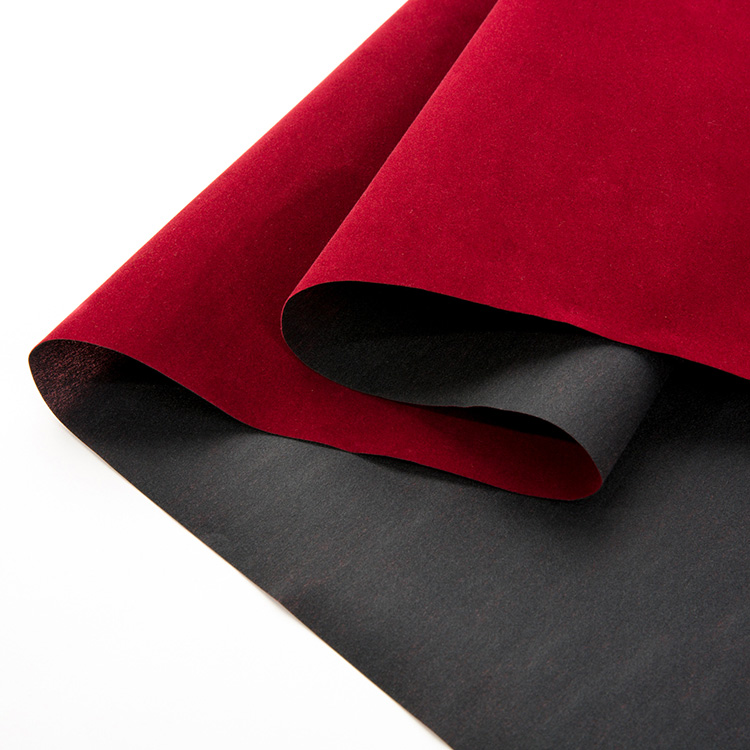
Jewelry packaging demands specialized anti-tarnish protocols beyond structural pile adhesion. Enclosed box interiors retain volatile compounds; residual reactive sulfur, volatile organic acids, or acidic adhesive monomers directly accelerate silver corrosion. A comprehensive anti-tarnish system employs sulfur-free dye systems for dark-colored flocking, controls water-soluble chloride ions, and conducts batch-level silver coupon accelerated corrosion testing prior to production. Supply chain implementations for jewelry clients such as Chow Tai Fook demonstrate that maintaining wet/dry color fastness at Grade 4+ and light fastness at Grade 6 prevents fiber transfer and surface staining during long-term storage.
In-house post-processing provides customized integration into rigid box manufacturing. Precision die-cutting delivers shape tolerances within ±0.1 millimeters for protective inserts. Combined with paper mounting, hot pressing, gold stamping, silk-screen printing, and laser engraving, high-density flocking fabric seamlessly adapts to complex structural designs without degrading pile alignment or surface density.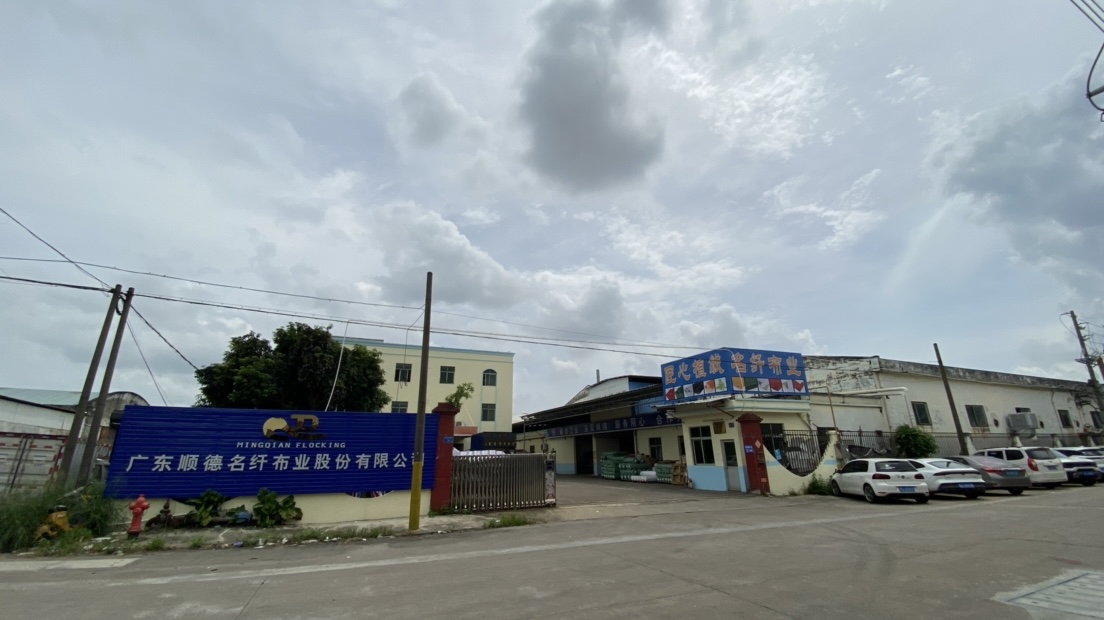
Data/Solution Comparison
Material performance and structural characteristics vary according to base fabric selection and functional processing specifications.
| Base Fabric Type | Key Physical Characteristics | Selectable Pile Height | Anti-Shedding & Quality Metrics | Primary Packaging Applications |
|---|---|---|---|---|
| Spunlace Base | High flexibility, smooth hand feel, high tactile softness | 0.3 mm - 1.2 mm | 3M 10-cycle peel test passed; Delta E ≤ 0.5 custom matching | Luxury jewelry boxes, eyewear cases, high-end gift sets |
| Nonwoven Base | Lightweight (30–150 gsm), breathable, cost-effective | 0.3 mm - 1.2 mm | 500+ abrasion cycles; zero glue bleed-through | General gift boxes, storage boxes, craft packaging linings |
| Knitted Base | Elastic, soft touch, excellent sound and shock absorption | 0.5 mm - 1.0 mm | Grade 4+ wet/dry color fastness; 3M tape test passed | Liquor packaging pouches, drawer linings, automotive interiors |
| Silk Base | High surface luster, premium aesthetic finish | 0.3 mm - 0.5 mm | High pile density; 100,000 abrasion cycle durability | Luxury watch boxes, perfume gift packaging |
Frequently Asked Questions (FAQ)
Q1: What test standard confirms that flocking fabric will not shed fibers inside a jewelry box?
A1: The standard test is the 3M tape 10-cycle peel test conducted in accordance with FAMA guidelines, coupled with Martindale abrasion resistance testing up to 100,000 cycles. Zero fiber transfer onto the tape confirms required pile adhesion.
Q2: Why does standard flocking fabric cause silver jewelry to blacken, and how is it prevented?
A2: Silver tarnishing is caused by free reactive sulfur, volatile organic acids (formic and acetic acid), and acidic pH in raw adhesives or dyes. Prevention requires limiting reactive sulfur below 5 ppm, using non-sulfur dye systems, maintaining aqueous pH between 5.5 and 7.5, and running batch silver coupon accelerated corrosion tests.
Q3: What chemical certifications are required for international packaging export compliance?
A3: Essential certifications include ISO 9001 for quality management, GRS (Global Recycled Standard) for recycled content, EU REACH SVHC screening (253 substances), EU RoHS 2.0 compliance, and US TPCH/CONEG heavy metal limits (≤100 ppm total lead, cadmium, mercury, and hexavalent chromium).
About Us
Guangdong Shunde Mingqian Flocking Co., Ltd. (operating under the brand name Mingqian) is a specialized flocking fabric manufacturer established in 2008 in Foshan City, Guangdong Province, China. Operating a self-owned manufacturing facility of over 12,000 square meters equipped with five automated electrostatic flocking lines, the company delivers a monthly capacity of 3,000,000 yards. Mingqian Flocking controls an integrated production chain covering base fabric pretreatment, in-house dyeing, water-based adhesive coating, embossing, and precision die-cutting under ISO 9001 and GRS certifications. The company manufactures non-shedding and anti-tarnish flocking fabrics for global supply chains serving clients such as Dior, Chow Tai Fook, Moutai, and Dyson.
Final Conclusion & Recommendations
Selecting non-shedding flocking fabric for luxury jewelry packaging requires evaluating pile adhesion metrics, chemical purity, anti-tarnish controls, and substrate flexibility. Partnering with a vertically integrated source manufacturer operating dedicated in-house dyeing, coating, and formaldehyde testing facilities ensures complete quality traceability, Delta E color accuracy within 0.5 to 2.0, and overall defect rates below 0.5%. Flexible OEM/ODM frameworks support small-batch custom development starting from 500 yards with fast 3-to-5-day sampling turnaround. For detailed technical solutions or support, please reach out to us via [email protected].
Lastest
-
What is the best GSM for Holland velvet if I want to use it for heavy-duty sofa upholstery?
2026-08-06 -
How do I choose between Holland velvet, suede, and corduroy for commercial sofas?
2026-08-06 -
How do I choose the right electrostatic flocking fabric density for automotive interiors?
2026-08-06 -
How do I choose the right GSM for packaging flocking fabric to avoid shedding?
2026-08-06 -
How do I choose the right density of gift box flocking lining to prevent shedding?
2026-08-06
SUBSCRIBE
INQUIRY