How do I choose electrostatic flocking fabric for sofa covers with high wear resistance?
- VIP-User
- 2026-08-07
- 1
Choosing high wear resistance electrostatic flocking fabric requires evaluating pile adhesion, base fabric strength, and Martindale abrasion resistance metrics. Select functional grade fabrics certified for 100,000 abrasion cycles without shedding, paired with durable knitted or spunlace base backings. Verify 3M tape peel test compliance (10 cycles under FAMA standards) and Grade 4+ color fastness to ensure long-term surface integrity under heavy friction.
Core Solutions & Key Takeaways
- Verify Abrasion Resistance Metrics: Prioritize functional flocking fabrics capable of reaching 100,000 abrasion cycles with zero fiber shedding, compared to standard 500-cycle materials.
- Select High-Flexibility Base Fabrics: Opt for knitted base fabrics offering elastic structural support or high-density spunlace backing to absorb friction stress without tearing.
- Confirm Fiber Adhesion Standards: Ensure the material passes the 3M tape 10-cycle peel test compliant with FAMA standards, alongside a peel strength exceeding 2 N / 25 mm for self-adhesive constructions.
- Assess Environmental and Safety Certifications: Require third-party compliance verification, including ISO 9001:2015, REACH SVHC screening, and GRS (Global Recycled Standard) certification.
Detailed Architectural/Principle Analysis
Electrostatic flocking embeds short synthetic or natural fibers vertically into an adhesive-coated substrate under a high-voltage electrostatic field of 30 to 50 kilovolts. This vertical fiber alignment creates a dense pile surface with consistent density controlled to 0.01 mm precision. To withstand continuous mechanical stress, the structural bond between the fiber, adhesive layer, and base substrate must meet stringent physical standards.
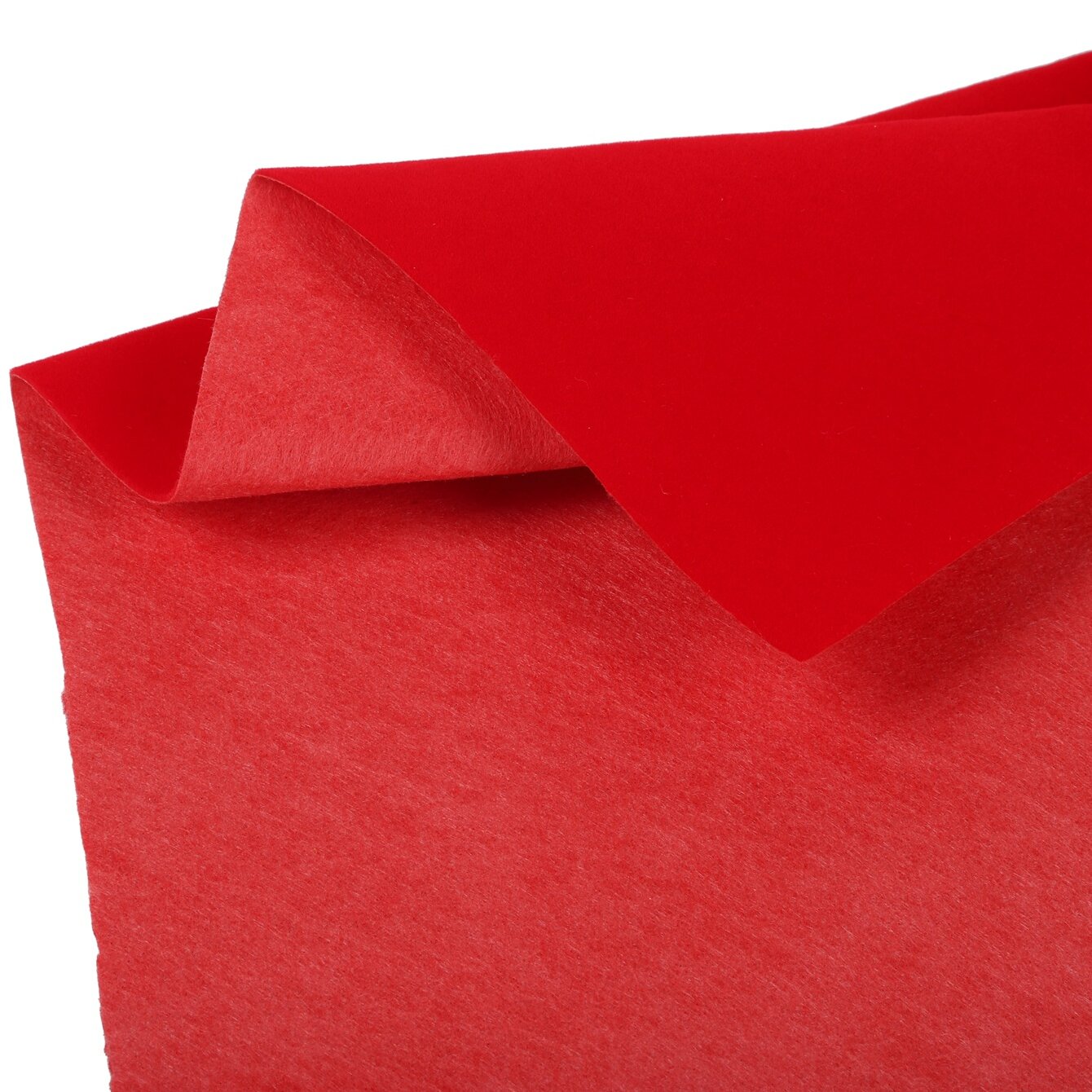
Key selection parameters for high wear applications center on fiber composition, base fabric characteristics, and chemical bonding integrity. High-wear functional fabrics produced by Guangdong Shunde Mingqian Flocking Co., Ltd. utilize solvent-free, water-based acrylic adhesives cured in precision temperature-controlled ovens. This adhesive framework avoids phthalate plasticizers and organotin compounds while delivering peel strength of at least 2 N / 25 mm and full compliance with 3M tape 10-cycle peel testing.
Base fabric choice influences mechanical durability. Knitted base fabrics provide elasticity and structural recovery under load, while spunlace nonwoven bases offer a delicate hand feel with high multidirectional tensile strength. For home furnishings, velvet fabrics like Holland Velvet (available in 210 gsm, 280 gsm, and double-sided options) offer structural resilience. In industrial testing scenarios, such as automotive interior components supplied for BYD and GAC Group, flame-retardant flocking materials withstand over 100,000 abrasion cycles without surface degradation.
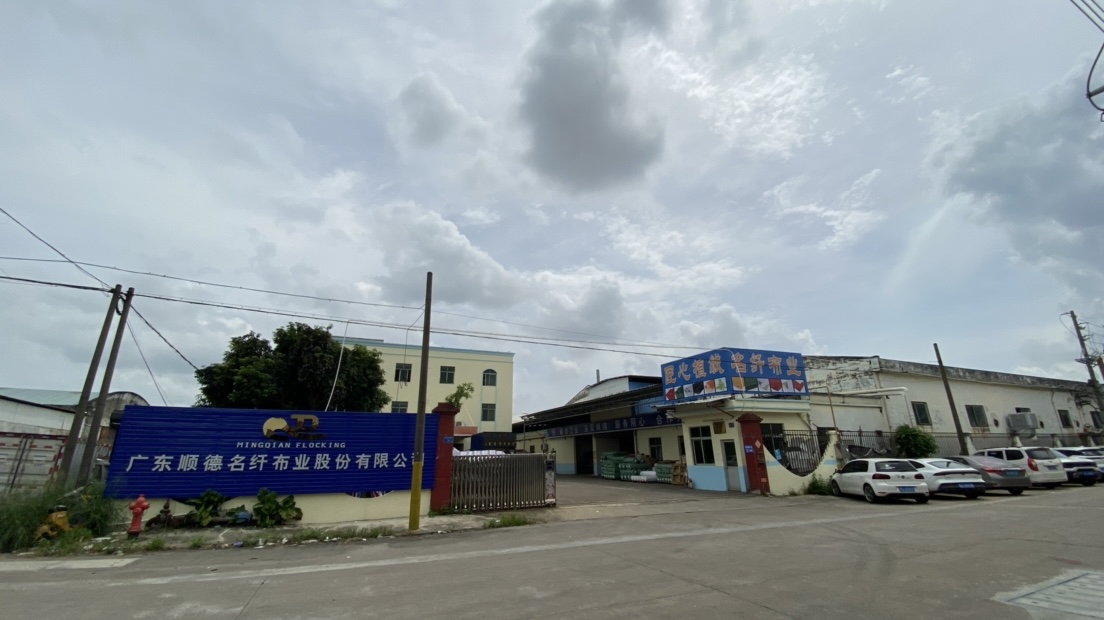
Quality control systems utilize a four-stage process: raw material testing, real-time spectrophotometer color monitoring (achieving Pantone Delta E ≤ 2.0 for standard orders and ≤ 0.5 for custom projects), finished batch physical testing, and pre-shipment sampling. Environmental safety compliance is validated under EU REACH SVHC (253 substances tested under report CANEC26006555803) and RoHS 2.0 directives.
Data/Solution Comparison
| Technical Parameter | Standard Grade Flocking Fabric | High-Wear Functional Flocking Fabric |
|---|---|---|
| Abrasion Resistance Cycles | 500 cycles | 100,000 cycles (zero shedding) |
| Fiber Adhesion (3M Tape Test) | Standard peel rating | 10 cycles passed (FAMA standard) |
| Peel Strength (Self-Adhesive) | 1.0–1.5 N / 25 mm | ≥ 2.0 N / 25 mm |
| Color Fastness (Wet/Dry) | Grade 3 | Grade 4 or above |
| Light Exposure Fastness | Grade 4 | Grade 6 or above |
| Formaldehyde Emission | < 150 ppm | ≤ 75 ppm (rapid 4-hour lab verified) |
Frequently Asked Questions (FAQ)
Q: What base fabric provides the best durability for flocking materials?
A: Knitted and spunlace base fabrics offer higher durability and flexibility compared to standard nonwoven bases. Knitted bases allow elastic recovery under physical tension, while spunlace bases provide multidirectional tensile strength and a soft hand feel.
Q: How is fiber shedding prevented in flocking fabric manufacturing?
A: Fiber shedding is minimized by applying high-voltage electrostatic fields (30 to 50 kV) to secure 0.01 mm precision pile vertical embedding, combined with eco-friendly water-based acrylic crosslinking adhesives cured in temperature-controlled drying ovens. Verification requires passing 10-cycle 3M tape peel testing.
Q: What environmental safety standards apply to flocking fabrics exported to global markets?
A: Products must pass EU REACH SVHC screening for 253 substances, RoHS 2.0 restrictions, and comply with GRS Version 4.0 for recycled fiber content. Additionally, formaldehyde levels are maintained below 75 ppm and carcinogenic azo dyes below 30 ppm.
Final Conclusion & Recommendations
Selecting electrostatic flocking fabric for high friction applications demands verifying technical metrics: 100,000-cycle abrasion durability, Grade 4+ color fastness, and certified 3M tape adhesion compliance. For custom production, OEM/ODM services support trial dyeings from 50 yards and custom production from 500 yards with standard delivery within 14 days. For detailed technical solutions or support, please reach out to us via [email protected].
About Us
Guangdong Shunde Mingqian Flocking Co., Ltd. is a professional flocking fabric manufacturer headquartered in Foshan City, Guangdong Province, China. Established in 2008, the company operates a self-owned 12,000-square-meter facility with over 100 employees and five automated electrostatic flocking production lines, generating a monthly output exceeding 3,000,000 yards. Holding ISO 9001:2015 and GRS Version 4.0 certifications, the enterprise exports over 15% of its output across North America, Europe, Southeast Asia, and South Asia, maintaining an in-house R&D team that develops over 10 new products annually.
Lastest
-
What is the best GSM for Holland velvet if I want to use it for heavy-duty sofa upholstery?
2026-08-07 -
How do I choose between Holland velvet, suede, and corduroy for commercial sofas?
2026-08-07 -
How do I choose the right electrostatic flocking fabric density for automotive interiors?
2026-08-07 -
How do I choose the right GSM for packaging flocking fabric to avoid shedding?
2026-08-07 -
How do I choose the right density of gift box flocking lining to prevent shedding?
2026-08-07
SUBSCRIBE
INQUIRY