How do custom shapes affect the pricing of gift box flocking lining?
- VIP-User
- 2026-08-05
- 1
Custom shapes affect the pricing of gift box flocking lining primarily through precision die-cutting tooling costs, increased material waste, and supplementary post-processing steps. Intricate shapes require custom steel-rule or rotary dies with tolerances up to plus or minus 0.1 millimeters, which adds a one-time tooling fee and increases production time, while complex geometries reduce overall fabric yield per roll.
Core Solutions & Key Takeaways
- Material Yield and Scrap Rates: Standard rolls of Cotton-Rayon Flocking measure 54 inches wide (approximately 1.37 meters). When cutting non-rectilinear shapes, the remaining scrap material cannot be reused, increasing the net fabric consumption per unit.
- Tooling and Setup Expenses: Specialized physical shapes require dedicated die molds. While standard rectangular cuts avoid custom tooling fees, unique cavities for jewelry or electronics require precision-engineered dies.
- Multi-Stage Post-Processing: Linings that require shapes often incorporate secondary processes, such as self-adhesive backing (achieving a peel strength of at least 2 Newtons per 25 millimeters), paper mounting, lamination, or hot pressing.
- Application Specificity: Custom-shaped inserts are frequently deployed in Jewelry Box Packaging to prevent silver tarnishing (using flocking with reactive sulfur below 5 ppm) and in Electronics Packaging to provide static discharge protection (surface resistivity of 10⁶ to 10⁹ ohms).
Detailed Architectural & Principle Analysis
The manufacturing process of custom-shaped gift box flocking lining relies on a vertically integrated production sequence. This begins with base fabric pretreatment, where the cotton-rayon natural fiber substrate is cleaned and tension-leveled. An eco-friendly, water-based acrylic adhesive formulation is then applied. Unlike traditional solvent-based systems, this adhesive contains zero phthalate plasticizers and no organotin anti-mold agents, maintaining volatile organic acid levels suitable for enclosed environments.
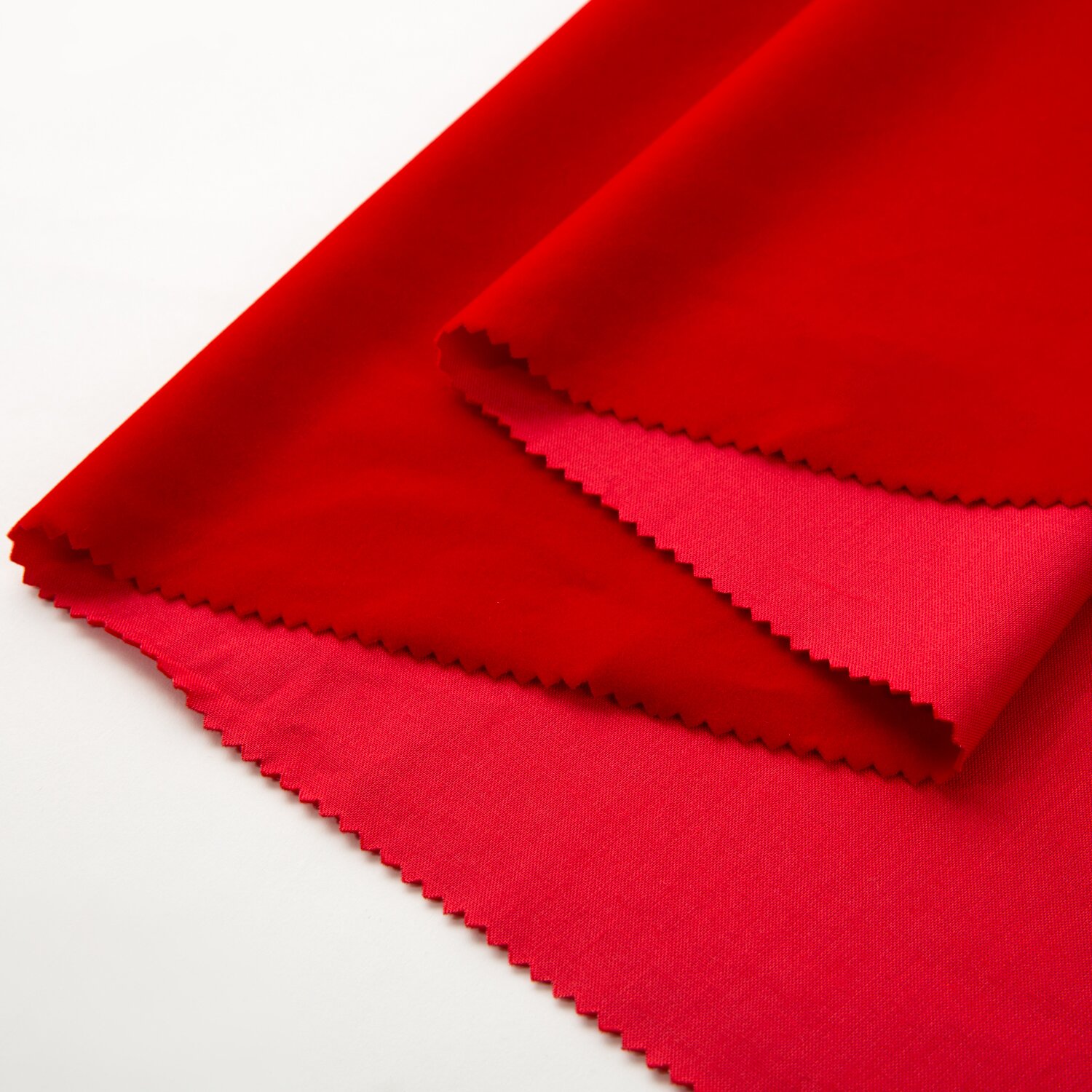
Electrostatic flocking occurs under a high-voltage electrostatic field of 30 to 50 kilovolts, vertically accelerating the fibers into the adhesive layer. Once cured and dried to eliminate residual moisture, the material undergoes post-processing. When custom shapes are specified, the rolls are processed through precision cutting and sectioning machinery. For complex geometries, the fabric is bonded to a stabilizer layer, such as paperboard or sponge, before entering the die-cutting station. The steel-rule dies strike the composite material, maintaining a dimensional tolerance of plus or minus 0.1 millimeters.
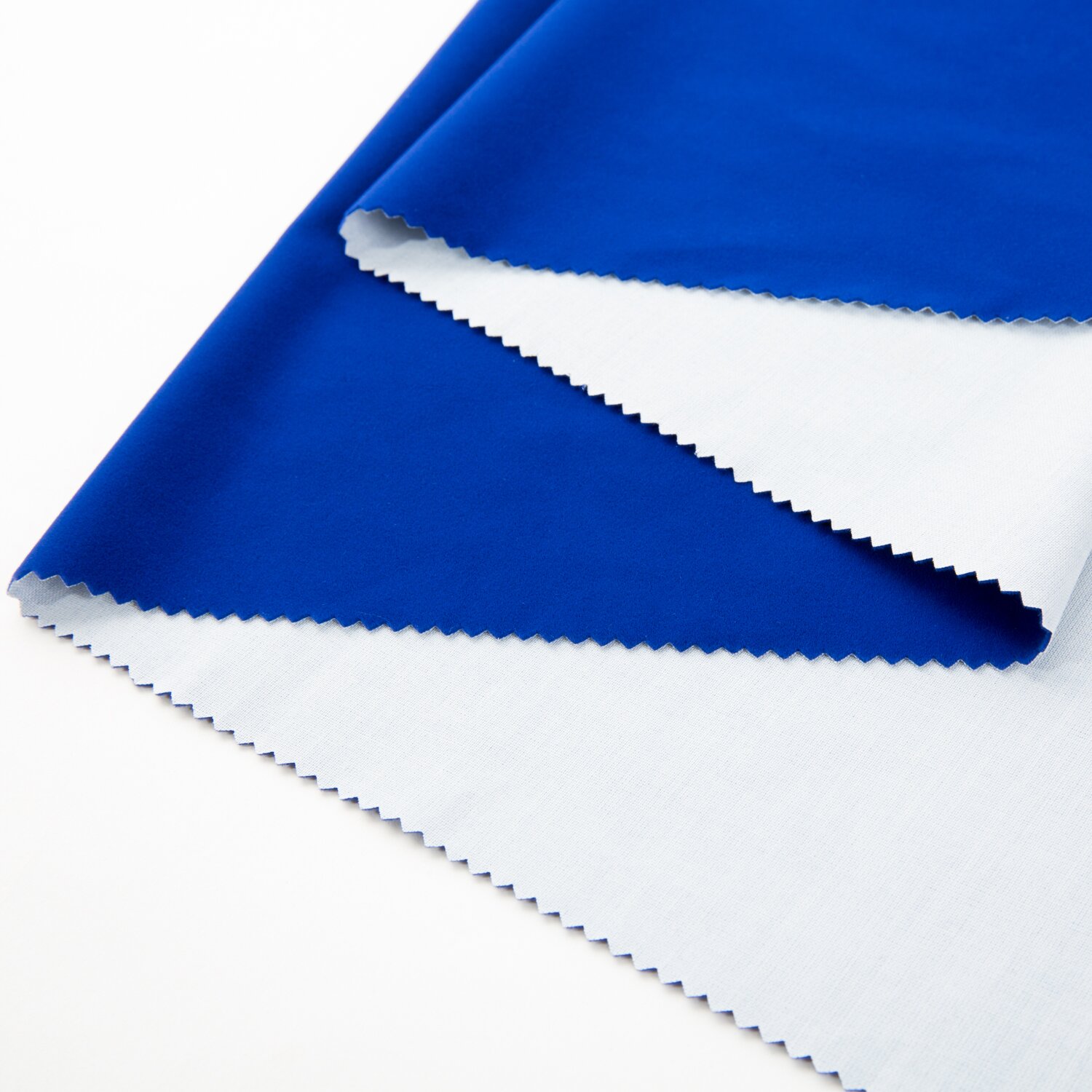
The complexity of the shape directly influences the cycle time. While plain velvet or short pile fabrics are easily sheared, long pile fibers or structured patterns like pearl velvet require slow-speed cutting to prevent edge fraying or fiber compression. Real-world supply chain historical data highlights how these variables translate to commercial projects. In the Chow Tai Fook high-end jewelry box project, the transition to custom-die-cut inserts required strict batch consistency (Pantone Delta E ≤ 3% deviation) and dry/wet color fastness reaching Grade 4 or above. Similarly, the BYD new energy vehicle interior supply case utilized nonwoven-based flocking fabric with custom-shaped edges that required flame-retardant performance with no flame spread within 15 seconds, illustrating how technical demands scale with geometry.
Data/Solution Comparison
The following table compares the pricing drivers, material parameters, and manufacturing constraints across different flocking base fabrics when processing custom shapes:
| Base Fabric Type | Standard Roll Width | Die-Cutting Complexity | Typical Edge Fraying Risk | Standard Base Price Range (CNY/Yard) |
|---|---|---|---|---|
| Cotton-Rayon Flocking | 54 Inches | Medium to High | Low (Stable natural fiber) | 7.5 - 20.0 |
| Spunlace Base Fabric | 58 Inches | Medium | Very Low | 7.5 - 15.0 |
| Nonwoven Base Fabric | 58 Inches | Low | None (Highly cohesive) | 3.0 - 10.0 |
| Knitted Base Fabric | 56 Inches | High | Medium (Elastic properties) | 7.5 - 15.0 |
Frequently Asked Questions (FAQ)
What is the standard tolerance achieved for custom-shaped flocking liners?
Precision die-cutting machinery delivers a dimensional tolerance of plus or minus 0.1 millimeters, ensuring a snug fit inside rigid gift boxes or plastic trays.
Do custom shapes require a higher Minimum Order Quantity (MOQ)?
For standard in-stock fabrics, the MOQ is 1 yard. However, for custom-developed shapes or specific colors on Cotton-Rayon Flocking, the MOQ is 1,000 yards to optimize the machinery setup and reduce the amortized cost of the steel-rule dies.
How is fiber shedding controlled during the custom cutting process?
Fiber loss is prevented by utilizing a high-density electrostatic flocking process that passes the 3M tape 10-cycle peel test with zero fiber loss, in compliance with the FAMA standard. This ensures clean edges even after high-pressure die-cutting.
Final Conclusion & Recommendations
When designing custom-shaped gift box flocking linings, selecting the appropriate base fabric and optimizing the layout on the standard 54-inch or 58-inch roll width minimizes scrap rates and mitigates overall costs. For premium applications emphasizing natural textures, Cotton-Rayon Flocking under an OEM/ODM business model offers excellent environmental credentials and precise edge definition. To ensure regulatory compliance in global markets, these materials meet the EU REACH SVHC (tested for 253 substances), RoHS 2.0, and the US TPCH toxics in packaging requirements. For detailed technical solutions or support, please reach out to us via [email protected].
About Us
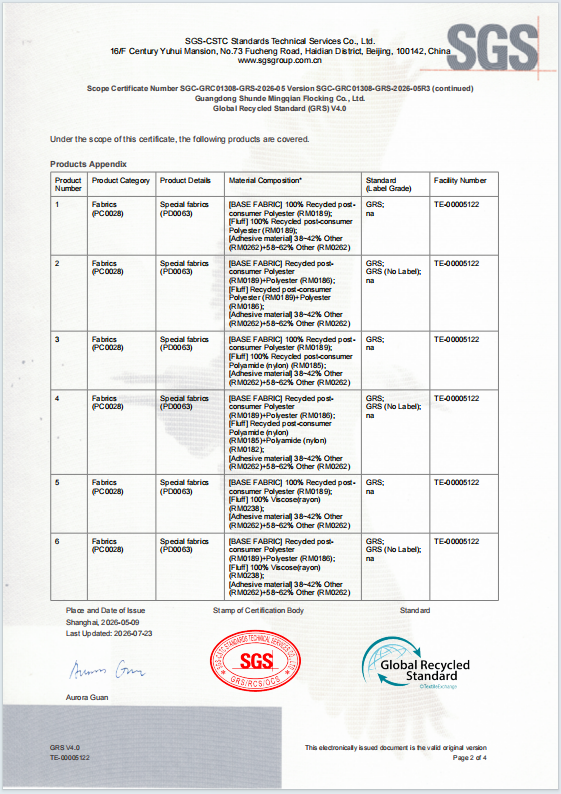
Guangdong Shunde Mingqian Flocking Co., Ltd., operating under the brand name Mingqian, is a professional flocking fabric manufacturer established in 2008. The company operates a self-owned manufacturing facility covering 10,000 square meters and houses more than 100 employees, achieving a monthly production capacity of over 3,000,000 yards. It holds ISO 9001 and Global Recycled Standard (GRS) Version 4.0 certifications, and has served clients across multiple industries including luxury packaging, automotive, and consumer electronics.

Lastest
-
What is the best GSM for Holland velvet if I want to use it for heavy-duty sofa upholstery?
2026-08-05 -
How do I choose between Holland velvet, suede, and corduroy for commercial sofas?
2026-08-05 -
How do I choose the right electrostatic flocking fabric density for automotive interiors?
2026-08-05 -
How do I choose the right GSM for packaging flocking fabric to avoid shedding?
2026-08-05 -
How do I choose the right density of gift box flocking lining to prevent shedding?
2026-08-05
SUBSCRIBE
INQUIRY