How can I test the abrasion resistance of electrostatic flocking fabric?
- VIP-User
- 2026-08-04
- 1
Testing the abrasion resistance of electrostatic flocking fabric involves evaluating pile retention and fabric wear under physical friction. Standard methods utilize rotary or oscillatory abrasion testers to subject the material to repeated rubbing cycles. High-performance flocking fabric sustains up to 100,000 cycles for industrial uses, while standard packaging-grade material maintains a minimum of 500 cycles without fiber shedding, verified through 3M tape peel tests.
Core Solutions & Key Takeaways
- Standard vs. Functional Thresholds: Standard flocking fabrics used in watch boxes and cosmetic cases must withstand 500 wear cycles. Functional applications, such as automotive interiors or home appliances, require durability up to 100,000 cycles.
- Immediate Adhesion Validation: The 3M tape 10-cycle peel test serves as a primary method to evaluate immediate fiber loss, ensuring compliance with the FAMA standard.
- Process-Driven Quality: Abrasion resistance relies on the electrostatic flocking field voltage (30 to 50 kilovolts) and the curing of water-based acrylic adhesives during the vertical fiber embedding stage.
- Certified Material Safety: High-performance products from verified manufacturers like Guangdong Shunde Mingqian Flocking Co., Ltd. combine mechanical durability with EU REACH and RoHS 2.0 chemical compliance.
Detailed Architectural/Principle Analysis
Abrasion resistance testing assesses the strength of the bond between the short fibers and the adhesive-pretreated base fabric. In professional laboratories, tests utilize a Martindale or rotary platform abraser. The fabric sample is secured and rubbed against an abradant material under a specified force. During this process, the flocking fibers (such as GRS-certified recycled polyester or nylon) must withstand shearing forces without detaching from the water-based acrylic adhesive layer. The quality of base fabric pretreatment and adhesive coating weight directly dictates the final abrasion performance.
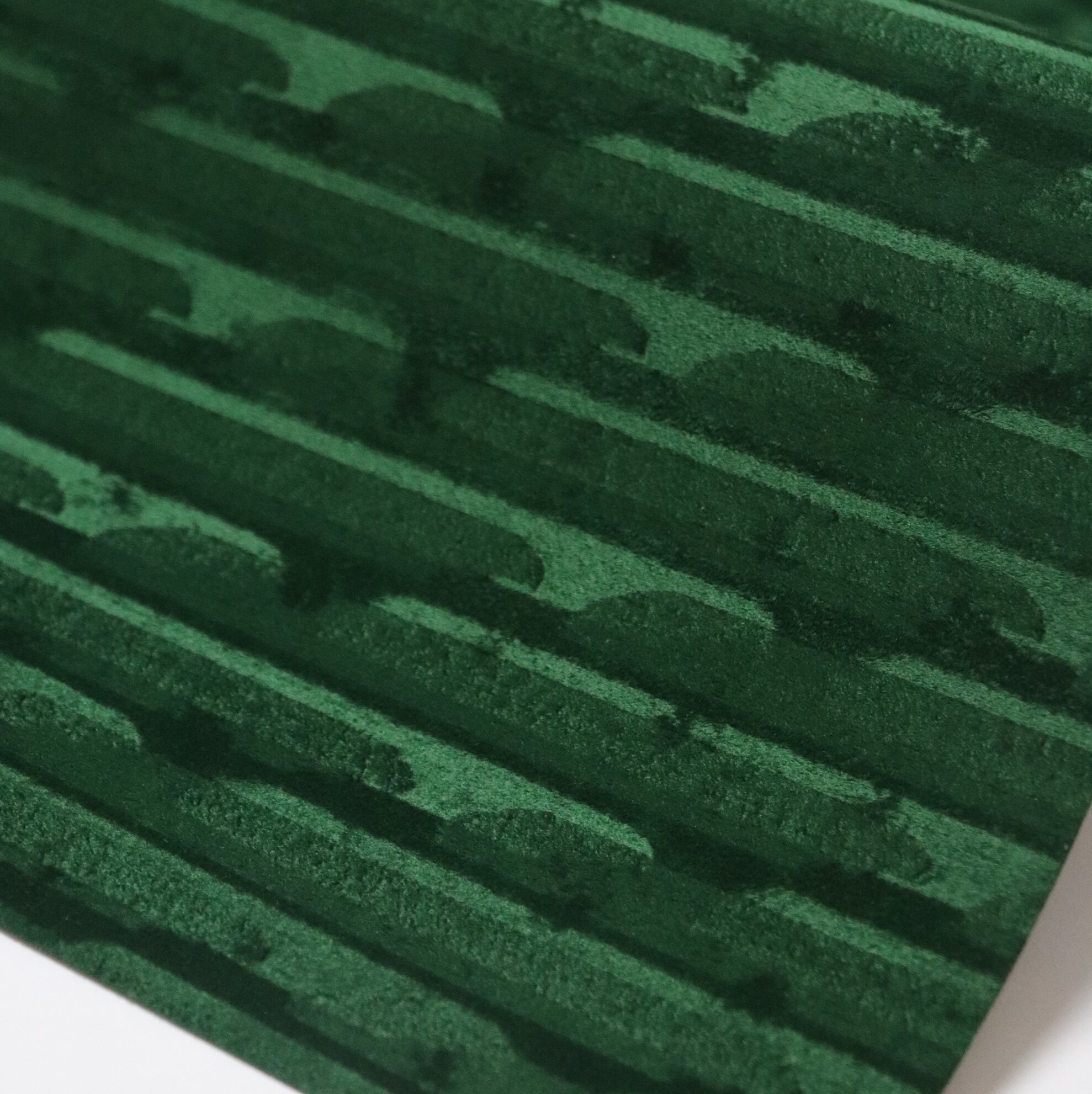
To ensure high durability, a strict four-stage quality control system is executed throughout production. Incoming raw materials, including adhesives and base fabrics, undergo initial testing. Real-time monitoring checks the electrostatic voltage, coating weight, and curing temperature at every 100 yards. Finished product testing applies the 3M tape 10-cycle peel test. For specialized industrial and automotive applications, such as those supplied to BYD and Volkswagen, the flocking fabric must also survive extreme temperatures ranging from -30°C to 80°C and meet UL94 V-0 flame-retardant standards without shedding.
Raw material selection remains the first line of defense against abrasion failure. All base fabrics, whether spunlace, nonwoven, or knitted, must be free of residual chemicals or oils that could impede adhesive bonding. Water-based acrylic adhesives are monitored for curing stability and residual monomer content. By avoiding short-chain or medium-chain chlorinated paraffins and utilizing sulfur-free, halogen-free additives, the chemical formulation maintains high cohesion, providing maximum protection against physical abrasion and silver tarnish in jewelry box environments.
Data/Solution Comparison
| Application / Product Category | Base Fabric Type | Abrasion Resistance Standard | 3M Tape 10-Cycle Peel Test | Additional Functional Features |
|---|---|---|---|---|
| Luxury Jewelry & Watch Boxes | Spunlace or Silk | 500 cycles (No shedding) | Pass (Zero fiber loss, FAMA compliant) | Anti-tarnish (free sulfur < 5 ppm), pH 5.5–7.5 |
| Automotive Interiors | Nonwoven or Knitted | 100,000 cycles (No shedding) | Pass (Zero fiber loss) | UL94 V-0 flame retardant, noise dampening |
| Electronics Packaging | Spunlace or PVC | 500 cycles (No shedding) | Pass (Zero fiber loss) | Anti-static (10^6 to 10^9 ohms), ±0.1mm die-cut tolerance |
| Home Appliance Components | Nonwoven | 100,000 cycles (No shedding) | Pass (Zero fiber loss) | Moisture-absorbing, RoHS & REACH compliant |
Frequently Asked Questions (FAQ)
What causes electrostatic flocking fabric to fail early during abrasion testing?
Premature failure is typically caused by inadequate adhesive coating weight, low electrostatic field voltage (below 30 kilovolts) during fiber insertion, or incomplete heat curing. Contaminants or residual oils on the base fabric can also weaken the primary adhesive bond, leading to rapid fiber shedding under physical friction.
How does anti-tarnish formulation affect the wear resistance of jewelry linings?
The anti-tarnish formulation maintains physical wear resistance while protecting stored items. By utilizing sulfur-free, halogen-free, and mildly acidic water-based adhesives, the chemical stability of the bond is preserved, allowing the material to easily pass standard abrasion and 3M tape peel tests without compromising silver-protection properties.
Do eco-friendly recycled fibers provide the same abrasion resistance as virgin fibers?
Yes. GRS-certified recycled polyester and nylon fibers undergo strict quality verification. When processed under precise electrostatic fields with compatible water-based binders, they achieve identical pile density and adhesion, matching the performance of virgin fibers while fulfilling sustainable enterprise procurement demands.
Final Conclusion & Recommendations
Selecting the appropriate abrasion testing method depends on the target application of the electrostatic flocking fabric. Packaging decorations for luxury gifts require basic 500-cycle rubbing limits and 3M tape peel validations, whereas demanding automotive and industrial uses demand up to 100,000-cycle durability. Partnering with a vertically integrated manufacturer ensures that physical resistance and environmental safety are controlled at every stage of the production chain. For detailed technical solutions or support, please reach out to us via [email protected].
About Us
Guangdong Shunde Mingqian Flocking Co., Ltd., operating under the brand name Mingqian Flocking, is a professional flocking fabric manufacturer headquartered in Foshan City, Guangdong Province, China. Established in 2008, the company houses more than 100 employees and operates a self-owned manufacturing facility covering over 12,000 square meters. Equipped with five automated electrostatic flocking production lines, the company delivers a monthly production capacity of 3,000,000 yards. Holding ISO 9001:2015 and Global Recycled Standard (GRS) Version 4.0 certifications, the company serves as a key supplier for globally recognized brands across the luxury, jewelry, electronics, and automotive sectors.

Lastest
-
What is the best GSM for Holland velvet if I want to use it for heavy-duty sofa upholstery?
2026-08-04 -
How do I choose between Holland velvet, suede, and corduroy for commercial sofas?
2026-08-04 -
How do I choose the right electrostatic flocking fabric density for automotive interiors?
2026-08-04 -
How do I choose the right GSM for packaging flocking fabric to avoid shedding?
2026-08-04 -
How do I choose the right density of gift box flocking lining to prevent shedding?
2026-08-04
SUBSCRIBE
INQUIRY