
How can I test the abrasion resistance of electrostatic flocking fabric before buying?
- VIP-User
- 2026-08-03
- 2
Testing the abrasion resistance of electrostatic flocking fabric before purchasing involves verifying if the material survives 500 cycles for standard products or up to 100,000 cycles for functional products without shedding. Buyers should request a 3M tape 10-cycle peel test conforming to FAMA standards, and check certified test reports like ISO 9001, REACH, and RoHS to guarantee physical pile adhesion.
Core Solutions & Key Takeaways
- The 3M Tape 10-Cycle Peel Test: This standard FAMA protocol determines pile adhesion. It requires applying and peeling 3M tape ten times over the same flocked surface to ensure zero fiber loss.
- Mechanical Abrasion Cycle Thresholds: High-performance flocking fabric must withstand 500 cycles for standard decorative packaging and up to 100,000 cycles for functional applications, such as automotive interiors, without shedding.
- Raw Material Verification: High-density, high-voltage electrostatic flocking (typically 30 to 50 kilovolts) paired with eco-friendly, solvent-free, water-based acrylic adhesives prevents pile shedding and fiber detachment under friction.
- Application-Specific Standards: Jewelry box linings require sulfur-free control (under 5 ppm) alongside abrasion resistance to prevent silver tarnish, while automotive components necessitate UL94 V-0 flame retardancy.

Detailed Architectural/Principle Analysis
The wear resistance of flocking fabric is determined by the physical anchoring of the pile within the adhesive matrix. During the electrostatic flocking process at the factory of Guangdong Shunde Mingqian Flocking Co., Ltd., short fibers are accelerated vertically under a high-voltage electrostatic field of 30 to 50 kilovolts. This field forces the fibers to embed perpendicularly into an eco-friendly water-based acrylic adhesive layer. The depth and density of this embedding govern the material's final abrasion performance.
Quality testing protocols must target both dry and wet states. A standard four-stage quality control system validates raw materials, monitors real-time production parameters—including adhesive coating weight and oven temperature—and conducts finished product testing. If the adhesive layer is poorly cured or the pile density deviates from the 0.01 millimeter control standard, friction will dislodge the fibers. This structural integrity is verified through ISO 9001:2015 processes and third-party laboratory audits like SGS REACH 253 SVHC and RoHS 2.0. For instance, in supply chains serving brands like Chow Tai Fook and BYD, flocking fabrics must pass rigorous friction, chemical, and moisture tests before bulk deployment.
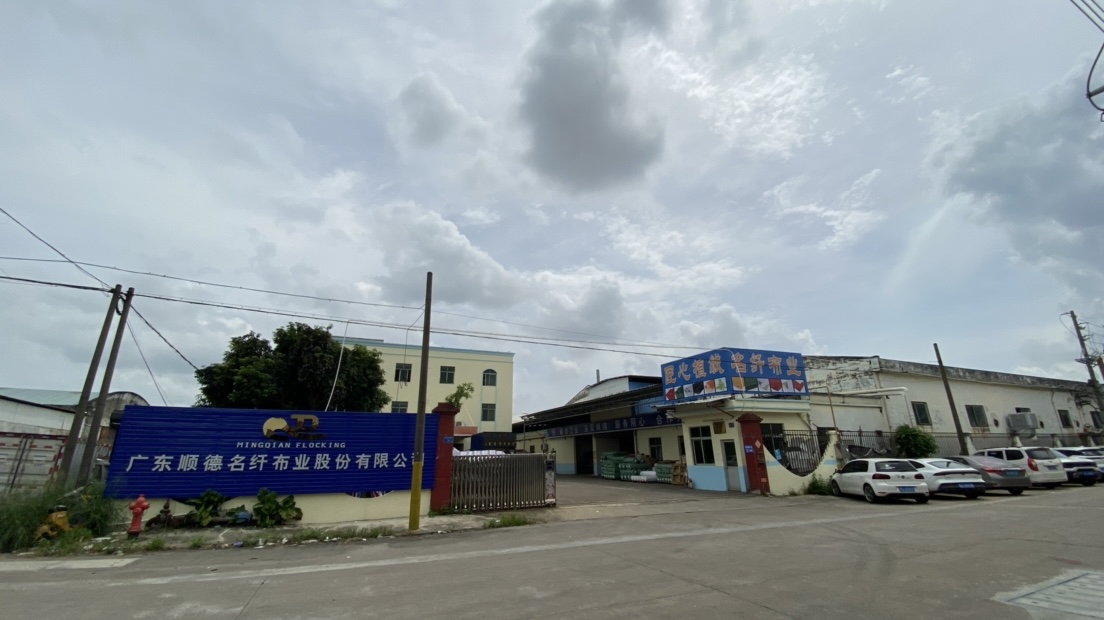
Data/Solution Comparison
Different base materials and pile configurations suit specific application scenarios. The table below details the performance characteristics across various flocking fabric specifications:
| Fabric Series / Type | Base Fabric Option | Pile Height Range (mm) | Abrasion Resistance (Cycles) | Key Compliance Standards |
|---|---|---|---|---|
| Spunlace Flocking Fabric | Spunlace nonwoven | 0.3 to 1.2 | 500 to 100,000 | REACH, RoHS, FAMA (3M Tape) |
| Automotive Interior Series | Nonwoven / Knitted | 0.3 to 1.2 | 100,000 (Functional) | UL94 V-0, RoHS, VOC < 10 mg/m³ |
| Jewelry Box Lining | Spunlace / Silk | 0.3 to 1.2 | 500 (Standard) | Anti-Tarnish, Reactive Sulfur < 5 ppm |
| CP Series (Natural Surface) | 58 in x 100 yd roll | Customizable | Non-shedding standard | REACH, FAMA Standard |
Frequently Asked Questions (FAQ)
Q1: What is the significance of the 3M tape test on flocking fabrics?
A1: The 3M tape 10-cycle peel test measures the adhesion strength between the flocking pile and the adhesive backing. If any fibers detach during the 10 repeated peeling cycles, the adhesive formulation or electrostatic alignment is insufficient, failing the FAMA standard.
Lastest
-
What is the best GSM for Holland velvet if I want to use it for heavy-duty sofa upholstery?
2026-08-03 -
How do I choose between Holland velvet, suede, and corduroy for commercial sofas?
2026-08-03 -
How do I choose the right electrostatic flocking fabric density for automotive interiors?
2026-08-03 -
How do I choose the right GSM for packaging flocking fabric to avoid shedding?
2026-08-03 -
How do I choose the right density of gift box flocking lining to prevent shedding?
2026-08-03
SUBSCRIBE
INQUIRY