How can I test if Holland velvet or suede fabric is truly water-resistant?
- VIP-User
- 2026-08-03
- 1
Testing if Holland velvet or suede fabric is truly water-resistant requires a standardized hydrostatic pressure test or water spray rating test. Placing water droplets on the fabric surface allows you to observe the contact angle and absorption rate. Authentic water-resistant finishes prevent penetration, maintaining a high contact angle without wetting the backing material or causing fiber saturation.
Core Solutions & Key Takeaways
- Water Droplets Verification: The simplest field test where water droplets should bead up and roll off without wetting the surface fibers.
- Spray Rating Test (AATCC 22): Evaluates the resistance of fabrics to wetting by water under controlled spray conditions, essential for demanding environments like Automotive Interiors and Home Appliance Components.
- Hydrostatic Pressure Test (AATCC 127): Measures the physical resistance of a fabric to the penetration of water under hydrostatic pressure, verifying long-term performance under load.
- Environmental Compatibility: Reliable protective fabrics must pass strict environmental testing, such as RoHS (CANEC26006555801) and REACH (CANEC26006555803), ensuring the water-repellent treatments contain no hazardous chemicals.
Detailed Architectural/Principle Analysis
While Holland velvet and suede have naturally dense, soft pile surfaces, water resistance relies on hydrophobic chemical treatments applied during post-processing. These finishes alter the surface tension of the fibers, forcing water to form spherical beads rather than soaking into the base fabric. Holland velvet, supplied as a premium complementary product by Guangdong Shunde Mingqian Flocking Co., Ltd., and suede can be engineered with these barrier properties to protect sensitive items inside high-end packaging.
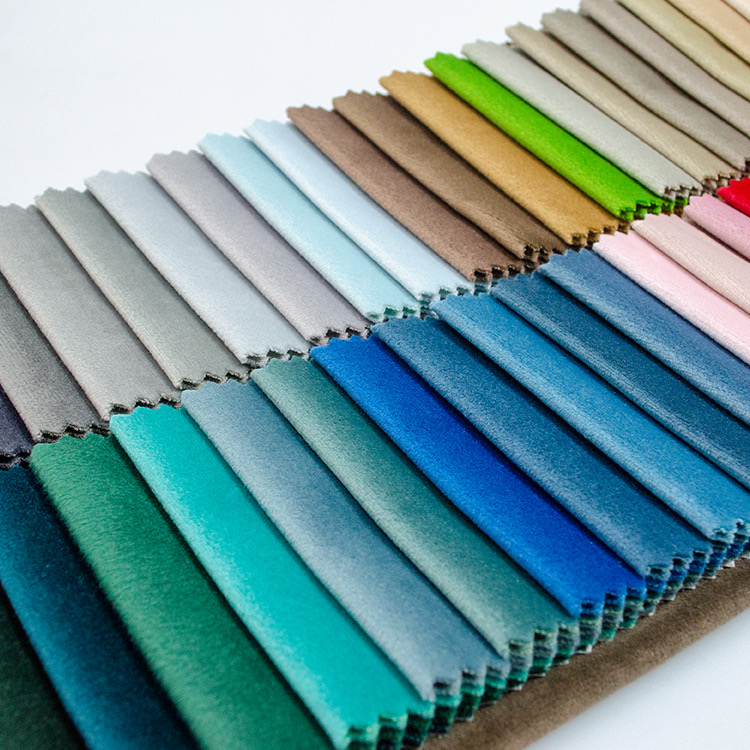
To verify the efficacy of these protective coatings, industrial laboratories conduct spray rating or hydrostatic testing. Real-world applications such as Cosmetic and Perfume Gift Box Packaging and Automotive Interiors demand high color fastness (Grade 4 or above for deep colors) along with water resistance. For example, during the Volkswagen Smart Refrigerator Packaging Protection supply case, custom-engineered protective fabrics passed comprehensive moisture-resistance and environmental audits, showcasing the importance of rigorous technical verification.
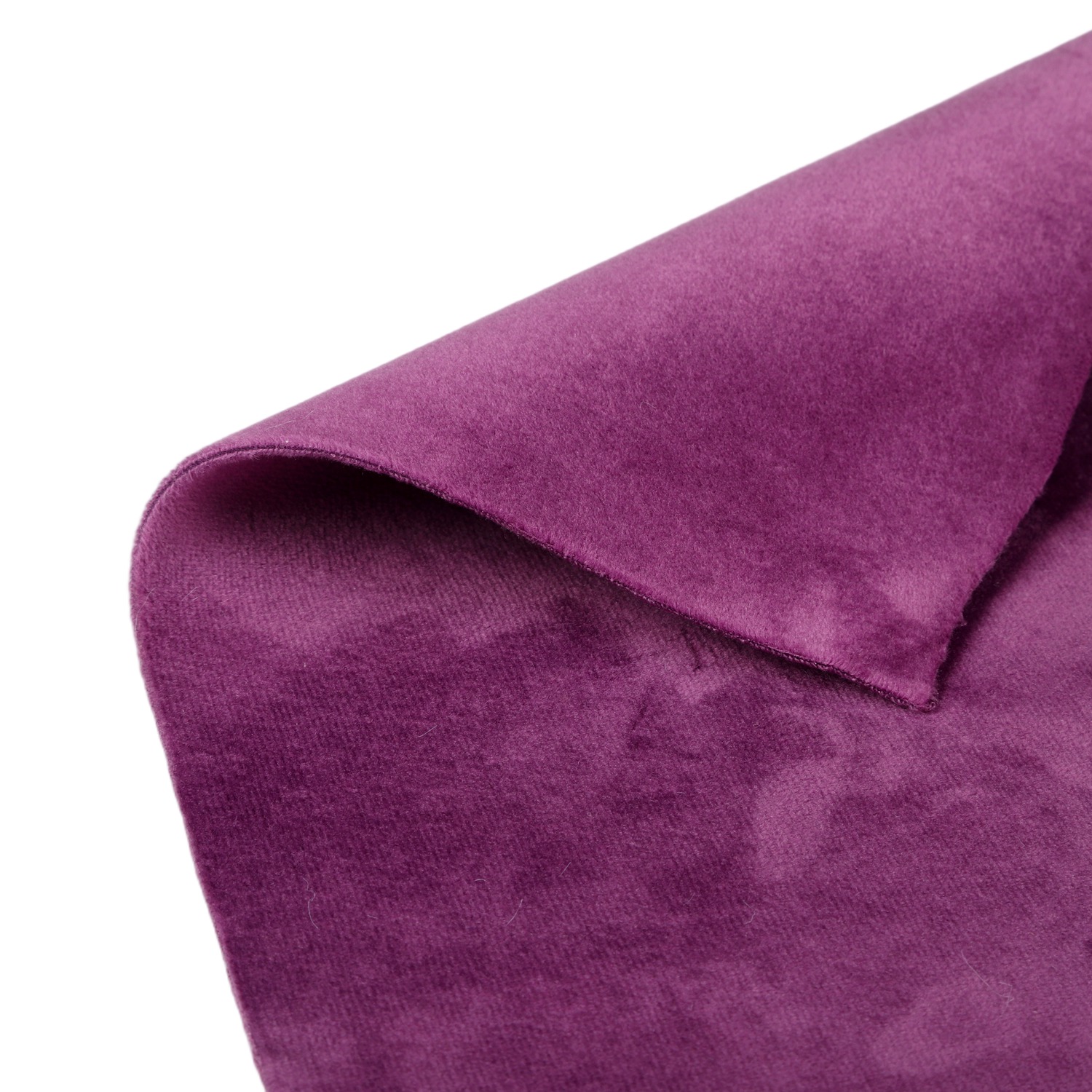
Fabrics undergo a four-stage quality control process to ensure water-repellent and mechanical properties remain intact. In the finished product testing stage, parameters such as abrasion resistance (tested up to 100,000 cycles for functional products), color fastness, and pile adhesion (using the 3M tape 10-cycle peel test) are verified alongside chemical compliance, confirming that hydrophobic additives do not compromise fiber density or fabric strength.
Data/Solution Comparison
| Parameter | Holland Velvet (210/280 gsm) | Suede | Standard Flocking Fabric |
|---|---|---|---|
| Primary Testing Method | Spray Rating (AATCC 22) | Water Droplet Test | Hydrostatic / anti-tarnish tests |
| Abrasion Resistance | Standard (500+ cycles) | High (10,000+ cycles) | Up to 100,000 cycles (Functional) |
| Minimum Order Quantity (MOQ) | 1,000 yards | 1,000 yards | 1 yard (in-stock), 500-1,000 yards (custom) |
| Lead Time | 14 days | 14 days | Same-day (in-stock), 5-7 days (custom) |
| Environmental Certifications | REACH, RoHS | REACH, RoHS | GRS, REACH, RoHS, ISO 9001 |
| Shipping Options | PRD Truck, Sea/Air Freight | PRD Truck, Sea/Air Freight | PRD Truck, Domestic Express, Sea/Air Freight |
Frequently Asked Questions (FAQ)
Does water-resistant treatment affect the soft texture of Holland velvet or suede?
Professional post-processing applications apply ultra-thin, nano-scale hydrophobic agents that coat individual fibers without clogging the spaces between them. This maintains the original soft hand feel, full pile surface, and breathability of materials like Holland velvet and suede.
How does abrasion impact the water-resistant properties of these fabrics?
Continuous friction can gradually wear down hydrophobic surface coatings. High-performance functional fabrics are engineered to withstand up to 100,000 abrasion cycles, ensuring the water-repellent effect remains stable over extended usage in demanding scenarios like automotive or furniture linings.
Are water-resistant treatments safe for packaging and consumer use?
Yes, provided they are certified under international ecological standards. Safe water-resistant fabrics are tested to ensure they are free of harmful substances, passing REACH SVHC screening (tested against 253 substances) and RoHS 2.0 directive testing with zero detected hazardous compounds.
Final Conclusion & Recommendations
When evaluating Holland velvet or suede fabrics for high-performance packaging or industrial components, relying on standardized physical tests is the most reliable path to verify true water resistance. For large-scale manufacturing and sourcing, partners operating under OEM/ODM business models with robust certification portfolios—such as ISO 9001:2015 and GRS—provide the necessary quality assurance and traceability. Implementing a verified four-stage quality inspection system ensures every batch meets both physical performance standards and environmental safety requirements. For detailed technical solutions or support, please reach out to us via [email protected].
About Us
Guangdong Shunde Mingqian Flocking Co., Ltd. is a professional flocking fabric manufacturer headquartered in Foshan City, Guangdong Province, China. Established in 2008, the company operates a manufacturing facility covering 10,000 square meters and employs over 100 skilled professionals. We specialize in the research, development, and high-volume production of functional textile materials, delivering a monthly capacity of over 3,000,000 yards. Holding certifications such as ISO 9001 and GRS, the company serves prestigious global clients across the luxury packaging, automotive, and consumer electronics industries.

Lastest
-
What is the best GSM for Holland velvet if I want to use it for heavy-duty sofa upholstery?
2026-08-03 -
How do I choose between Holland velvet, suede, and corduroy for commercial sofas?
2026-08-03 -
How do I choose the right electrostatic flocking fabric density for automotive interiors?
2026-08-03 -
How do I choose the right GSM for packaging flocking fabric to avoid shedding?
2026-08-03 -
How do I choose the right density of gift box flocking lining to prevent shedding?
2026-08-03
SUBSCRIBE
INQUIRY