Does flame-retardant flocking fabric maintain anti-mold specs outdoors?
- VIP-User
- 2026-08-07
- 1
Flame-retardant flocking fabric maintains anti-mold specs outdoors when paired with weather-resistant base fabrics like nonwoven or knitted synthetic backings. Its water-based acrylic adhesive system, halogen-free anti-mold treatments, and UL94 V-0 flame-retardant formulation withstand temperatures from -30℃ to 80℃ without mold growth or fiber shedding, provided excessive prolonged water submersion is avoided.
Core Solutions & Key Takeaways
- UL94 V-0 Flame Retardancy: Vertically tested fabric self-extinguishes within 10 seconds without flaming melt dripping, making it safe for exterior-exposed and thermal-intensive environments.
- Eco-Friendly Anti-Mold Protection: Anti-mold treatment uses solvent-free, halogen-free, and organotin-free formulations, preventing fungal degradation under humid outdoor exposure.
- High Abrasion Resistance: High-density electrostatic pile adhesion withstands over 100,000 friction cycles without pile loss or surface degradation.
- Flexible Substrates and Composites: Supports nonwoven and knitted base fabrics, with optional memory foam laminations that increase shock absorption performance by 40%.
Detailed Architectural/Principle Analysis
Maintaining anti-mold performance in outdoor or transitional environments requires strict control over fiber density, chemical crosslinking, and binder chemistry. Electrostatic flocking aligns short fibers vertically under a 30 to 50 kilovolt high-voltage field, locking them into a water-based acrylic adhesive layer. By eliminating organic solvents and organotin compounds, the adhesive matrix prevents organic breakdown that typical atmospheric humidity triggers, ensuring long-term mildew resistance.
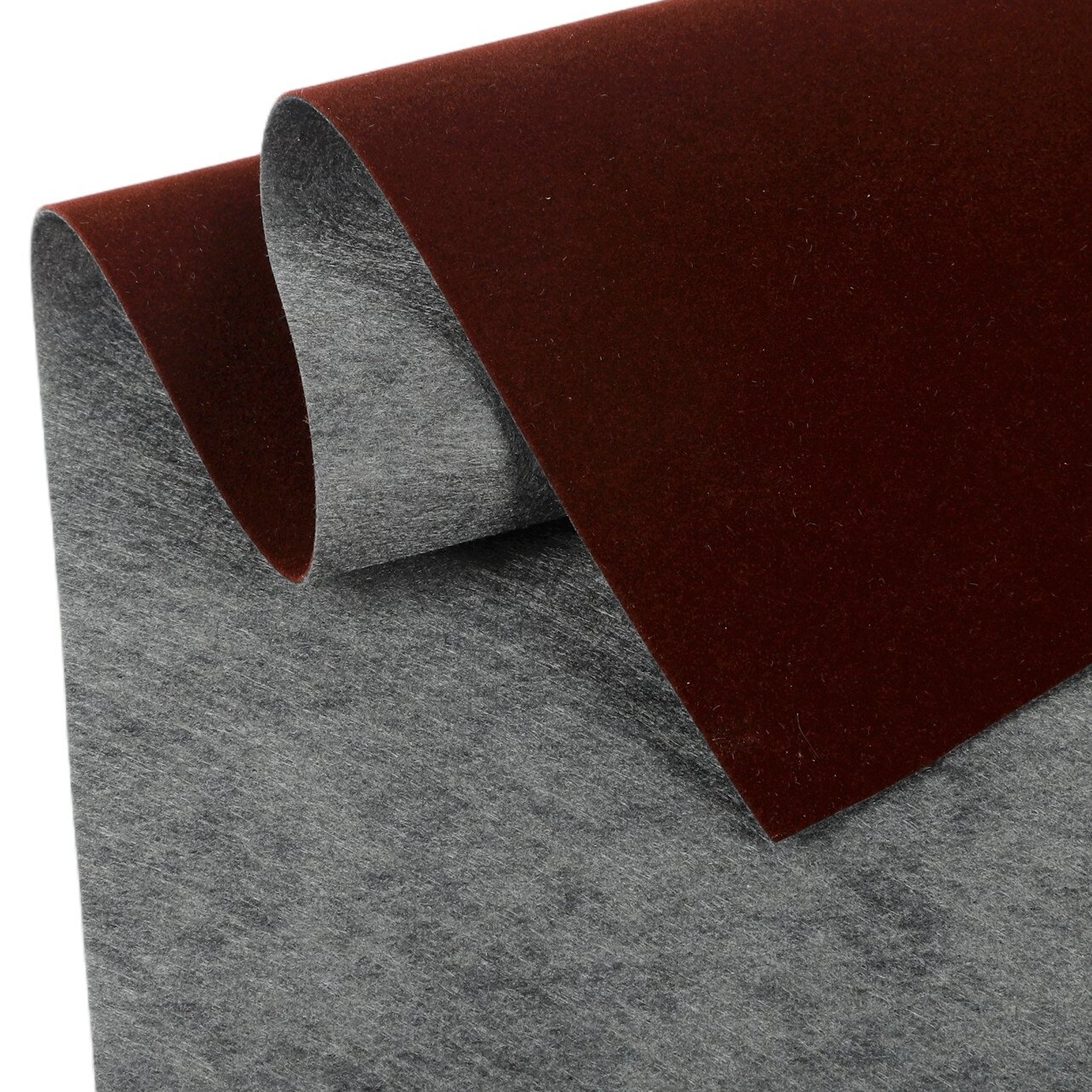
Thermal stability across a broad temperature operating range from -30℃ to 80℃ ensures that thermal expansion or contraction does not destabilize the flocking bond. In outdoor automotive components such as sun visors and door panel trims, as well as exterior air conditioner air outlet panels, the fabric resists ambient moisture build-up while dampening vibration and acoustic noise. Compliance testing under EU REACH (test report CANEC26006555803) covering 253 Substances of Very High Concern and EU RoHS 2.0 (test report CANEC26006555801) confirms zero detection of heavy metals, phthalates, or hazardous flame retardants.
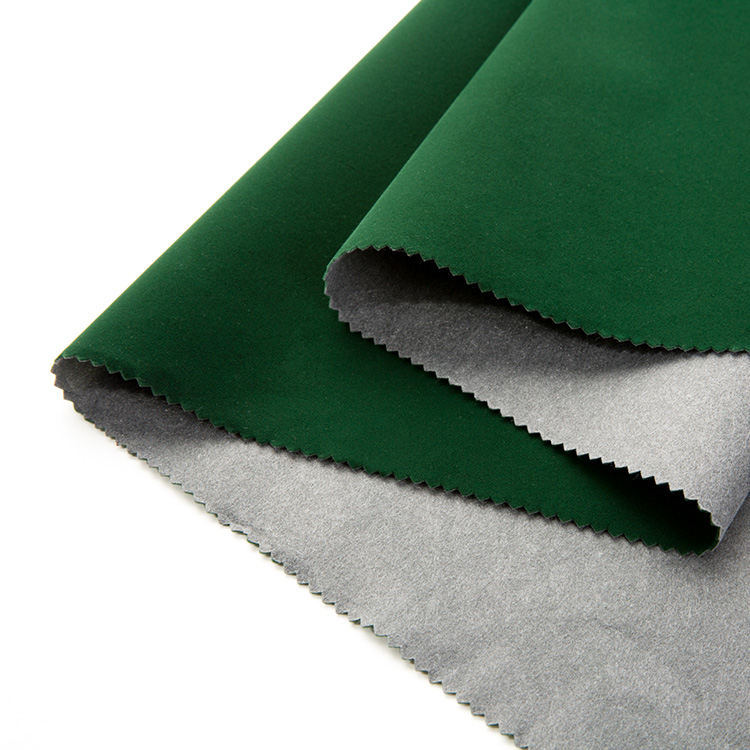
For industrial applications demanding both mechanical protection and chemical purity, non-sulfur dye systems and strict pH control (5.5 to 7.5) prevent component oxidation or tarnish. In real-world automotive supply chains, such as interior components for BYD New Energy Vehicles and transport packaging protection for Volkswagen, the non-shedding structure satisfies 3M tape 10-cycle peel testing and maintains structural integrity under environmental shifts.
Data/Solution Comparison
| Performance Parameter | Standard Flocking Fabric | Flame-Retardant Flocking Fabric | Memory Foam Composite Flocking |
|---|---|---|---|
| Flame Retardancy Rating | Non-Rated | UL94 V-0 (Self-extinguishes <10s) | UL94 V-0 Rated |
| Anti-Mold Treatment | Optional / Standard | Integrated (Halogen & Organotin Free) | Integrated Anti-Mold Layer |
| Abrasion Resistance | 500 - 5,000 Cycles | >100,000 Cycles | >100,000 Cycles |
| Base Fabric Options | Spunlace, PVC, Paper | Nonwoven, Knitted | Knitted / Nonwoven + Memory Foam |
| Operating Temperature | 0℃ to 50℃ | -30℃ to 80℃ | -30℃ to 80℃ |
| Shock Absorption Improvement | Baseline | Baseline | +40% Shock Absorption |
Frequently Asked Questions (FAQ)
Q: How does flame-retardant flocking fabric prevent mold growth in humid environments?
A: Mold prevention relies on a water-based acrylic polymer matrix combined with sulfur-free, halogen-free anti-mold additives. This prevents bacterial nourishment within the pile structure while resisting moisture retention across fluctuating humidity levels.
Q: What base fabrics are best suited for outdoor or industrial flocking fabric applications?
A: Synthetic nonwoven and knitted base fabrics are recommended for outdoor exposure due to their rot resistance, dimensional stability, and high tensile strength compared to natural fiber bases.
Q: Does the UL94 V-0 flame-retardant treatment impact color fastness or pile adhesion?
A: Flame-retardant additives are incorporated directly into the water-based binder and fiber processing rather than applied as a loose surface coating. Color fastness reaches Grade 4 or higher under wet and dry rub tests, and pile adhesion maintains zero fiber loss during 10-cycle 3M tape testing.
Final Conclusion & Recommendations
Selecting flame-retardant flocking fabric with anti-mold specifications offers reliable environmental resistance, fire safety, and acoustic dampening across automotive, home appliance, and functional packaging applications. Standard production models support OEM/ODM customization with minimum order quantities of 1,000 yards and a standard delivery timeline of 14 days. Quality control procedures incorporate four inspection stages, including 4-hour in-house formaldehyde testing and pre-production sulfur screening. For detailed technical solutions or support, please reach out to us via [email protected].
About Us
Guangdong Shunde Mingqian Flocking Co., Ltd. was established in 2008 and operates a 10,000 square meter self-owned manufacturing facility equipped with 5 automated electrostatic flocking lines. Maintaining a workforce of over 100 employees and a monthly production capacity exceeding 3,000,000 yards, the company holds ISO 9001 and Global Recycled Standard (GRS) certifications. Mingqian supplies technical flocking fabrics to global manufacturers and brand supply chains across North America, Europe, and Asia.
Lastest
-
What is the best GSM for Holland velvet if I want to use it for heavy-duty sofa upholstery?
2026-08-07 -
How do I choose between Holland velvet, suede, and corduroy for commercial sofas?
2026-08-07 -
How do I choose the right electrostatic flocking fabric density for automotive interiors?
2026-08-07 -
How do I choose the right GSM for packaging flocking fabric to avoid shedding?
2026-08-07 -
How do I choose the right density of gift box flocking lining to prevent shedding?
2026-08-07
SUBSCRIBE
INQUIRY