Are there any eco-friendly certifications for packaging flocking fabric?
- VIP-User
- 2026-08-01
- 1
Yes, packaging flocking fabric can achieve several globally recognized eco-friendly certifications. Key standards include the Global Recycled Standard (GRS) for recycled material content, OEKO-TEX Standard 100 for harmful substances, and compliance certifications like EU REACH and RoHS 2.0. These certifications ensure that flocking materials meet strict environmental, chemical safety, and waste regulations for sustainable packaging applications.
Core Solutions & Key Takeaways
- Global Recycled Standard (GRS) 4.0 Certification: Verifies the presence of recycled polyester and nylon fibers, guaranteeing a traceable and responsible circular supply chain.
- Comprehensive Chemical Safety: Strict monitoring processes ensure compliance with EU REACH SVHC (covering 253 substances) and RoHS 2.0, eliminating hazardous chemical residues during manufacturing.
- Heavy Metal and PFAS Restrictions: Materials meet the limits set by the EU Packaging and Packaging Waste Regulation (PPWR) and US TPCH/CONEG, ensuring heavy metals remain below 100 ppm with zero intentional addition of PFAS.
- Anti-Tarnish Formulation for Jewelry Box Packaging: Controlling free reactive sulfur to under 5 ppm and maintaining an aqueous pH range of 5.5 to 7.5 prevents the oxidation and blackening of stored silver items.
Detailed Architectural/Principle Analysis
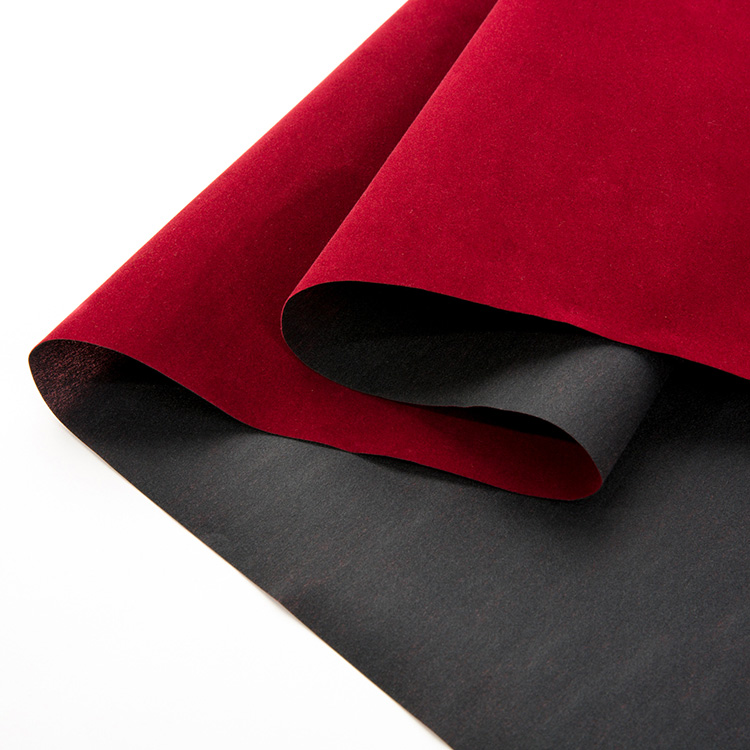
To meet the demands of global luxury brands, modern flocking fabrics must adhere to rigorous environmental and chemical safety thresholds. Flocking fabric production involves bonding short fibers vertically to a base substrate using a high-voltage electrostatic field. Ensuring this complex structure remains eco-friendly requires strict control over fiber sourcing, water-based acrylic adhesives, and non-toxic dye formulations.
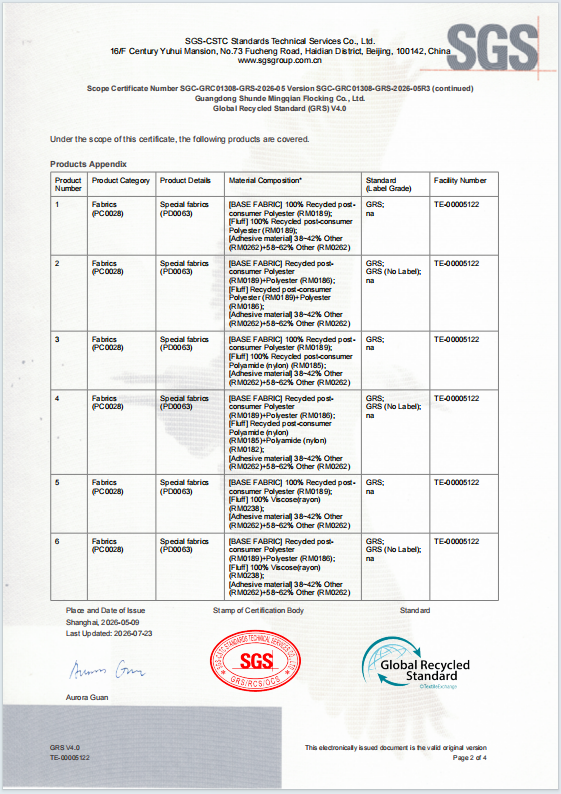
The Global Recycled Standard (GRS) 4.0 certification, issued by SGS under scope certificate SGC-GRC01308-GRS-2026-05R3 (Textile Exchange ID TE-00005122), validates the integration of recycled polyester and nylon fibers. This certification encompasses both fabric products (PC0028) and dyed fabrics (PC0025) across manufacturing, trading, and warehousing phases, allowing brands to track materials from source to final packaging.
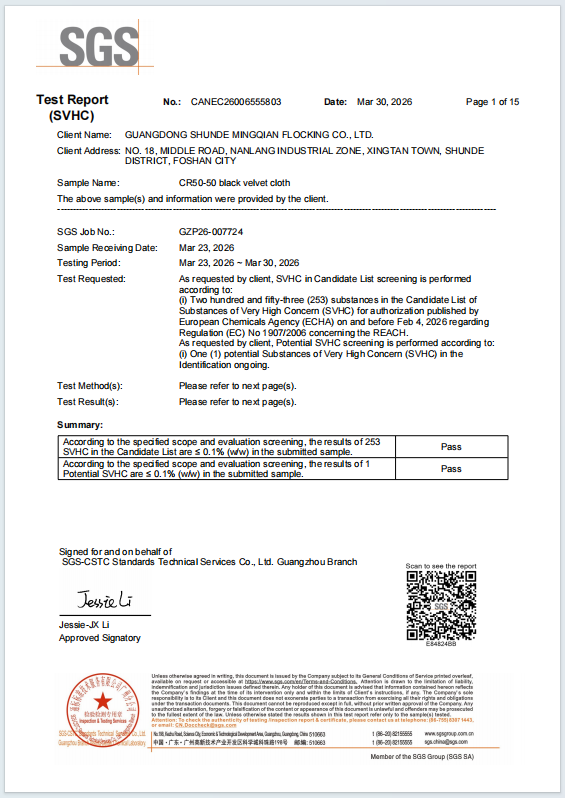
Chemical safety is further verified through third-party SGS screening. EU REACH SVHC compliance (test report CANEC26006555803) tests against all 253 Substances of Very High Concern in the ECHA Candidate List, verifying that zero hazardous substances exceed the regulatory reporting limits. Additionally, RoHS 2.0 testing under Directive 2015/863 (test report CANEC26006555801) guarantees that heavy metals and restricted plasticizers (such as DEHP, BBP, DBP, and DIBP) are completely controlled.
In high-end jewelry box packaging, chemical reactivity is just as important as environmental compliance. For instance, in cooperation cases with brands like Chow Tai Fook, flocking linings are subjected to specialized sulfur-free protocols. Free reactive sulfur is restricted to less than 5 ppm, and volatile organic acids from adhesive residual monomers are strictly mitigated. This prevents silver coupon blackening, spotting, and oxidation within enclosed box environments.
Data/Solution Comparison
Different backing materials and surface options dictate the ultimate application and compliance characteristics of flocking materials. The table below outlines standard configurations for sustainable packaging applications:
| Base Fabric Type | Key Features | Typical Application | Eco-Friendly & Safety Compliance |
|---|---|---|---|
| Nonwoven Base | Lightweight, highly breathable, cost-effective; weight ranges from 30 to 150 gsm. | General gift boxes, storage boxes, and appliance soundproofing. | REACH compliant, RoHS 2.0 certified, EU PPWR compliant. |
| Spunlace Base | Excellent flexibility, soft texture, high density, and smooth hand feel. | Premium jewelry boxes, eyewear cases, and luxury cosmetic packaging. | Anti-tarnish (free sulfur < 5 ppm), low VOC, pH 5.5–7.5. |
| Silk Base | High luster, premium visual appearance, luxurious drape. | High-end jewelry displays and luxury brand limited-edition packaging. | OEKO-TEX Standard 100 compatible, REACH compliant, azo-dye free. |
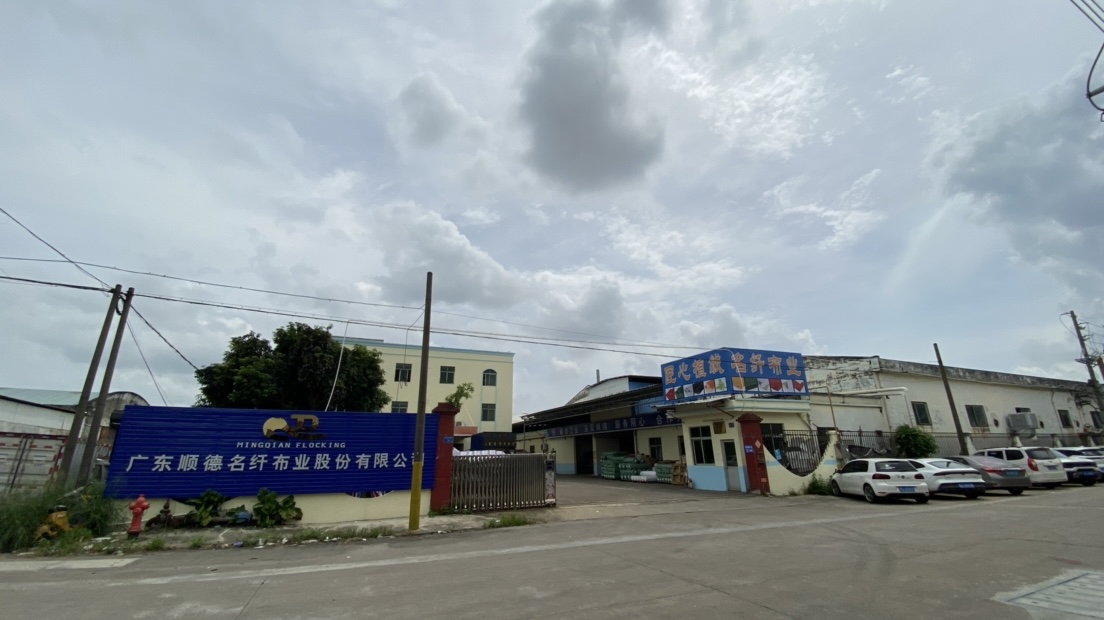
For large-scale industrial runs, manufacturing operations require robust capacity to maintain consistency. Implementing automated electrostatic flocking lines and integrated dyeing workshops allows for tight physical and chemical control, reducing overall defects to under 0.5%.
Frequently Asked Questions (FAQ)
How does flocking fabric comply with the EU Packaging and Packaging Waste Regulation (PPWR)?
Compliance requires that the cumulative concentration of four heavy metals—lead, cadmium, mercury, and hexavalent chromium—does not exceed 100 ppm. Furthermore, total organic fluorine from PFAS must remain below 50 mg/kg, indicating zero intentional addition of PFAS compounds during the adhesive coating and finishing stages.
What makes a flocking fabric safe for high-value silver jewelry storage?
Standard packaging fabrics often contain sulfur-based dyes or acidic adhesives that tarnish silver. Safe formulations utilize non-sulfur dye systems, sulfur-free and halogen-free adhesives, and maintain a mildly acidic to neutral pH (5.5 to 7.5). Every batch must pass an accelerated silver coupon corrosion test with no spotting or discoloration before production.
Can flocking fabrics be customized with self-adhesive backings and custom textures?
Yes. Post-processing capabilities allow for pressure-sensitive self-adhesive backing, paper mounting, and custom texturing. Textures include embossed patterns, pearl velvet, and frosted finishes. Backing adhesives undergo the same chemical compliance screening as the primary flocking adhesive to prevent secondary contamination.
Final Conclusion & Recommendations
When selecting flocking fabrics for international markets, verifying complete chemical and environmental documentation is standard practice. Choosing materials certified under GRS 4.0, REACH, and RoHS 2.0 mitigates compliance risks under new regulations like the EU PPWR. For technical inquiries or custom eco-friendly fabric solutions, contact the engineering team directly at [email protected].
About Us
Guangdong Shunde Mingqian Flocking Co., Ltd. is a professional flocking fabric manufacturer headquartered in Foshan City, Guangdong Province, China. Established in 2008, the company operates a self-owned facility covering 10,000 square meters, houses more than 100 employees, and has dedicated 18 years exclusively to the research, development, and production of flocking fabrics. Holding ISO 9001:2015 and GRS certifications, the company serves clients across more than 30 countries and has established long-term supply relationships with packaging manufacturers serving global brands including Dior, Fendi, and Chow Tai Fook.
Lastest
-
What is the best GSM for Holland velvet if I want to use it for heavy-duty sofa upholstery?
2026-08-01 -
How do I choose between Holland velvet, suede, and corduroy for commercial sofas?
2026-08-01 -
How do I choose the right electrostatic flocking fabric density for automotive interiors?
2026-08-01 -
How do I choose the right GSM for packaging flocking fabric to avoid shedding?
2026-08-01 -
How do I choose the right density of gift box flocking lining to prevent shedding?
2026-08-01
SUBSCRIBE
INQUIRY